Activities for seniors
15 Easy Homophone Puzzles for Seniors, With Answers
Try 15 easy homophone puzzles for seniors, with familiar word choices, definition pairs, sentence clues, hints and fully checked answers.
What is a homophone?
Merriam-Webster defines homophones as words pronounced alike but different in meaning, origin or spelling. RIGHT and WRITE are a familiar example: they sound alike in common American English, but the correct spelling depends on the sentence.
For puzzles 1 to 5, choose the word that completes the sentence. For puzzles 6 to 10, name both words from their definitions. For puzzles 11 to 15, choose the spelling described by the clue. Say an answer, point to it, write it or ask for a hint.
Pronunciation can vary by region and speaker. If a pair does not sound alike to the player, read both choices, enjoy the spelling question or skip that item. These fifteen puzzles were created for this article and are not sample pages from the linked books.
Round 1: choose the correct spelling
Choose the word that makes sense in each sentence. The two choices sound alike but have different meanings.
- 1. Please ___ your name on the card. (RIGHT or WRITE)
- 2. I can ___ the church bell. (HEAR or HERE)
- 3. Add one cup of ___ to the batter. (FLOUR or FLOWER)
- 4. From the pier, we could ___ the lighthouse. (SEA or SEE)
- 5. I packed a ripe ___ for lunch. (PAIR or PEAR)
Show answers or guidance
1. WRITE: to form words on a surface. 2. HEAR: to perceive a sound. 3. FLOUR: the ingredient used in baking. 4. SEE: to notice with the eyes. 5. PEAR: the fruit. Checks: RIGHT means correct or a direction; HERE means this place; FLOWER is the blooming part of a plant; SEA is a body of salt water; PAIR means two things that belong together.
Round 2: find both homophones
Each item gives two meanings. Find the two different spellings that share a pronunciation.
- 6. A device used to slow a bicycle / a pause from work
- 7. The back part of an animal / a story
- 8. A passage between store shelves / an island
- 9. Past tense of eat / the number after seven
- 10. The number before two / succeeded in a contest
Show answers or guidance
6. BRAKE / BREAK. 7. TAIL / TALE. 8. AISLE / ISLE. 9. ATE / EIGHT. 10. ONE / WON. Each pair has two spellings and two meanings but is pronounced alike in common American English.
Round 3: use the clue to choose the word
Read the meanings in parentheses, then choose the spelling that fits the sentence.
- 11. The letter arrived in the ___. (letter delivery / an adult man: MAIL or MALE)
- 12. The appointment is next ___. (seven days / lacking strength: WEEK or WEAK)
- 13. Roll the ___ before baking. (baking mixture / a female deer: DOUGH or DOE)
- 14. I need ___ cups. (the number 2 / more than enough / a direction word: TWO, TOO or TO)
- 15. The table is made of ___. (material from a tree / a word used for an imagined choice: WOOD or WOULD)
Show answers or guidance
11. MAIL. 12. WEEK. 13. DOUGH. 14. TWO. 15. WOOD. The unused homophones are MALE, WEAK, DOE, TOO, TO and WOULD. In item 14, all three choices sound alike, so the meaning and sentence position identify TWO.
Check each answer with meaning and grammar
First read the complete sentence aloud. Then ask what the missing word must mean. In puzzle 3, the sentence is about baking, so FLOUR fits; FLOWER does not. Sound alone cannot settle the spelling.
A short definition is enough to check most answers. BRAKE slows movement, while BREAK names a pause or the act of separating something. TAIL is part of an animal, while TALE is a story.
Grammar can provide another clue. In ‘I need two cups,’ the missing word counts cups, so TWO is correct. TOO means also or more than wanted, while TO commonly marks direction or begins an infinitive.
Give a small hint before revealing the spelling
Begin by repeating the sentence and emphasizing its meaning. If another hint is wanted, give a simple definition: ‘This word means to notice a sound.’ Next show the first letter, and reveal the answer whenever the player asks.
For a two-word definition puzzle, solve one side first. In puzzle 8, start with ‘a passage between store shelves’ and offer A as the first letter. After AISLE is found, ask for its sound-alike word meaning an island.
To make a puzzle easier, keep the two spellings visible. To add challenge, read the sentence without choices, then ask the player to spell the answer.
Play aloud or turn the pairs into cards
For a phone call or family visit, read the sentence and both choices aloud, then spell each choice. The player can answer by saying the word, its first letter or its meaning.
For a matching activity, write one word on each card. Mix pairs such as BRAKE/BREAK, TAIL/TALE and WEEK/WEAK. Match cards by sound, then use each spelling in a short sentence.
In a small group, read one clue and invite two possible spellings. Let one person choose, another explain the meaning and a third use the other homophone in a new sentence. The British Council also presents homophone practice by saying a word and having players write its different versions.
Prepare a clear large-print puzzle page
Put five puzzles on a page, leave generous space between choices and keep the answer key separate. Use uppercase choices only if the reader finds them comfortable; clear spacing matters as much as decoration.
RNIB says large print is generally 16 to 18 point and notes that individual readers may need another size. Print one sample puzzle first and ask whether the type size, contrast and spacing are comfortable.
If print is not comfortable, play entirely aloud. Spell the two choices slowly and repeat the sentence as often as needed.
Choose more word activities by style
Our large-print activity-book guide explains how to compare readability, layout and activity style. The memory-activity-book guide helps families choose among word games, trivia, matching, conversation prompts and mixed activities.
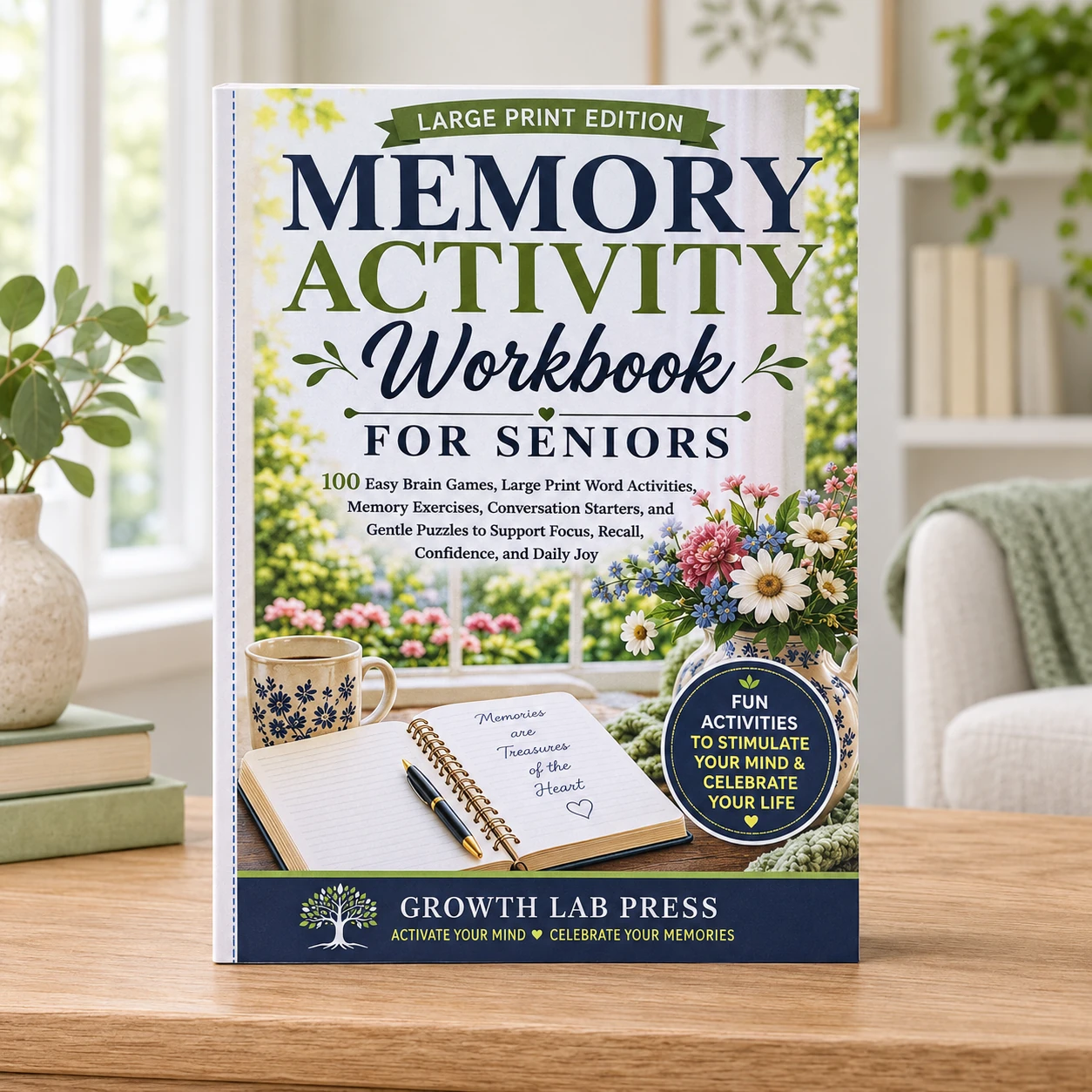
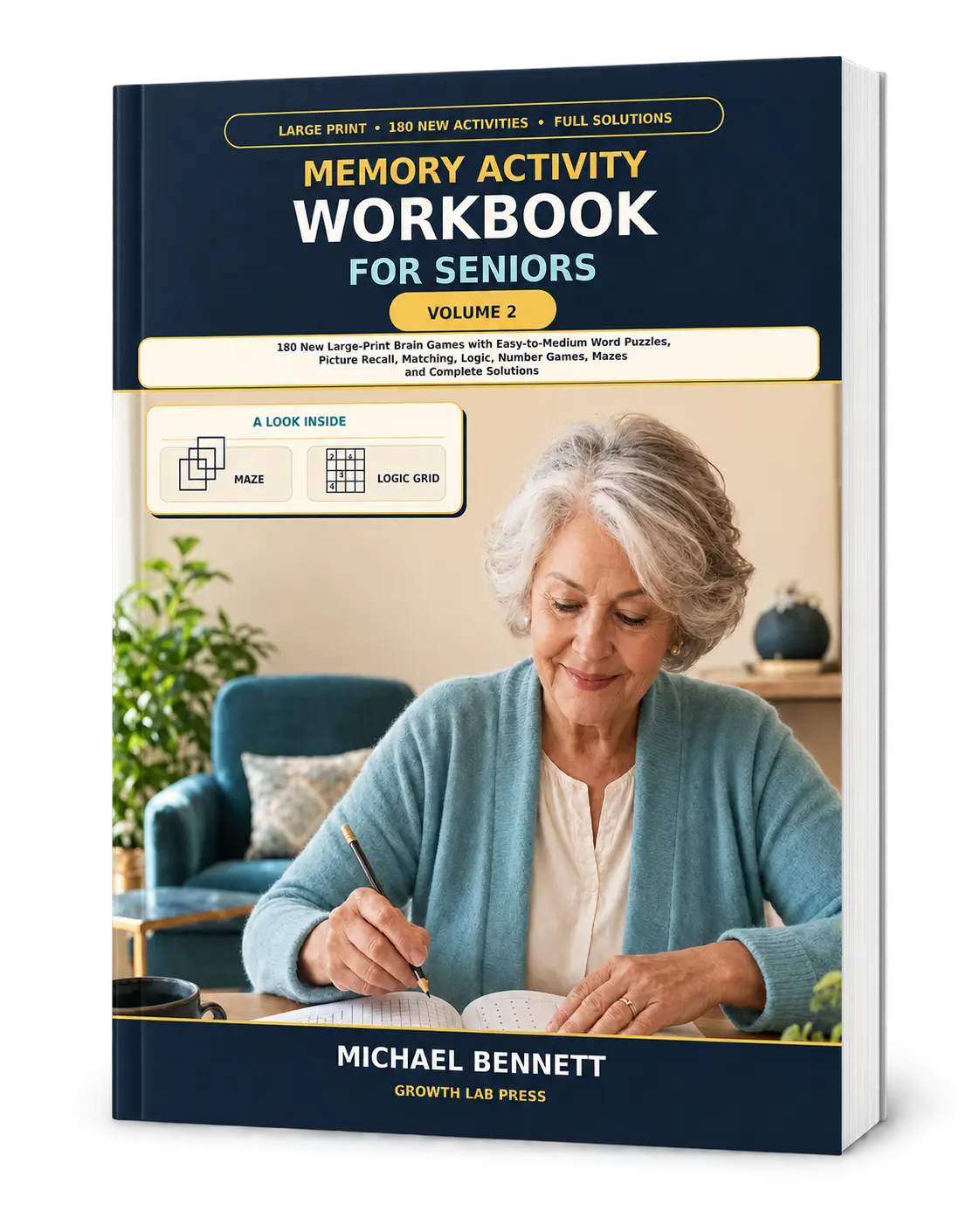
Memory Activity Workbook for Seniors includes large-print memory recall activities, word games, everyday prompts, conversation starters and reflection pages. Memory Activity Workbook for Seniors, Volume 2 contains 180 large-print word, number, matching, visual, logic, planning and maze activities with complete solutions.
The linked product pages show the current formats and contents. These fifteen homophone puzzles remain a separate free activity created for this blog.
Common questions
What is an easy example of a homophone?
RIGHT and WRITE are easy examples. They sound alike in common American English, but RIGHT can mean correct or a direction, while WRITE means to form words.
How do you choose the correct homophone?
Read the complete sentence, identify the meaning needed, and check which spelling has that meaning. Grammar and sentence position can also help.
Can these homophone puzzles be played without writing?
Yes. Read the sentence and choices aloud, spell each option, accept a spoken answer or let the player explain the meaning.
Are these puzzles taken from the Growth Lab Press books?
No. They were created for this blog article and are not sample pages from either linked workbook.
Sources and further reading
Published by Growth Lab Press. Read our editorial standards.