Activities for seniors
15 Easy What Am I Riddles for Seniors, With Answers
Try 15 easy What Am I riddles for seniors, with familiar household clues, checked answers, hints and options for playing aloud or in large print.
How to play What Am I riddles
Read one riddle at a time and guess the familiar object described by all three clues. The first clue is broad, the second narrows the possibilities and the third should confirm the intended answer.
Use the rounds in order or choose any five. Reveal the answer panel after each round, or cover it until every riddle has been tried. There is no timer, and a player may answer aloud, write, request a hint, choose between two options or pass.
These fifteen riddles were created for this article and are not sample pages from the linked Growth Lab Press books.
Round 1: things used around the home
Each answer is an everyday object that may be seen near an entrance, on a wall or in the kitchen.
- 1. I wait by a doorway. Shoes touch me before coming inside. I help leave outdoor dirt at the door. What am I?
- 2. I begin as a flat paper pocket. I can be sealed and addressed. A letter travels inside me. What am I?
- 3. I show many numbered squares. My pages follow the months. People check me for dates and appointments. What am I?
- 4. I have a long handle and many stiff fibres. I travel across the floor but have no feet. I gather dust into a pile. What am I?
- 5. I stay small when the sky is clear. I open above your head. I help keep rain off you. What am I?
Show answers or guidance
1. DOORMAT: it lies by a doorway and catches dirt from shoes. 2. ENVELOPE: it is a sealable paper holder for a letter. 3. CALENDAR: it arranges dates by days and months. 4. BROOM: its handle and bristles sweep dust across a floor. 5. UMBRELLA: it folds closed and opens overhead for rain.
Round 2: useful objects with distinctive parts
Listen for the part of the object that makes it easy to identify: an eye, teeth, hands, a spout or strings.
- 6. I am small and slender. Thread passes through my eye. I move in and out of fabric to make stitches. What am I?
- 7. I may have teeth, but I do not eat. I fit into a particular opening. A turn of me can unlock a door. What am I?
- 8. I have a face and moving hands. I stay in one place while the day moves on. People look at me to know the time. What am I?
- 9. I hold water but am not a cup. I have a handle and a spout. When heated, I prepare water for tea. What am I?
- 10. I have many strings but tie no parcels. My lid may be raised before I am played. Pressing my keys makes music. What am I?
Show answers or guidance
6. SEWING NEEDLE: thread goes through its eye and the point passes through fabric. 7. KEY: its cut edge fits a lock and turning it can open a door. 8. CLOCK: its face and hands display the time. 9. KETTLE: it heats water and pours through a spout. 10. PIANO: its keys activate strings inside the instrument to make music.
Round 3: look for the practical job
The final round describes what each object does during reading, cooking, sewing or a drink break.
- 11. I rest quietly between two pages. I do not read the story. I show where the reader stopped. What am I?
- 12. I look like a bowl that cannot hold water. My many holes are useful. I let water leave pasta or washed vegetables behind. What am I?
- 13. I am worn on one fingertip. I am much too small to be a hat. I help push a needle without pressing its point into the finger. What am I?
- 14. I am a bottle with an extra layer. I travel with a drink. I help the drink stay hot or cold longer than an ordinary open cup. What am I?
- 15. I tie around the waist and cover the front of clothing. Flour or splashes may land on me. Cooks and makers wear me while they work. What am I?
Show answers or guidance
11. BOOKMARK: it is placed between pages to mark a reader’s place. 12. COLANDER: its holes drain water while holding food. 13. THIMBLE: it protects the fingertip used to push a sewing needle. 14. THERMOS: its insulated container helps a drink keep its temperature. 15. APRON: it covers the front of clothing during cooking or other work.
Check every clue before accepting an answer
A good answer must fit all three clues, not only one. For riddle 12, a sieve also has holes and drains liquid, but the bowl shape and the example of pasta point more specifically to a colander. If a player gives another answer that fits naturally, ask them to explain how each clue works.
Some regional words differ. A THERMOS may be called a vacuum flask, and a DOORMAT may simply be called a mat. Accept an equivalent everyday name when the object and all clues match.
After revealing an answer, ask which clue helped most. This turns the solution into a short explanation instead of a score.
Offer hints without giving the answer away
Begin with a category hint: ‘You might find it near the front door,’ ‘It belongs with sewing supplies,’ or ‘It is used in the kitchen.’ If another hint is wanted, give the first sound or offer two choices.
For riddle 11, try the category hint ‘It is used while reading.’ Next offer the first sound ‘book…’ and only then give the choices BOOKMARK or BOOKCASE. Reveal the answer whenever the player wants it.
To make a riddle more challenging, read only the first two clues. To make it easier, read all three slowly and place two answer cards in view.
Use the riddles aloud, one-to-one or in a group
For a phone call or family visit, read one clue, pause and then add the next. The player can answer at any point. Choose five riddles for a short activity and save the remaining rounds for another day.
In a group, let one person read, another answer and a third explain which clues fit. Rotate roles after each riddle. Keep score only if everyone wants it; the riddles also work as a cooperative activity where the group agrees on one answer.
Invite one optional story after a solution: ‘Who taught you to sew?’ after THIMBLE, or ‘What did you usually make tea in?’ after KETTLE. The conversation can continue, but no one has to share a personal memory.
Prepare a clear large-print riddle page
Put one riddle in each block, keep the number beside its clues and leave generous space between blocks. Place the answer key on a separate page so the solutions do not distract from the riddles.
RNIB explains that large print is generally 16 to 18 point, while individual readers may prefer another size. Print one sample and ask whether the text size, spacing and contrast are comfortable before preparing the full set.
If print is not comfortable, use the activity aloud. Read each clue clearly, repeat it when asked and name the answer before explaining how the clues fit.
Choose more activities by style
Our large-print activity-book guide explains how to compare readability, page layout and activity style. The memory-activity-book guide helps families choose among word games, trivia, matching activities, conversation prompts and mixed workbooks.
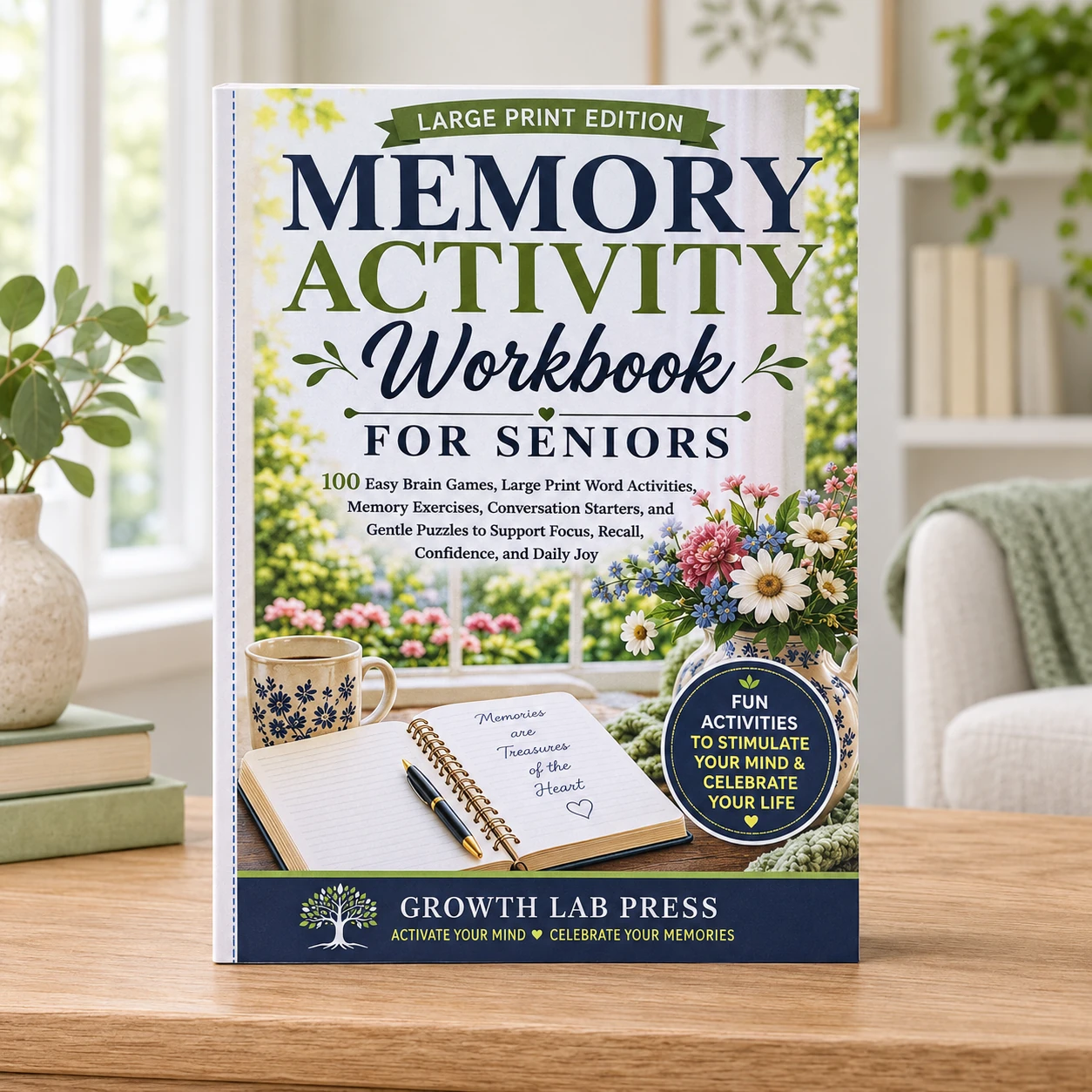
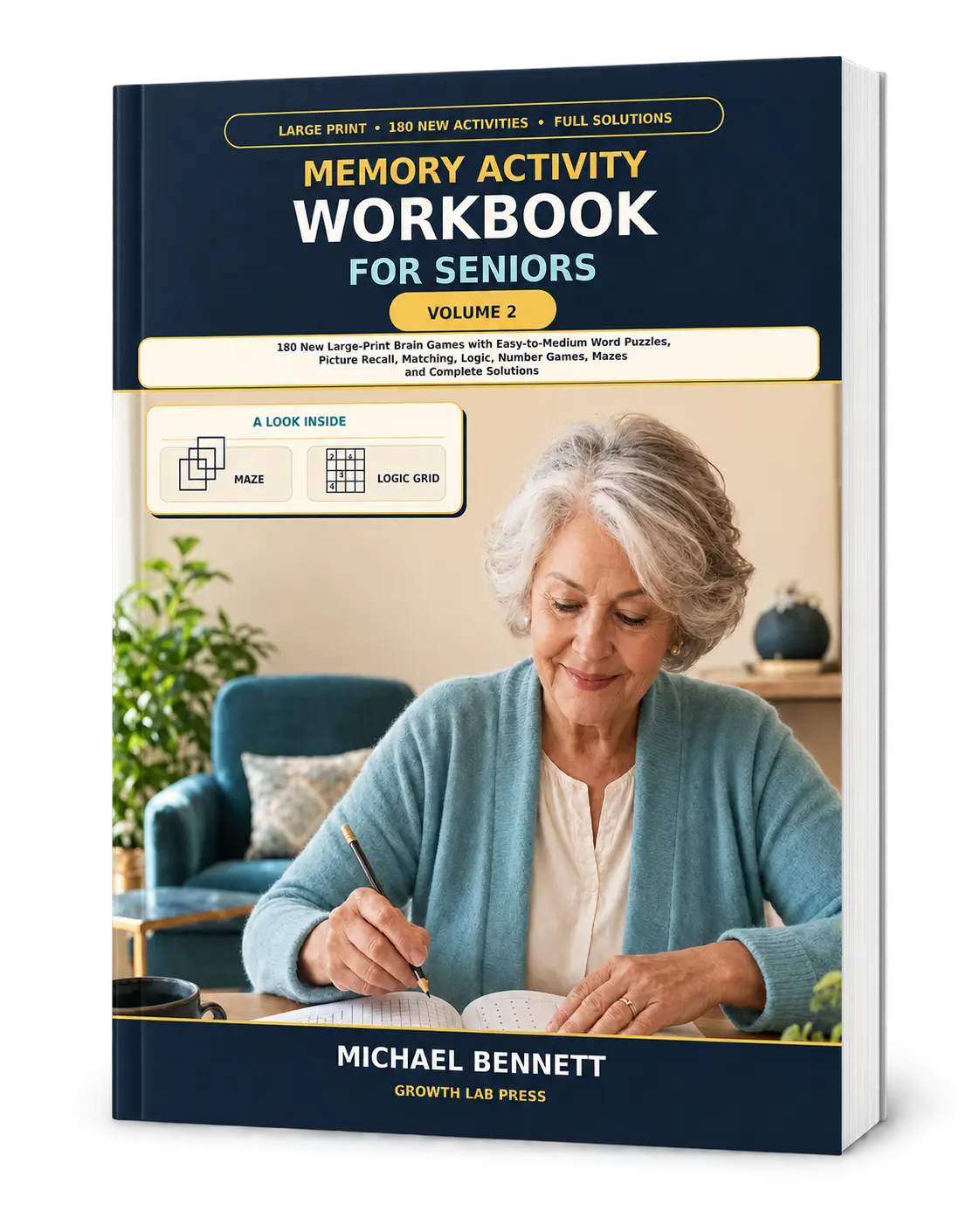
Memory Activity Workbook for Seniors includes large-print memory recall activities, word games, everyday prompts, conversation starters and reflection pages. Memory Activity Workbook for Seniors, Volume 2 contains 180 large-print word, number, matching, visual, logic, planning and maze activities with complete solutions.
The linked product pages show the current formats and contents. These fifteen riddles remain a separate free activity created for this blog.
Common questions
What is a What Am I riddle?
It describes an object without naming it. The player combines the clues to identify the answer and can explain how each clue fits.
How can I make these riddles easier?
Read all three clues slowly, name the object’s category, give the first sound or offer two answer choices. Use five riddles at a time rather than all fifteen.
Can these riddles be played without writing?
Yes. Read the clues aloud and let the player answer, request a hint, choose between two options or pass.
Are these riddles taken from the Growth Lab Press books?
No. They were created for this blog article and are not sample pages from either linked workbook.
Sources and further reading
Published by Growth Lab Press. Read our editorial standards.