Activities for seniors
15 Easy Word Sequence Puzzles for Seniors, With Answers
Try 15 easy word sequence puzzles for seniors, with calendar words, alphabetical patterns, growing words, hints and fully checked answers.
How to play word sequence puzzles
Read each line from left to right and find the rule that connects the words. Then supply the missing word. The rule changes between rounds, so read the short instruction before starting each set.
Try five puzzles at a time or choose any round. A player may say the answer, write it, point to a word card, request a hint or pass. There is no timer, and the answer panel can be opened whenever it is useful.
These fifteen puzzles were created for this article and are not sample pages from the linked Growth Lab Press books.
Round 1: familiar words in their usual order
Complete each familiar sequence. The missing word belongs exactly where the blank appears.
- 1. SUNDAY, MONDAY, ___, WEDNESDAY
- 2. MARCH, APRIL, ___, JUNE
- 3. SPRING, SUMMER, ___, WINTER
- 4. MORNING, AFTERNOON, ___, NIGHT
- 5. FIRST, SECOND, ___, FOURTH
Show answers or guidance
1. TUESDAY: it follows Monday and comes before Wednesday. 2. MAY: it follows April and comes before June. 3. AUTUMN or FALL: it follows summer and comes before winter. 4. EVENING: it follows afternoon and comes before night. 5. THIRD: it follows second and comes before fourth.
Round 2: follow the first letters
The first letters move forward through the alphabet. The clue identifies the intended missing word, and every answer continues both the letter pattern and the theme.
- 6. APRON, BOWL, CUP, ___ (clue: a piece of tableware that can hold or serve food)
- 7. ENVELOPE, FOLDER, GLUE, ___ (clue: a pen used to mark important text brightly)
- 8. KETTLE, LADLE, MUG, ___ (clue: a cloth or paper square used at a meal)
- 9. ORANGE, PEAR, QUINCE, ___ (clue: a red or dark berry made of many small sections)
- 10. SOFA, TABLE, UMBRELLA, ___ (clue: a container often used to display flowers)
Show answers or guidance
6. DISH: A, B, C is followed by D, and a dish fits the kitchen theme. 7. HIGHLIGHTER: E, F, G is followed by H, and a highlighter fits the desk-supplies theme. 8. NAPKIN: K, L, M is followed by N, and a napkin fits the dining theme. 9. RASPBERRY: O, P, Q is followed by R, and a raspberry fits the fruit theme. 10. VASE: S, T, U is followed by V, and a vase fits the household-object theme.
Round 3: grow the word by one letter
Add exactly one letter at each step without removing or rearranging the letters already present. The new letter may go at the beginning, middle or end. Complete the final word.
- 11. A → AT → CAT → COAT → ___ (clue: land beside the sea)
- 12. I → IN → PIN → SPIN → ___ (clue: the row of bones along the back)
- 13. A → AN → CAN → CANE → ___ (clue: a narrow boat moved with a paddle)
- 14. O → OR → FOR → FORM → ___ (clue: documents with spaces to complete)
- 15. TO → TOP → STOP → STOOP → ___ (clue: bends the upper body forward)
Show answers or guidance
11. COAST: add S to COAT while keeping C-O-A-T in order. 12. SPINE: add E to SPIN. 13. CANOE: add O to CANE while keeping C-A-N-E in order. 14. FORMS: add S to FORM. 15. STOOPS: add S to STOOP. Every step adds one letter and keeps all earlier letters in the same order.
Check the rule before accepting an answer
A correct answer must satisfy the whole rule. In puzzle 10, VASE fits because its first letter follows S, T and U, and it belongs with the household objects in that line. A different V-word is not the intended answer unless it also fits the clue and theme.
For the growing-word round, compare one step at a time. COAT becomes COAST by adding S; no existing letter moves. Saying the letters slowly or writing each word directly below the last makes the change easier to see.
Puzzle 3 accepts AUTUMN or FALL because both names correctly describe the season between summer and winter. Equivalent regional wording is welcome when it preserves the sequence.
Offer one useful hint at a time
For Round 1, name the type of sequence: days, months, seasons, parts of the day or ordinal numbers. For Round 2, point to the first letters and say the next letter aloud. For Round 3, name the definition and show where a blank letter might fit.
For puzzle 13, begin with ‘The answer is a kind of boat.’ If another hint is wanted, show CAN_E and offer the choices CANOE or CANDY. Reveal the answer whenever the player wants it; the explanation is part of the activity.
An activity booklet from Ireland’s Health Service Executive suggests reading a clue aloud, allowing time and adding an extra clue when needed. Use that flexible approach without turning the puzzles into a test.
Use the sequences aloud, on paper or with letter cards
On a phone call or family visit, read the sequence twice and pause at the blank. For Round 2, emphasize the first sound of each word. For Round 3, spell the final two words so the added letter is clear.
In a small group, let one person identify the rule, another suggest the missing word and a third explain why it fits. Rotate roles after each puzzle. Work cooperatively unless everyone wants to keep score.
Letter cards can make the growing-word round more concrete. Leave the existing letters on the table and slide one new card into place. This visually confirms that no letter was removed or rearranged.
Prepare a clear large-print puzzle page
Put one round on each page, keep the arrows and blanks large, and place the answers on a separate page. Use strong contrast and generous space between lines so the sequence is easy to follow.
RNIB describes large print as generally 16 to 18 point and notes that individual readers may prefer another size. Print one sample and ask whether the type, spacing and contrast are comfortable before preparing every puzzle.
If reading print is not comfortable, use the puzzles aloud. Repeat the sequence when asked and give the answer choices verbally rather than requiring writing.
Choose more activities by format and variety
Our large-print activity-book guide explains how to compare readability, page layout and activity style. The memory-activity-book guide helps families choose between word games, trivia, matching activities, conversation prompts and mixed workbooks.
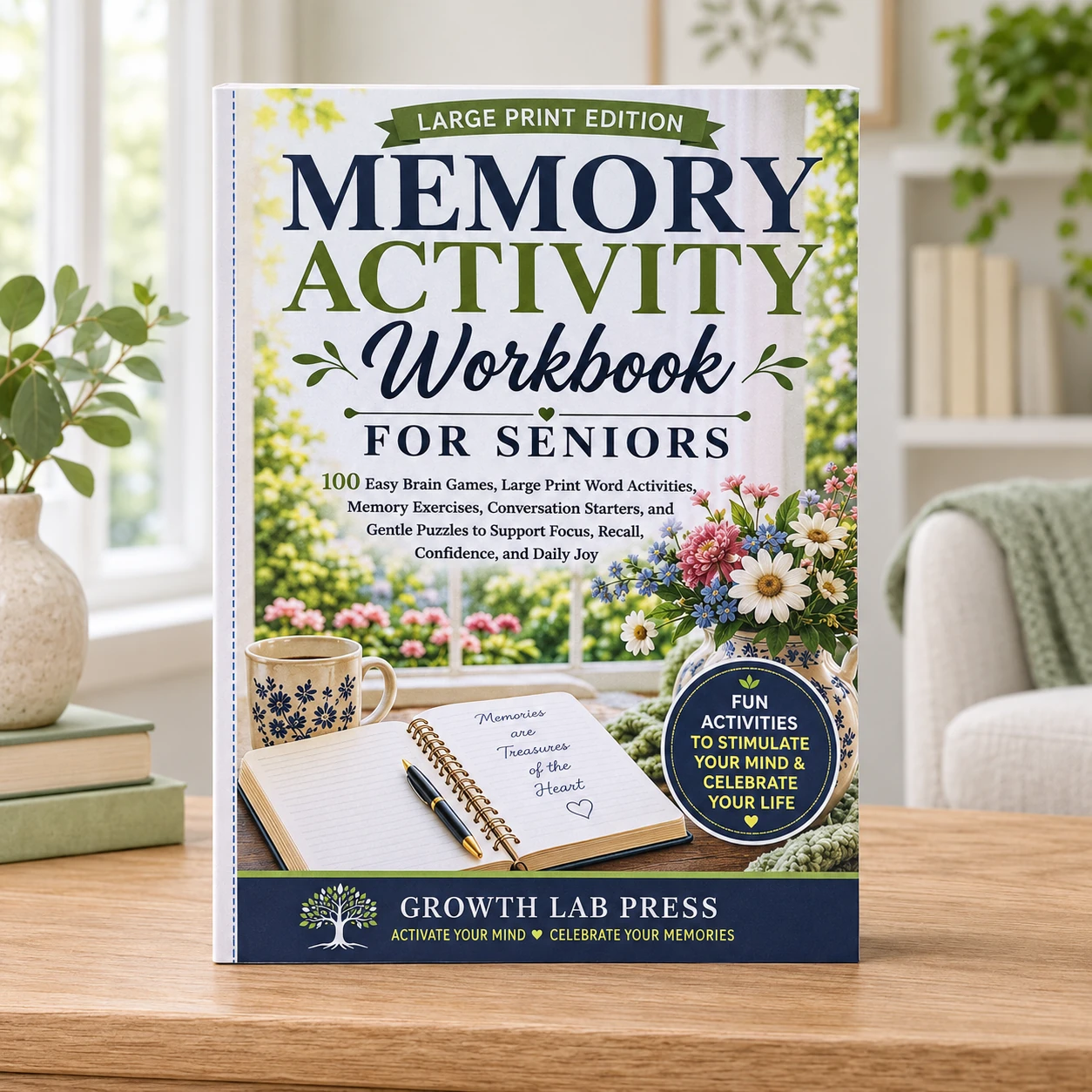
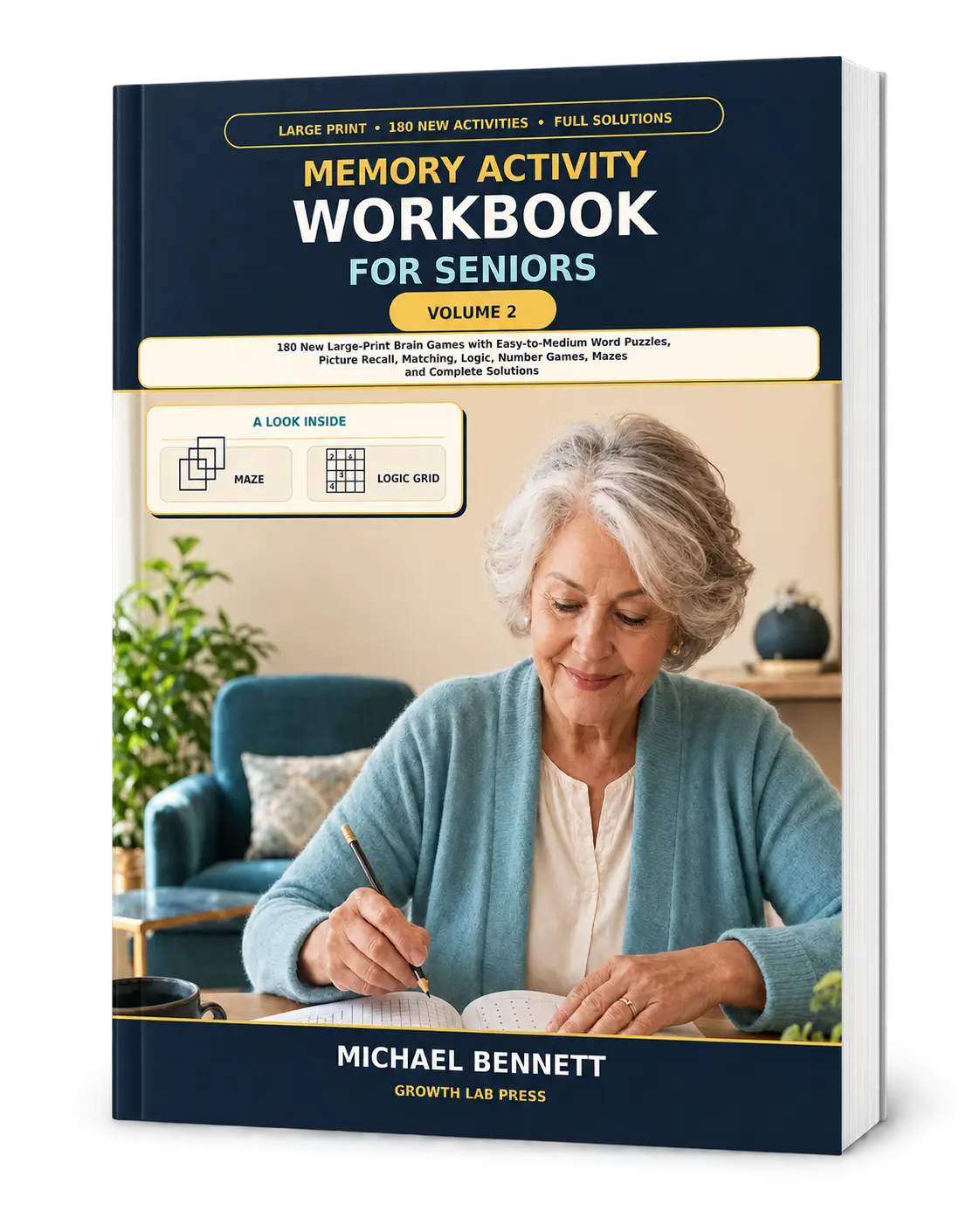
Memory Activity Workbook for Seniors includes large-print memory recall activities, word games, everyday prompts, conversation starters and reflection pages. Memory Activity Workbook for Seniors, Volume 2 contains 180 large-print word, number, matching, visual, logic, planning and maze activities with complete solutions.
The linked product pages show the current formats and contents. These fifteen word-sequence puzzles remain a separate free activity created for this blog.
Common questions
What is a word sequence puzzle?
It presents words in an ordered pattern and asks for a missing item. The rule may use calendar order, consecutive first letters or a word that changes by adding one letter.
How can I make these sequence puzzles easier?
Name the type of sequence, point out the first letters, provide the definition, show one blank letter position or offer two choices. Use five puzzles at a time rather than all fifteen.
Can these puzzles be played without writing?
Yes. Read the sequence aloud and let the player say an answer, choose between two options, use letter cards, request a hint or pass.
Are these puzzles taken from the Growth Lab Press books?
No. They were created for this blog article and are not sample pages from either linked workbook.
Sources and further reading
Published by Growth Lab Press. Read our editorial standards.