Family storytelling
How to Make a Family History Timeline With Grandparents
Create a clear family history timeline with grandparents using 12 open questions, approximate-date labels, photo prompts and a simple one-page template.
Start with one sheet, not an entire life story
Use a large sheet of paper, index cards or sticky notes, a pencil and any family photographs the speaker wants to share. Draw a horizontal line and mark broad periods such as childhood, school years, early work, family life and later years. Leave plenty of blank space between them.
A timeline is a conversation guide, not a test of dates. Begin with three to five events the grandparent remembers easily. Add details in later visits instead of trying to complete every decade at once.
The Smithsonian Institution Archives recommends developing a chronology of important events before an oral-history interview and using names, places and photographs as prompts. It also recommends open-ended questions, one question at a time, and allowing the interviewee to choose what to answer.
Choose five anchor events for the first timeline
Ask the grandparent which moments they would place on the page first. Useful anchors might include where they were born, a move, starting school, a first job, meeting a partner, becoming a parent, changing careers or moving to a new home.
Write one event on each card. Record the year only when the speaker feels confident. Otherwise use labels such as about 1958, early 1960s, before we moved to Toronto or when Aunt Rosa was a baby. An honest approximate date is better than a precise guess.
Place the cards in rough order. If two events may have happened in the opposite order, leave them side by side and add a question mark. The timeline can show uncertainty while the family checks photographs, letters or records later.
12 questions to build a family history timeline
1. What is the earliest home or neighbourhood you remember, and who lived with you?
2. What is the first school event you would place on your timeline?
3. When did your family make an important move, and what changed afterward?
4. What job, responsibility or skill did you learn first?
5. Which friendship or relationship changed the direction of your life?
6. What family celebration or tradition began during your childhood?
7. What object, photograph or document helps date an important event?
8. Which community or world event affected your everyday life most directly?
9. When did you first live independently, and what do you remember about that home?
10. Which family arrival, marriage or reunion belongs on the timeline?
11. What turning point seemed small at the time but became important later?
12. Which story should a younger family member add beside one of these events?
Use follow-up questions that add context
After an anchor event, ask one gentle follow-up: Who was there? What did the place look like? What happened just before or after? What would a younger relative misunderstand about that time? These questions turn a date into a story without pushing for private details.
Ask permission before recording. Explain who will hear the recording and how it will be stored. The Library of Congress suggests asking older relatives whether you may record the conversation, then transcribing and sharing it later if appropriate.
Let the speaker skip any question, pause the recorder or correct the timeline. Do not replace their words with a more dramatic version. If family members remember an event differently, label each account instead of deciding which person must be wrong.
A fictional family timeline example
This made-up example demonstrates the format; it is not a customer story or a sample from either linked journal. Childhood — about 1948: Lena remembers living above her parents' corner shop. Source: Lena's recollection; address still to check.
School — 1954 or 1955: she joined a school choir and travelled by bus to a local festival. Source: recollection; photograph may be in Cousin May's album. Early work — summer 1962: first paid job at a bakery, probably before the family moved.
Family life — 1968: married Daniel; date confirmed by invitation. Move — early 1970s: moved to a house with a small garden; exact year uncertain. Later milestone — 1996: first grandchild born; date to confirm with the family calendar.
Each entry separates the remembered event from the evidence and from details still being checked. That makes the page useful without pretending every date is settled.
Turn the rough timeline into a family keepsake
Give every entry four fields: date or date range, event, one story detail and source. A source might be the speaker's recollection, a labelled photograph, a letter, a certificate or another relative. Keep a short list of names and places whose spelling needs checking.
Add copies or scans of photographs only with permission, and record who supplied each image. The Library of Congress classroom guidance for timelines recommends noting image sources when the image is added so the citation is not lost later.
Save the timeline with a descriptive name such as Grandma-Lena-family-timeline-2026-11-14. Keep a second copy in a place the family can access. If the timeline contains private or sensitive details, agree on who may see it before sharing.
Continue the stories with guided journals and reader guides
Our life-story question guide offers more prompts for parents and grandparents, while the journal-gift guide explains how to choose a format, introduce the gift and help someone who prefers to answer aloud.
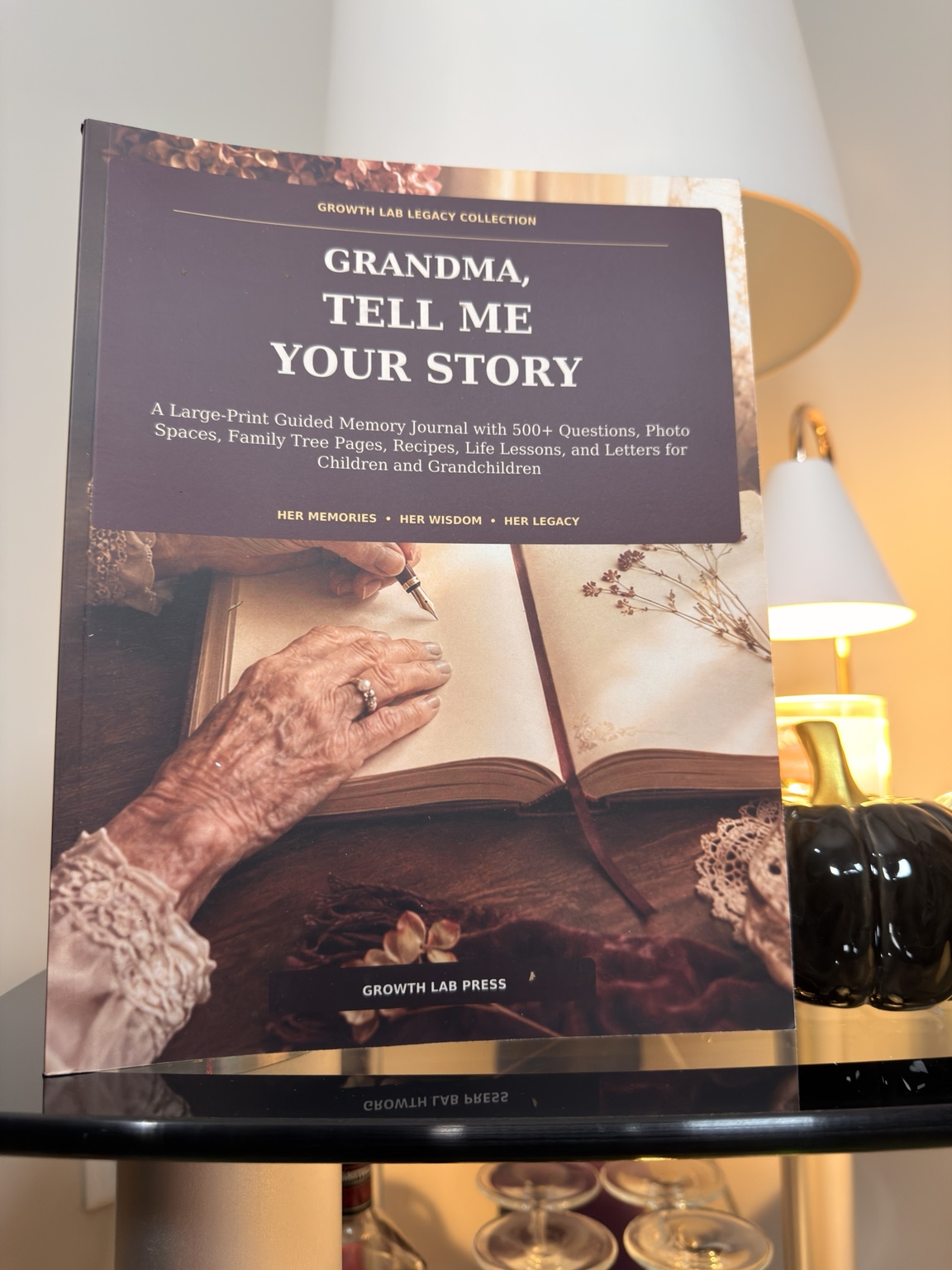
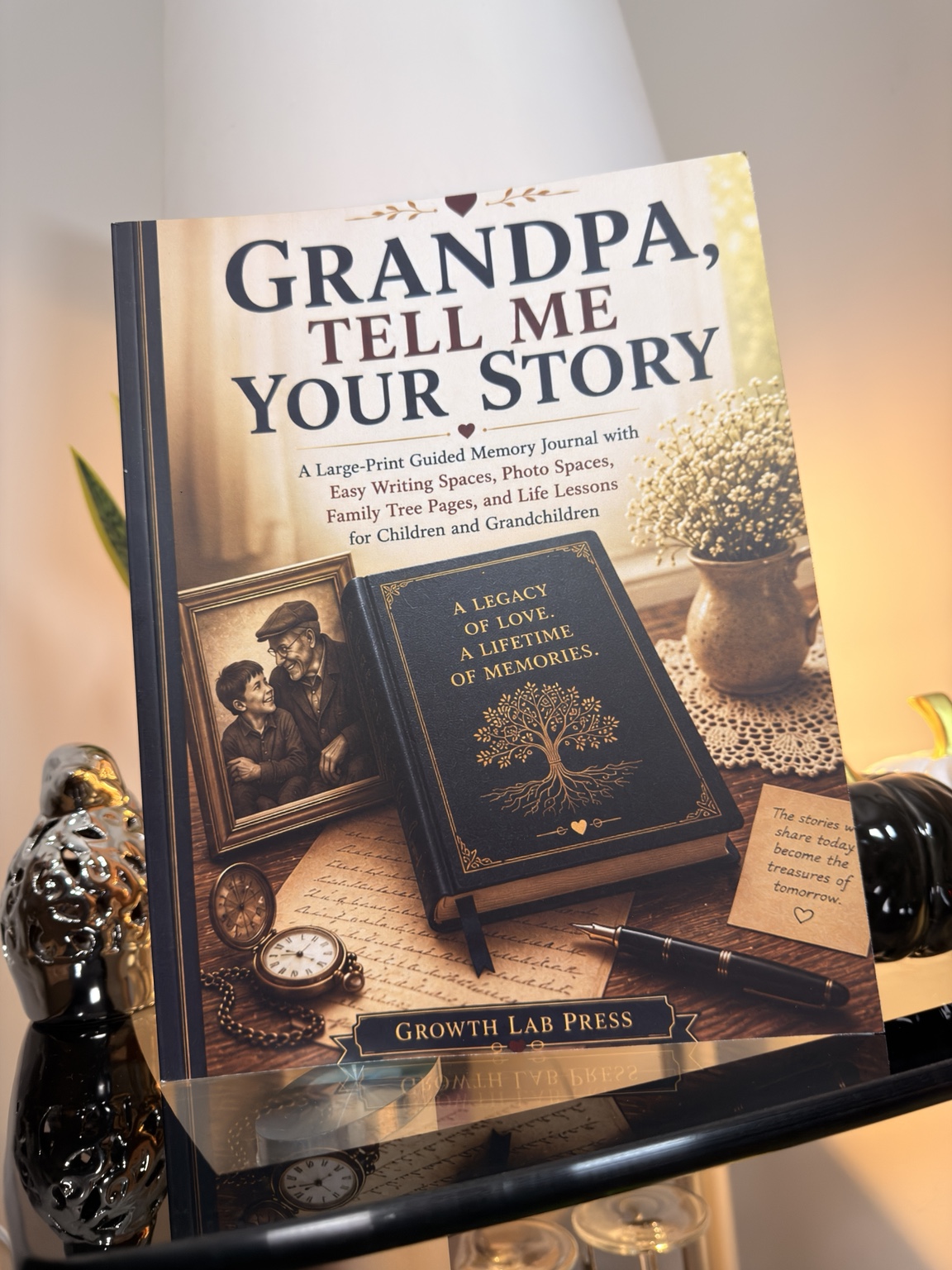
Grandma, Tell Me Your Story by Michael Bennett is a 160-page large-print guided journal with 531 questions, photo spaces, family tree pages, recipes, traditions, life lessons and letters. Grandpa, Tell Me Your Story is a large-print guided keepsake journal for memories, milestones, family traditions and wisdom. Both current product pages list paperback and hardcover formats.
Use the product pages to inspect the real covers, current formats and book details. The timeline template and 12 questions in this article are original blog material and are not presented as pages from either journal.
Common questions
What if a grandparent cannot remember exact dates?
Use an approximate year, decade, age or sequence marker such as before the move or after the first child was born. Label it clearly and leave space to check records later.
How many events should go on a family history timeline?
Start with three to five anchor events. Add more over several conversations so the timeline remains comfortable and readable.
Should historical events be added to the timeline?
Add a public event only when it helps explain the grandparent's own experience. Ask what changed in their home, work or community rather than assuming everyone experienced the event in the same way.
Can two relatives make the timeline together?
Yes. Give each person time to answer and label differing memories separately. The finished page can preserve both accounts and mark dates that still need checking.
Sources and further reading
Published by Growth Lab Press. Read our editorial standards.