Family stories
15 Questions to Ask Grandparents About Family Meals
Use 15 warm questions to ask grandparents about childhood meals, family kitchens, table routines, celebrations and food traditions worth preserving.
Why ask about family meals?
A question about dinner can lead to the kitchen, the people who cooked, the work of shopping and growing food, family rules, celebrations and the way daily life changed over time. The goal is not to collect a perfect menu. It is to hear the scene in your grandparent’s own words.
The Library of Congress describes oral history as learning about the past through interviews with people who experienced it. Its family-story guide recommends preparing short questions and avoiding questions that can be answered only with yes or no.
Choose three to five questions for one conversation. Follow an interesting memory instead of rushing through the full list, and let your grandparent skip anything they would rather not discuss.
Questions about everyday meals
Begin with ordinary routines. These questions are specific enough to provide a starting point but open enough for a story.
- 1. What did a usual breakfast look like when you were a child?
- 2. Who normally prepared weekday meals, and what do you remember about watching or helping?
- 3. Where did your family get groceries, meat, milk and fresh produce?
- 4. Did your household grow, preserve or trade any food? What happened from harvest to table?
- 5. Which ordinary meal felt most comforting to you, and what made it special?
Questions about the family table
Move from the food to the room, the people and the small rules that made the table feel like your grandparent’s family table.
- 6. Where did everyone sit for meals, and did anyone have a usual place?
- 7. What table manners or mealtime rules did the adults expect?
- 8. What did people usually talk about while eating?
- 9. Was there a Sunday meal or another meal when more relatives gathered? Describe a day you remember.
- 10. What food did you take to school or work, and how was it packed?
Questions about treats, celebrations and traditions
Finish with foods tied to occasions and with the traditions your family may want to carry forward.
- 11. What treat did you buy or receive only occasionally, and where did it come from?
- 12. What meal or dessert appeared on birthdays when you were young?
- 13. Which holiday or community celebration had the most memorable food?
- 14. Is there a family dish whose name, ingredients or method came from an older relative? What story belongs with it?
- 15. If we could recreate one meal from your childhood together, which meal would you choose and what details should we get right?
Use simple follow-ups to find the story
After an answer, invite one more detail. Useful follow-ups include ‘Who was there?’, ‘What did the room smell like?’, ‘Where did that happen?’, ‘What happened next?’ and ‘How did you feel about it then?’
If your grandparent names a person, ask what that person was like in the kitchen or at the table. If a food has an unfamiliar name, ask how it was pronounced, served and eaten. If a memory includes an object such as a lunch tin, stove or serving bowl, ask whether a photograph or similar object still exists.
Avoid correcting a date in the middle of a story. Make a note and check names or dates together later if accuracy matters to the family record.
Record the conversation respectfully
Ask before recording. Explain whether the audio, notes or photographs will stay within the family or be shared more widely. A person can agree to a conversation without agreeing to every possible use of it.
The Library of Congress family-story guide recommends choosing a quiet place, testing the recording device, identifying the date, place, interviewer and interviewee, and encouraging the speaker without interrupting. It also suggests taking notes while recording when possible.
Give the file a clear name such as ‘Grandma-Lena-family-meals-2026-11-05.’ Keep a short note listing people, places and dishes mentioned so another relative can understand the recording later.
Turn one meal memory into a family keepsake
Choose one story and write a short entry with a title, the speaker’s name, an approximate date and the people involved. Add a recipe only if the speaker wants to include one; the story can stand on its own even when exact measurements were never written down.
A useful entry might begin: ‘Saturday bean supper at the old house, around 1958.’ Follow with two or three paragraphs about who cooked, where ingredients came from, who sat at the table and what happened that day. Add a labelled photograph, menu or handwritten note if one is available.
Read the finished entry back to your grandparent. Invite corrections, alternate spellings and another detail before sharing it with the family.
Use a guided journal for more family stories
Our life-story questions guide offers more prompts about childhood, people, milestones, traditions and everyday life. The family-story-journal guide explains how to compare readability, question range, writing space and the recipient’s preferred way to participate.
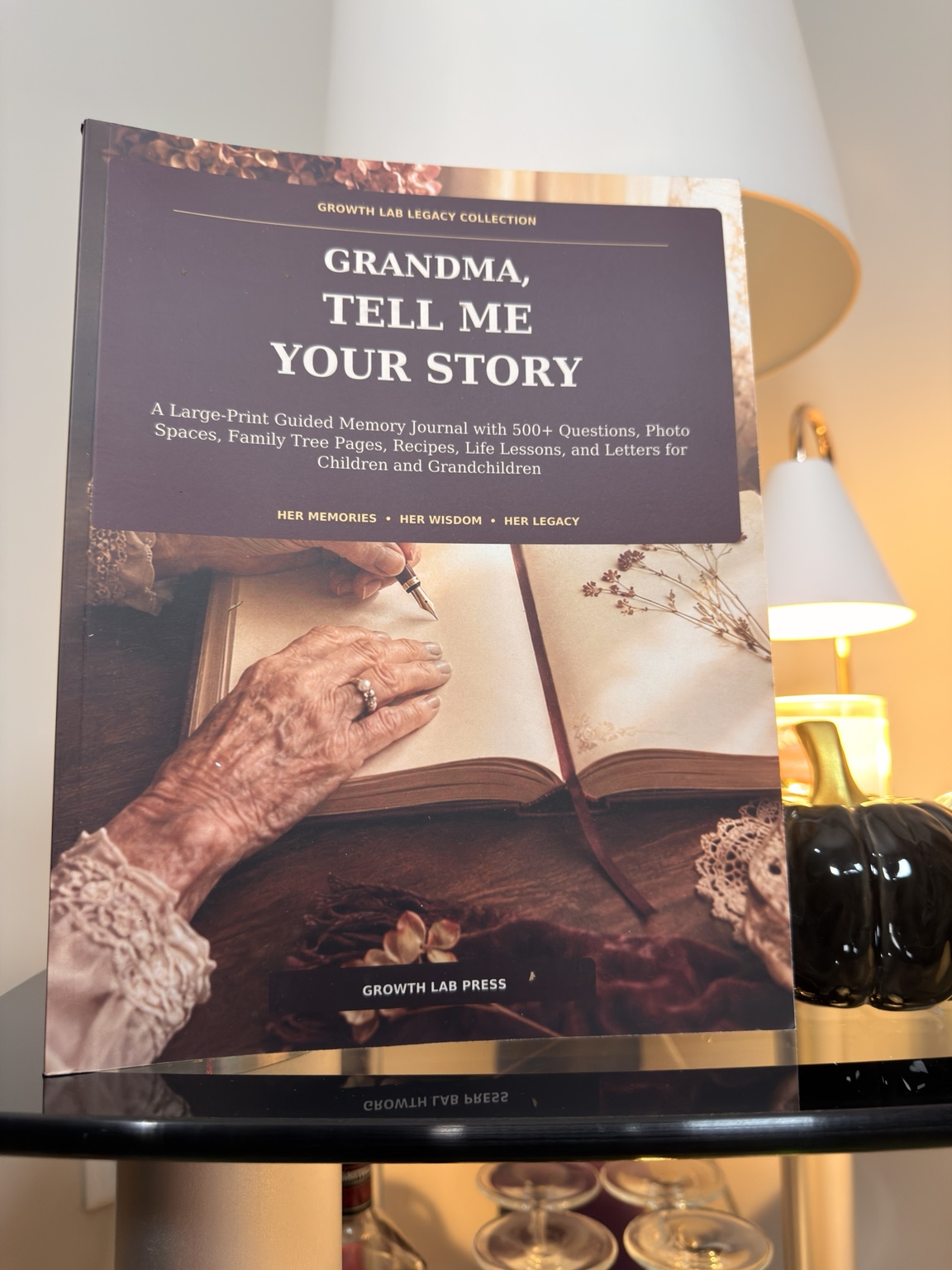
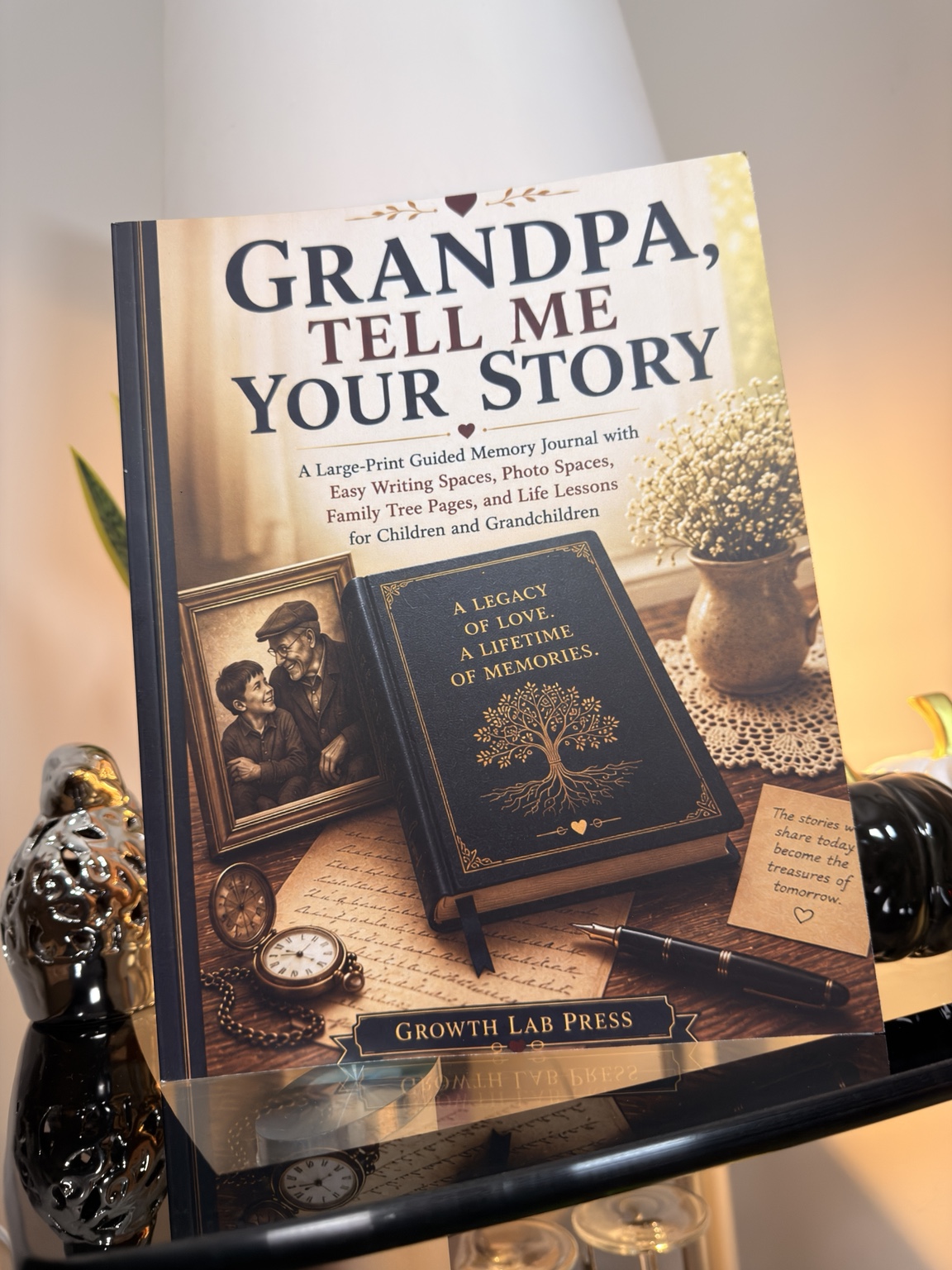
Grandma, Tell Me Your Story is a large-print guided memory journal with 531 questions, photo spaces, family tree pages, recipes, life lessons and letters. Grandpa, Tell Me Your Story is a guided keepsake journal for preserving memories, milestones, family traditions and hard-earned wisdom. Both are listed in paperback and hardcover formats.
Use the books for writing or as conversation guides. If a grandparent prefers speaking, a relative can ask the questions, take notes and add the answers with permission.
Common questions
How many questions should I ask in one visit?
Start with three to five. One detailed story is more useful than rushing through all 15 questions.
What if my grandparent does not remember exact dates?
Record an approximate period, such as ‘during primary school’ or ‘in the late 1950s,’ and verify details later only if the family needs them.
Should I record the conversation?
Only with permission. Explain how the recording will be used, choose a quiet place, test the device and keep clear notes with the file.
How is this different from recording a family recipe?
These questions focus on people, routines, places and traditions around meals. A recipe may appear, but exact ingredients and instructions are not required.
Sources and further reading
Published by Growth Lab Press. Read our editorial standards.