Family stories
15 Questions to Ask Grandparents About Their First Home as an Adult
Use 15 open questions to ask grandparents about their first home as an adult, from moving day and household routines to neighbours and new independence.
Why ask about a first home as an adult?
A first home can connect stories about work, relationships, money, household skills, neighbourhoods and the first decisions a person made away from the home where they grew up. The interesting part may not be the building itself. It may be the people who shared it, the journey there or the feeling of beginning a new stage of life.
Do not assume the home was owned, private or shared with a spouse. It might have been a rented room, boarding house, apartment with friends, a relative’s household, student residence, military accommodation or a house of their own. Let your grandparent name the place in the way that feels accurate.
The Library of Congress describes oral history as learning about the past through interviews with people who experienced it. Its family-story guide recommends short questions that cannot be answered only with yes or no. Choose three to five questions for one conversation and follow the details that matter to your grandparent.
Questions about finding the place and moving in
Begin with how the move happened. These prompts work whether the place was near the family home or in a different region or country.
- 1. What was the first place you considered your own home as an adult, and what kind of place was it?
- 2. Where was it, in general, and what was the surrounding area like then?
- 3. What led you to move there at that point in your life?
- 4. How did you find the place, and who helped you decide it was suitable?
- 5. What do you remember about moving day and the belongings you brought with you?
Questions about the rooms and daily routine
Invite a picture of ordinary life. Small details about furniture, cooking and chores can make the story understandable to relatives who never saw the home.
- 6. If you walked through the front door again, what would you see first?
- 7. Which piece of furniture, appliance or household object felt most important to you?
- 8. How did you cook, heat the home, do laundry and manage other everyday chores?
- 9. What was your usual routine when you returned home from work, study or daily errands?
- 10. What did you learn to do for yourself there that had been new to you?
Questions about people and memorable moments
Finish with the people, challenges and feelings attached to the place. Let your grandparent skip a question if the period was difficult or private.
- 11. Who lived with you or visited often, and what do you remember about them in that home?
- 12. What were the neighbours or local community like?
- 13. What was the first meal, celebration or gathering you remember having there?
- 14. What problem or surprise did the home give you, and how did you handle it?
- 15. When you think about that home now, what did it mean to you and what detail should the family remember?
Use follow-up questions to rebuild the scene
After an answer, ask for one concrete detail: ‘Who was there?’, ‘What happened next?’, ‘How did the room look?’, ‘What could you hear outside?’ or ‘How did you feel that day?’ The National Museum of African American History and Culture recommends open questions and follow-ups that invite sensory descriptions.
If your grandparent mentions an object, ask where it came from and whether it travelled to a later home. If they name a neighbour, roommate or relative, ask what that person was like. If a move involved a long journey, ask how they travelled and what they carried.
Avoid turning the conversation into a property questionnaire. Exact prices, addresses and dates may be forgotten or private. An approximate neighbourhood, year or life stage is enough for a family story unless your grandparent wants to research the details later.
Record the story with permission and context
Explain why you want to record or take notes and who may hear or read the result. Ask permission before starting. A person can agree to tell a story without agreeing to have their voice, photograph or address shared beyond the family.
The Library of Congress guide recommends a quiet location, tested equipment and an opening that identifies the date, place, interviewer, interviewee and topic. It also advises encouraging the speaker without interrupting and taking notes while recording when possible.
The Smithsonian museum’s family oral-history guidance emphasizes trust, open-ended questions, careful notes and a backup copy after the interview. Give the file a clear name such as ‘Grandpa-first-home-interview-2026-11-07’ and keep a short note with approximate dates, names and places mentioned.
Turn the answers into a one-page home story
Choose a working title such as ‘My first room in the city’ or ‘The apartment above the shop.’ Add the speaker’s name, the approximate year, the general location and the people who lived there. Then write two or three short paragraphs: how the place was found, what daily life looked like and one memorable event.
Add a photograph only with permission. If there is no picture of the home, use a labelled image of a meaningful object, a simple hand-drawn floor plan or a map showing the town rather than a precise private address.
Read the draft back to your grandparent. Invite corrections, preferred spellings and one final detail. Keep their wording where possible so the page sounds like the person who told the story.
Use a guided journal for the next chapter
Our life-story questions guide offers more prompts about childhood, family, work, turning points, traditions and everyday life. The family-story-journal guide explains how to compare question range, readability, writing space and the recipient’s preferred way to participate.
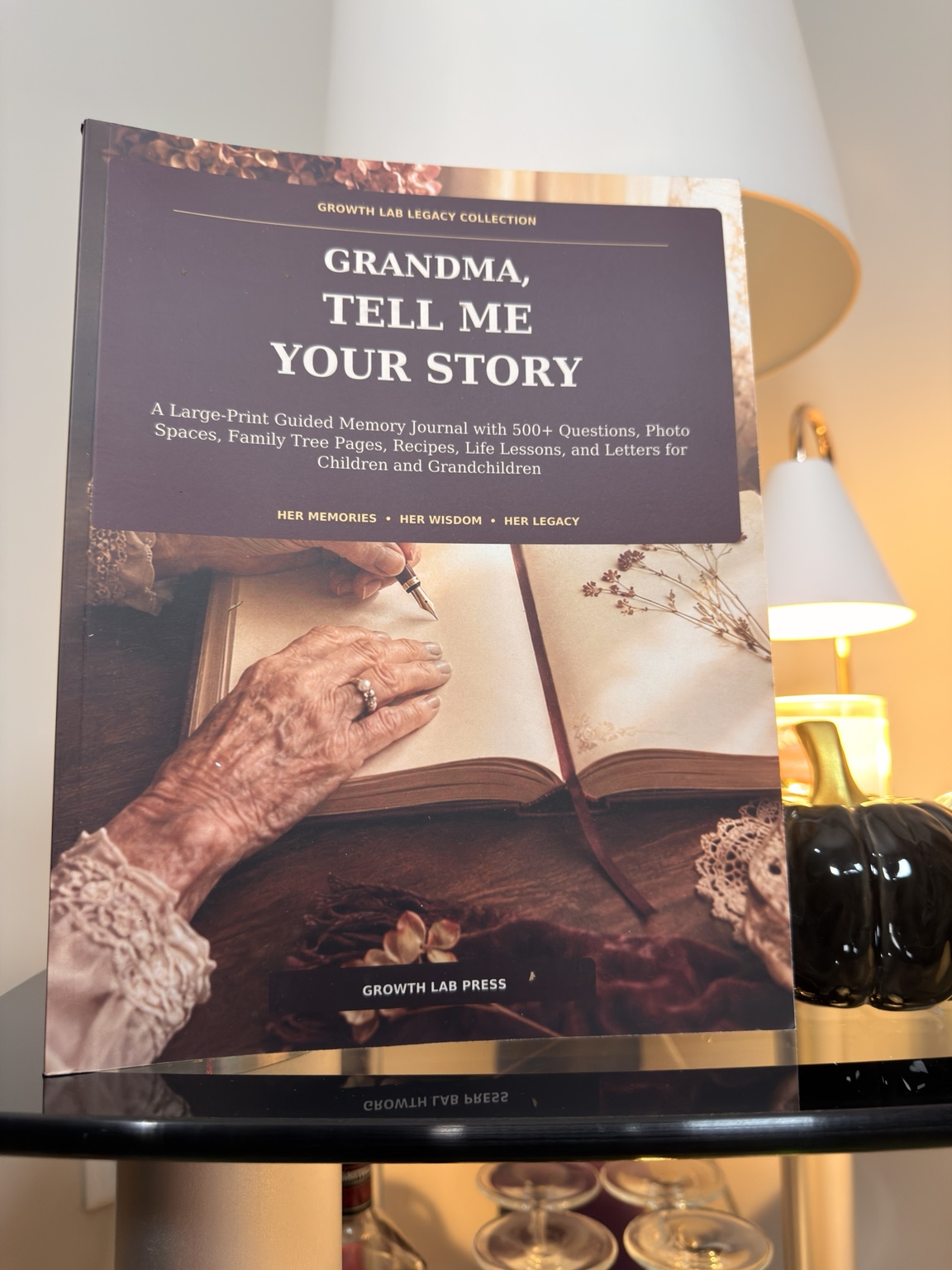
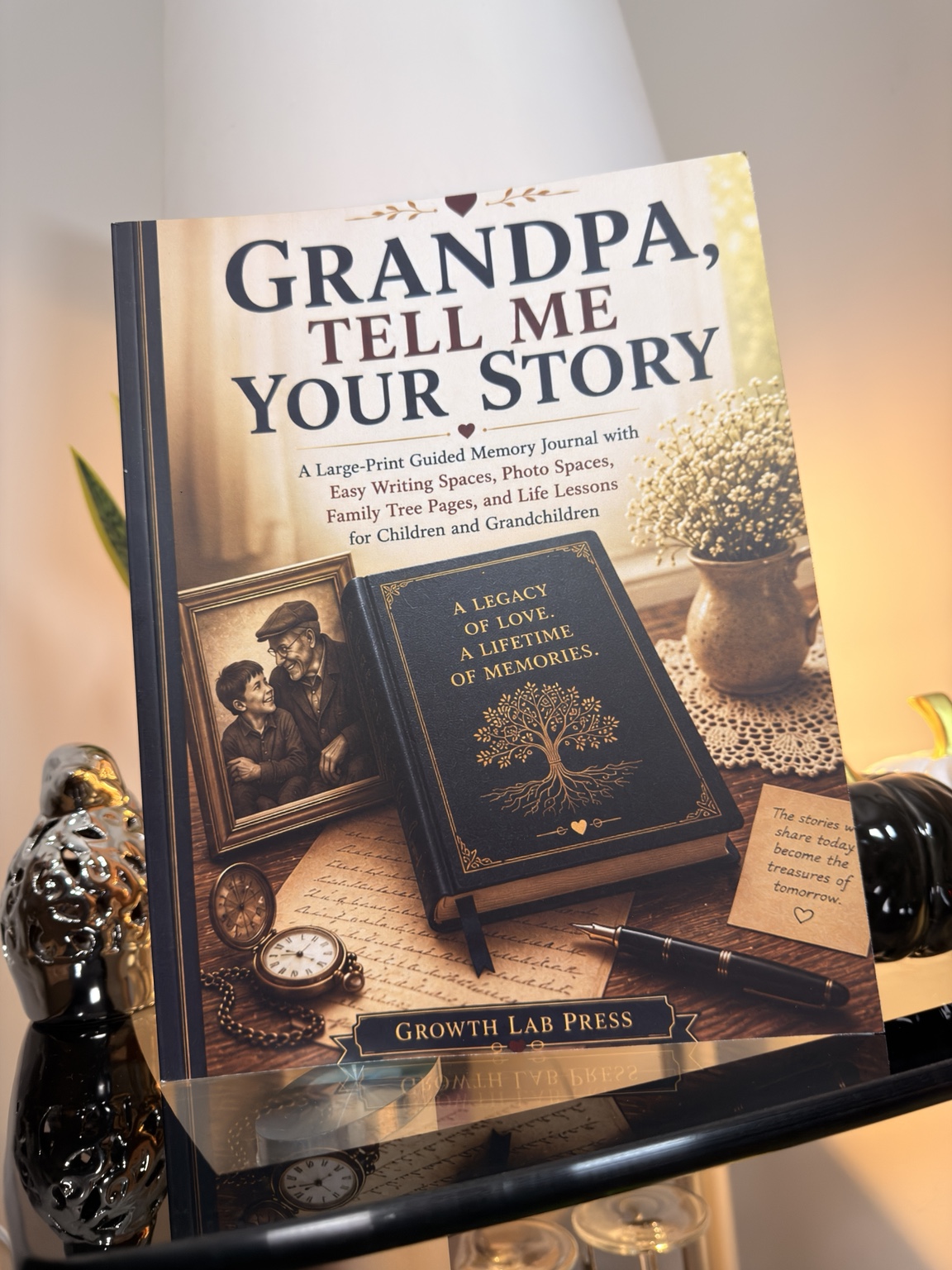
Grandma, Tell Me Your Story is a large-print guided memory journal with 531 questions, photo spaces, family tree pages, recipes, life lessons and letters. Grandpa, Tell Me Your Story is a guided keepsake journal for preserving memories, milestones, family traditions and hard-earned wisdom. Both are currently listed in paperback and hardcover formats.
Use a journal for writing or as a conversation guide. If speaking is easier, a relative can ask a few questions, take notes and add the answers with permission.
Common questions
What counts as a grandparent’s first home as an adult?
Use the place your grandparent considers their first adult home. It could be a rented room, shared apartment, relative’s household, residence, military quarters or purchased house.
How many questions should I ask in one conversation?
Start with three to five. Follow one detailed memory rather than rushing through all 15 questions.
What if my grandparent does not remember the exact address or year?
Record an approximate town, neighbourhood or life stage. Exact details can be checked later if they matter and your grandparent wants to research them.
Should I ask how much the home cost?
Only if your grandparent is comfortable discussing it. The story can focus on finding the place, daily life and what the home meant without including private financial details.
Sources and further reading
Published by Growth Lab Press. Read our editorial standards.