Family storytelling
How to Write Family Photo Captions With Grandparents
Turn one family photograph into a useful record with a six-part caption template, gentle questions and examples for uncertain names and dates.
Start with one photo, not the whole album
Ask your grandparent to choose a photograph they would enjoy discussing. A recent family meal is as welcome as an old school picture. Set the rest aside so the visit does not become an obligation to identify every face.
Use a digital copy or a replacement print for the conversation where possible. Keep your notes on separate paper. The U.S. National Archives advises keeping food and drink away from original photographs, avoiding contact with the image surface and never repairing prints with tape or glue. Its preservation guide is linked below.
Open with an invitation: What would you like someone in our family to know about this picture? If the answer leads to a different story, follow it. You do not need to complete a checklist during one visit.
Use this six-part family photo caption template
Give the image a simple reference such as Family-photo-001. Put the same reference on your separate notes and the digital copy's filename. Then fill in the fields below. Leave a field blank or mark it unknown when nobody knows the answer.
Use full names in the private family record when people agree. A relationship alone, such as Uncle, leaves later readers wondering whose uncle you mean. Before sharing the caption outside the family, agree on which names and details to include.
- People: names and positions, reading from left to right. Identify each row separately in a group picture.
- Place: the location you know, from a room or garden to a town. Do not add an address from a guess.
- Date: an exact date if known, an estimated year or range if not, or date unknown.
- Occasion: what was happening, followed by one detail the storyteller wants to keep.
- Source: who identified the image, when you spoke and any existing writing on the photo enclosure.
- Uncertainty and sharing: unresolved details, differing recollections and permission to share the story.
A worked example: from Summer visit to a useful caption
The following example is fictional. It demonstrates the template and is not a customer story or a sample from one of our books.
Family-photo-001. Left to right: Ruth, her brother Peter and their neighbour, whose name is unknown. In the garden behind Ruth's childhood home. Probably summer 1964 or 1965. Ruth remembers Peter bringing the folding chairs outside for a family visit. Identified by Ruth during a conversation on 24 September 2026. The date is an estimate. Keep the caption within the family for now.
This caption separates an identification from an estimate. It also keeps an ordinary detail about the chairs. There is no need to supply the neighbour's name or select a single year to make the record look finished.
Ask questions without turning the visit into a quiz
Offer one question at a time and leave room for the person to answer in their own way. Try the questions below as invitations, not a test of recall. If someone would rather describe the clothing or the room than name the people, record those observations instead.
If the image brings up an unwelcome subject, put it aside. Ask before recording audio. Offer to take notes yourself if your grandparent prefers talking to writing, then read the caption back for their approval.
- What do you notice first when you look at this picture?
- What would you like me to write about the people here?
- Is there a story behind an object, outfit or place in the photograph?
- Which details feel certain, and which should we leave open?
- Would you like this story kept private or shared with particular relatives?
Keep unknown details and different memories visible
Use wording such as date unknown, believed to be 1970 or location suggested by Maria. Do not convert probably into a fact when you tidy the notes. If two relatives remember different places, keep both accounts with their names rather than deciding who is right during the visit.
Create a short follow-up list on a separate page: check the album's existing caption, ask another relative about the location, or compare a dated invitation. Keep the current caption useful even if none of those questions gets answered.
If a detail changes later, add a dated correction and retain the earlier note. This is a suggested family-record method, not a requirement to conduct formal historical research.
Keep the caption connected to its photograph
Save the caption beside the digital image using a matching reference, for example Family-photo-001.jpg and Family-photo-001-notes.txt. For a printed copy, place the caption on the facing album page. These filename examples are an organizational suggestion, not a complete digital backup plan.
Avoid writing directly on a treasured original for this activity. The National Archives notes some paper photographs do not accept pencil and recommends labeling their enclosures instead. It also recommends using a reproduction for display to limit light exposure of the original. Consult the linked guide before handling fragile photographs.
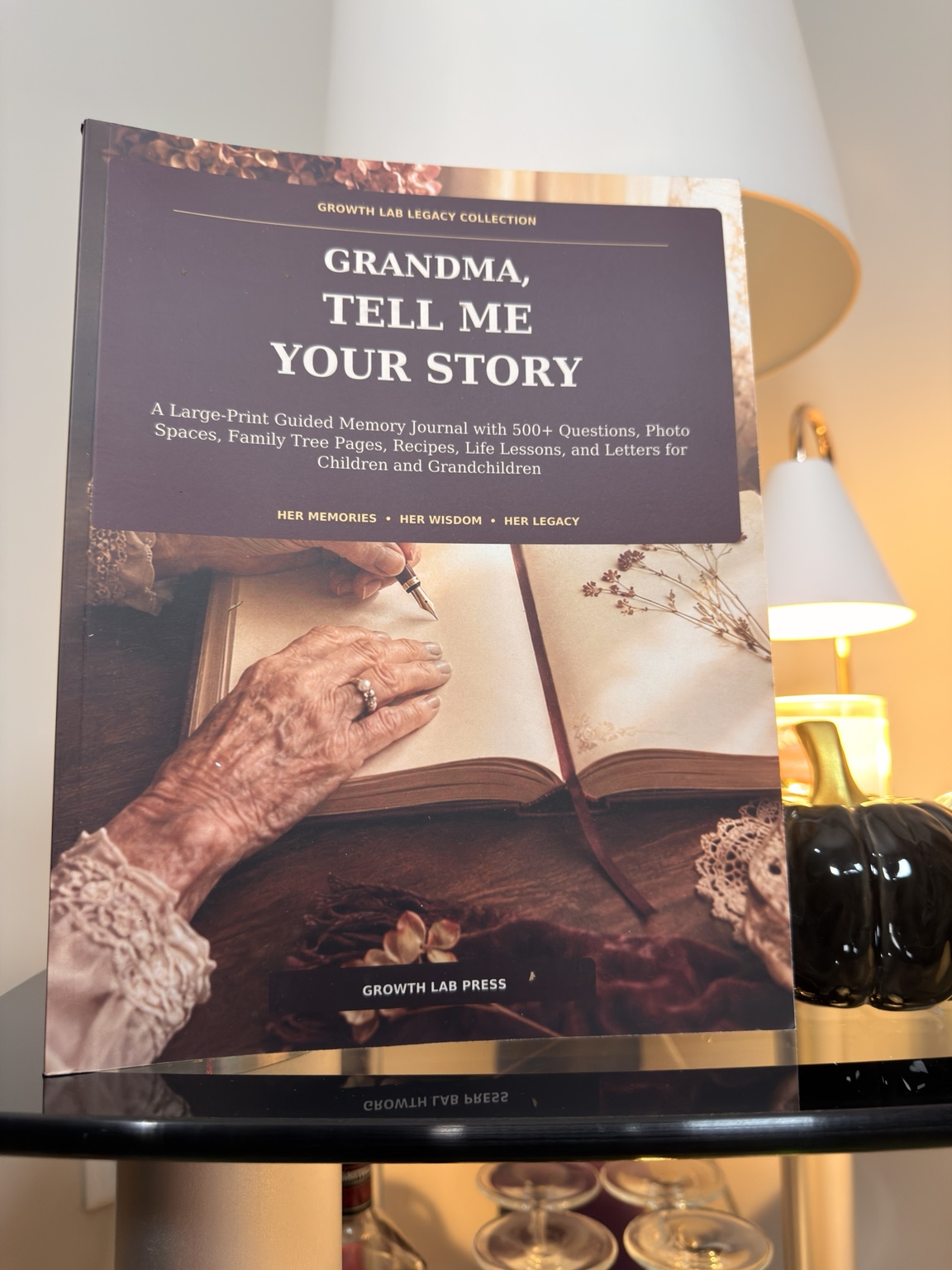
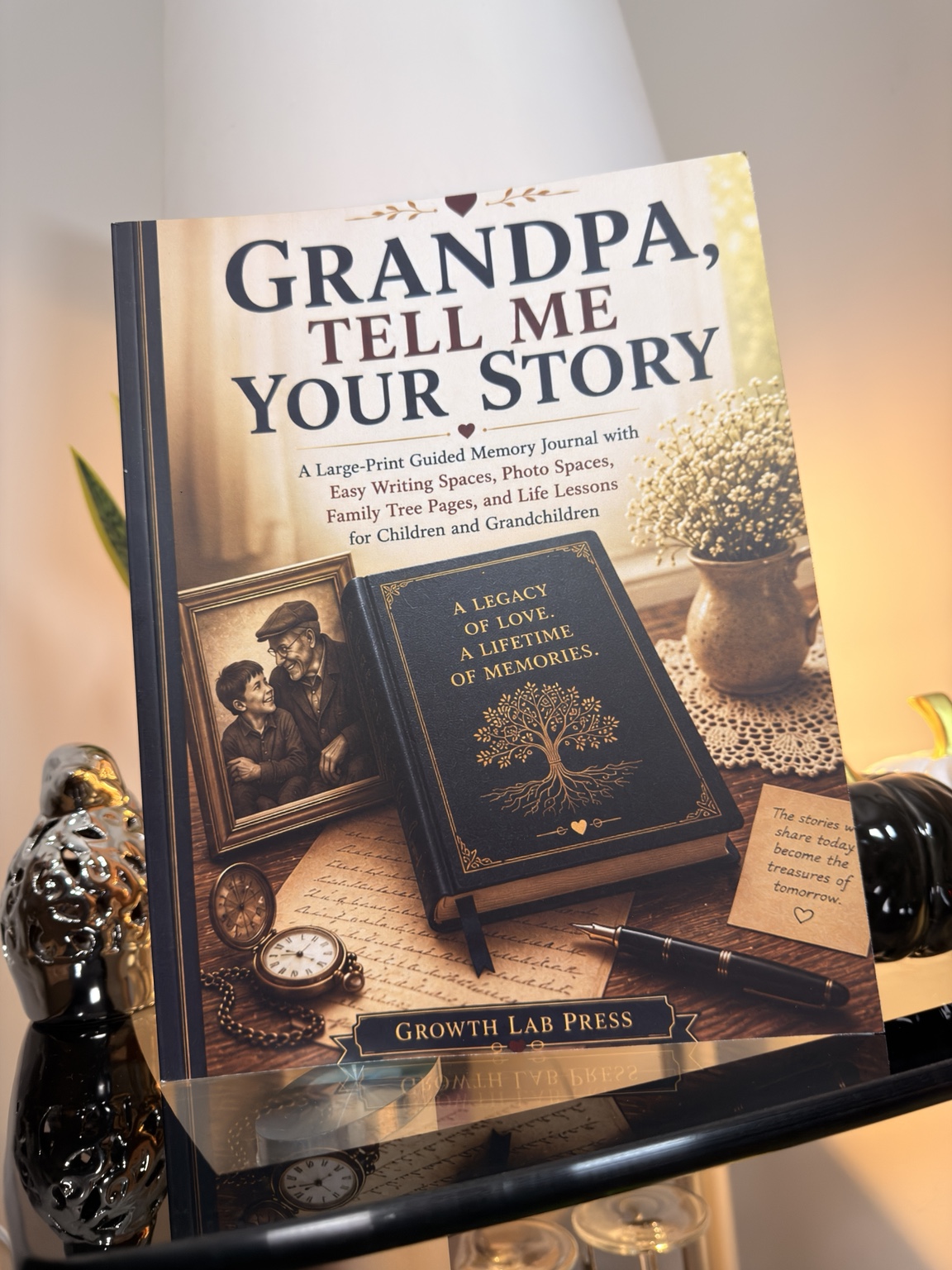
For a longer family keepsake, compare Grandma, Tell Me Your Story and Grandpa, Tell Me Your Story below. The Grandma edition includes photo and family-tree pages. The Grandpa edition provides guided questions about memories and family traditions. These are optional companions. The caption template above works on ordinary paper without buying a book.
Common questions
What should a family photo caption include?
Include the people, place, date or date range, occasion, person who supplied the information and any uncertainty. Add one story detail if the person wishes.
What if nobody knows the year?
Write date unknown or identify an estimated range explicitly. Record who suggested the estimate. Do not present clothing or appearance alone as proof of a year.
Do we need to scan an entire album first?
No. Start with one existing digital image or a photograph suitable for gentle handling. Leave fragile originals alone and consult the preservation guidance before attempting to copy them.
Should every family caption be shared online?
No. Agree with the people involved before sharing names, images or personal stories. A private family record is a complete and worthwhile outcome.
Sources and further reading
Published by Growth Lab Press. Read our editorial standards.