Activities for seniors
12 Compound Word Puzzles for Seniors, With Answers
Match word halves in 12 original compound word puzzles for seniors. Try three short rounds with clues, checked answers and a read-aloud option.
How to play the compound word matching game
Choose an ending from the word bank and add it after the starting word. Use each ending once within its round. Keep the letters in their original order. For a practice example, BED + ROOM makes BEDROOM. The 12 puzzles below use different words.
Merriam-Webster explains compounds have several written forms: a single word, a hyphenated form or separate words. This game uses single-word answers only. Its guide to compound spelling is linked in Sources and further reading.
Start with whichever round appeals to the player. Read the starting word and choices together, then use the clue if wanted. Open the answer panel after solving, or sooner if you prefer working through the solution together. These are original blog puzzles, not copied pages from the linked books.
Round 1: Familiar things at home
Choose from these endings: POT, COAT, MARK, BRUSH. Use each once. Each clue describes the completed word.
- 1. BOOK + ___ (clue: something placed between pages to keep your place).
- 2. TOOTH + ___ (clue: an item used to clean your teeth).
- 3. RAIN + ___ (clue: clothing worn to keep rain off your body).
- 4. TEA + ___ (clue: a vessel with a spout used to brew and pour tea).
Show answers or guidance
1. BOOK + MARK = BOOKMARK. 2. TOOTH + BRUSH = TOOTHBRUSH. 3. RAIN + COAT = RAINCOAT. 4. TEA + POT = TEAPOT.
Round 2: Outdoors and at the doorstep
Choose from these endings: FISH, MAN, BELL, PRINT. Keep this bank separate from Round 1. Use the clue to select the intended answer, even if another combination also looks like a word.
- 5. FOOT + ___ (clue: a mark left by a foot or shoe on the ground).
- 6. DOOR + ___ (clue: something a visitor rings to announce their arrival).
- 7. STAR + ___ (clue: the familiar name for a star-shaped sea creature).
- 8. SNOW + ___ (clue: a figure built from snow, often with a carrot nose).
Show answers or guidance
5. FOOT + PRINT = FOOTPRINT. 6. DOOR + BELL = DOORBELL. 7. STAR + FISH = STARFISH. 8. SNOW + MAN = SNOWMAN. FOOTMAN is also a word, but it does not fit the clue for number 5.
Round 3: Breakfast and a quiet morning
Choose from these endings: HOUSE, PAPER, CAKE, CHAIR. Use each once. Try covering the clues first if you would like fewer hints, then uncover one whenever needed.
- 9. PAN + ___ (clue: a flat food cooked from batter and often served with syrup).
- 10. ARM + ___ (clue: a seat with side supports for your arms).
- 11. NEWS + ___ (clue: a printed publication containing reports and articles).
- 12. BIRD + ___ (clue: a small nesting shelter put up for birds).
Show answers or guidance
9. PAN + CAKE = PANCAKE. 10. ARM + CHAIR = ARMCHAIR. 11. NEWS + PAPER = NEWSPAPER. 12. BIRD + HOUSE = BIRDHOUSE.
Play without a worksheet or pen
For a read-aloud version, offer one starting word with two possible endings. Try: Does BOOK go with MARK or COAT to make something which keeps your place in a book? Repeat the choices when asked. There is no requirement to hold all four endings in mind.
Take turns asking and answering. In a group, invite people to solve a round together or let each person pass. Agree whether players want hints before offering them. An adult who enjoys a harder puzzle might prefer the full bank without clues, while another player might prefer hearing the complete answer first and repeating the two parts.
If a different answer fits the clue, discuss it rather than treating the printed solution as a test of the person. For these matching rounds, also check whether the unused endings still fit the remaining clues. Stop after a single pair if everyone prefers moving on.
Make a clear paper version
Copy one round onto a plain page. Put the four endings at the top and each numbered puzzle on its own line. Leave a blank line between questions. Choose a text size the reader finds comfortable and check one page before preparing more.
Keep the answer key on a separate sheet. For pointing instead of writing, copy the four endings onto separate paper cards and place them beside the questions. Move each selected card next to its starting word so the completed pairs remain visible.
To continue with conversation, choose one solved word. TEAPOT might lead to a question about a favourite cup. NEWSPAPER might lead to a choice between reading local news or the puzzles page. These are optional conversation prompts, with no answer key.
Choose a workbook for more activity variety
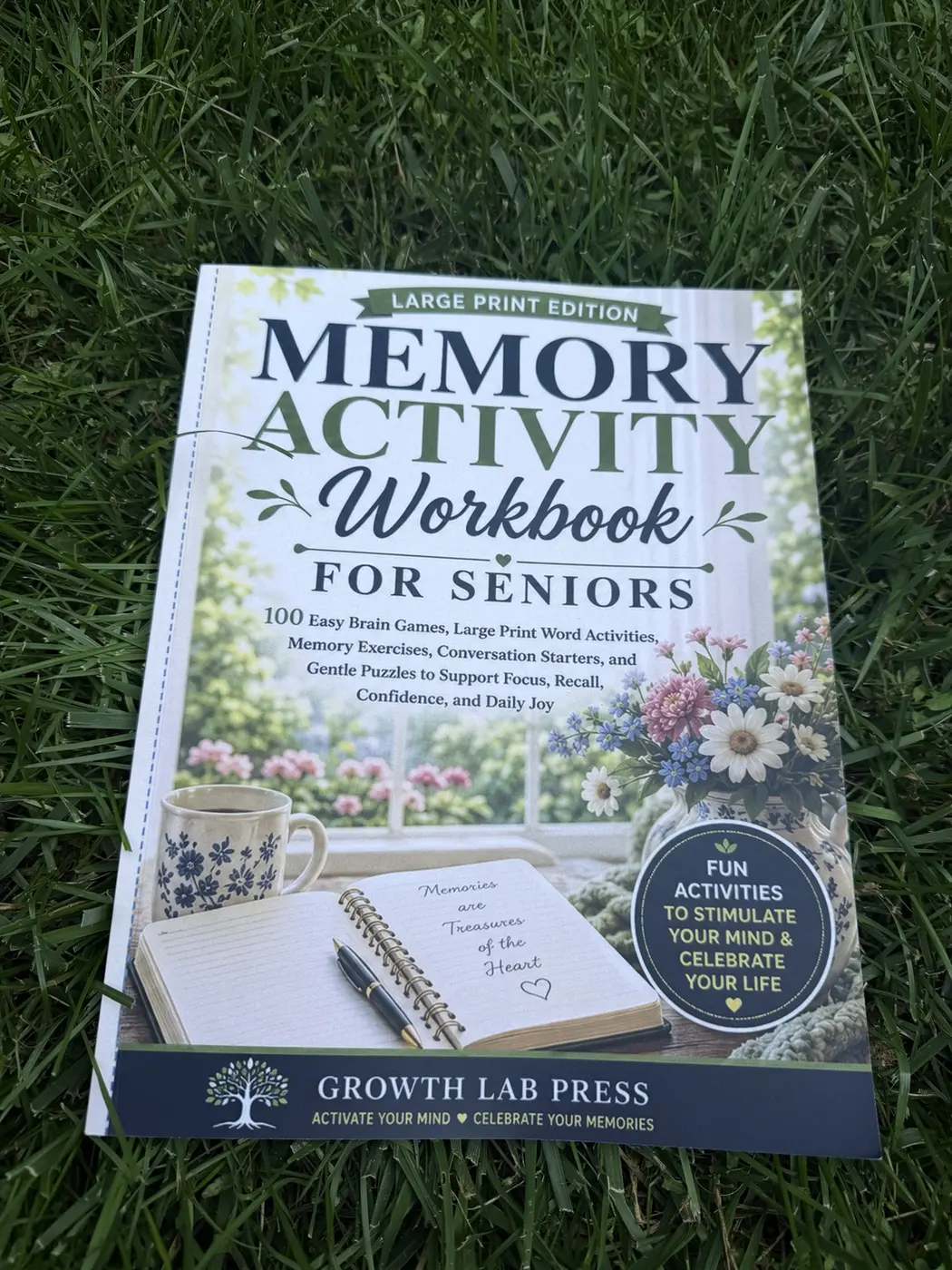
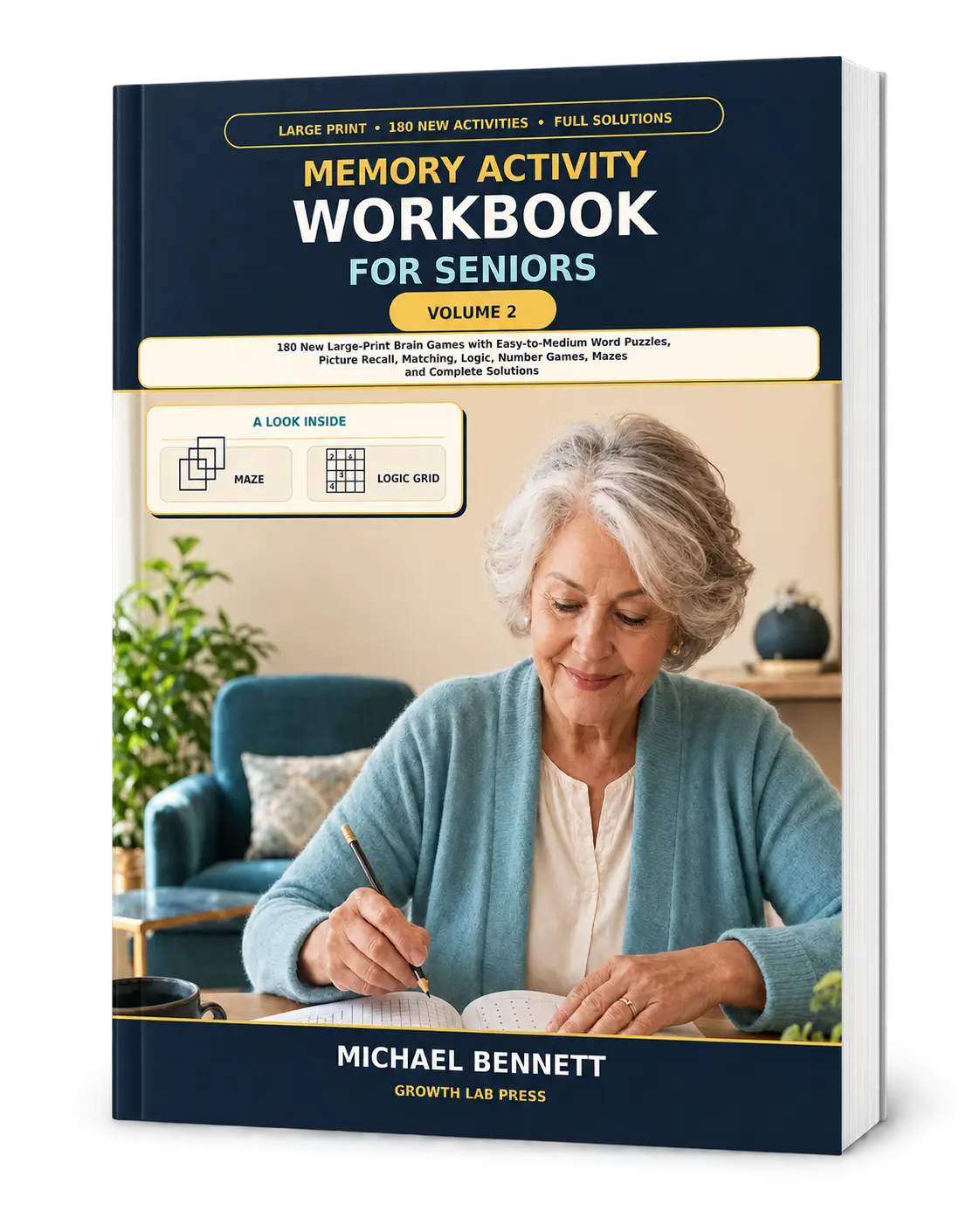
For prepared pages, the Memory Activity Workbook for Seniors includes word games, everyday prompts and conversation starters. Volume 2 offers 180 large-print activities across word, number, matching, visual, logic, planning and maze tasks, with complete solutions. Both books are by Michael Bennett.
Use the book links below to inspect the sample pages before choosing. Compare the instructions, print size and amount of writing with the way you enjoyed playing here. The related reader guides explain what to check when selecting a large-print activity book.
These compound word rounds are free to use from this article. They are recreational examples, not a promise of a health outcome or a claim about the exact puzzles inside either workbook.
Common questions
What is a compound word game?
In this version, you match a starting word with an ending to form a familiar single word. Each round provides four choices, clues and an answer panel.
Does the player need to write the answers?
No. Say an answer aloud, point to an ending or move a paper word card. Another person is welcome to read the choices.
How do I make a round easier or harder?
For more support, read the clue and offer two endings. For fewer hints, cover the clues and use the full four-word bank. Let the player choose.
Are these puzzles included in the workbooks?
These 12 puzzles were written for this blog article. The linked book pages provide the actual samples for each workbook.
Sources and further reading
Published by Growth Lab Press. Read our editorial standards.