Activities for seniors
15 Easy Double-Meaning Word Puzzles for Seniors, With Answers
Try 15 double-meaning word puzzles for seniors, with familiar clues, checked answers, clear explanations and options for playing aloud.
How to play double-meaning word puzzles
Each puzzle gives two definitions that lead to the same word. For example, a BRANCH can be part of a tree or a local office of a bank or company. Read both clues, name the shared word and then explain its two meanings.
The first round uses familiar things, the second mixes objects with actions, and the third places the answer in two sentences. Reveal the answer panel after each round or cover it until the end.
These fifteen puzzles were created for this article and are not sample pages from the linked Growth Lab Press books. There is no timer. A player may answer aloud, write, point to a word bank, request a hint or pass.
Round 1: familiar things with two meanings
Name the one word described by both parts of each clue.
- 1. Part of a tree; a local office of a bank or company.
- 2. A season of the year; a coiled piece of metal.
- 3. A kind of music; a large stone.
- 4. A flying animal; an item swung in baseball.
- 5. A fruit; a color.
Show answers or guidance
1. BRANCH: a tree branch and a branch office. 2. SPRING: the season and a metal spring. 3. ROCK: rock music and a stone. 4. BAT: the animal and a baseball bat. 5. ORANGE: the fruit and the color.
Round 2: an object and an action or idea
The answer may name an object in one clue and an action or event in the other.
- 6. Something you can read; to reserve a table or ticket.
- 7. A timepiece worn on the wrist; to look at something carefully.
- 8. A vessel used for cooking; to move a camera from side to side.
- 9. A fruit drink served from a bowl; a hit made with a fist.
- 10. A small animal; a device used with a computer.
Show answers or guidance
6. BOOK: read a book and book a table. 7. WATCH: wear a watch and watch carefully. 8. PAN: cook in a pan and pan a camera. 9. PUNCH: drink fruit punch and throw a punch. 10. MOUSE: the animal and the computer device.
Round 3: one word completes both sentences
Fill both blanks in each numbered pair with exactly the same word.
- 11. She deposited the cheque at the ___. They sat on the river ___.
- 12. Use a ___ to hold the papers together. Save a short video ___.
- 13. Turn on the ___. This suitcase feels ___.
- 14. Our hotel ___ faced the garden. There is ___ for one more chair.
- 15. The team walked onto the baseball ___. History is her chosen ___ of study.
Show answers or guidance
11. BANK: a financial institution and the land beside a river. 12. CLIP: a paper fastener and a short piece of video. 13. LIGHT: illumination and not heavy. 14. ROOM: a part of a building and available space. 15. FIELD: a sports area and an area of study.
Check both meanings, not only the word
After an answer, ask the player to use the word in two short sentences. ‘I read a book’ and ‘I will book a table’ show the two meanings more clearly than repeating the answer alone.
Some meanings are related. A hotel ROOM and having ROOM for a chair both involve space, but one names an enclosed part of a building while the other means available space. Other pairs, such as a flying BAT and a baseball BAT, are clearly separate meanings.
If another word seems to fit, test it against every detail in both clues. Accept it when both meanings work naturally. Otherwise, add the first letter or one example sentence to point toward the intended answer.
Make the puzzles easier or more challenging
For an easier version, offer two choices: ‘Is it branch or basket?’ You can also show five answer cards for one round and let the player match each card to its clue. Give the first sound if another hint is useful.
For more challenge, read only the first definition and ask for the word’s second meaning after the answer. Another option is to hide one sentence in round three and ask the player to create a new sentence that uses the word differently.
In a group, let one person read the clue, another answer and a third use the word in two sentences. Switch roles between puzzles. Anyone may pass, ask for a choice or simply listen.
Create a new double-meaning puzzle
Start with an everyday word such as RING, PARK or KEY. Write its two meanings separately before turning them into a clue. For RING, you might write: ‘Jewelry worn on a finger; the sound a telephone makes.’
Keep each definition specific enough to identify the intended word. ‘Something round’ would be too broad for RING, while ‘jewelry worn on a finger’ gives a useful path. Read the finished clue aloud and check that both parts use the same spelling.
For a family version, choose a word connected to a shared story. PARK could lead to a conversation about a favorite park after the puzzle is complete, but the story invitation remains optional.
Prepare a clear large-print page
Place one two-part clue on each line, keep the number close to its clue and leave generous space between puzzles. Put the answer key on a separate page so it does not distract from the clues.
RNIB explains that large print is generally 16 to 18 point, while individual readers may prefer another size. Print one sample and ask whether the type, spacing and contrast feel comfortable before preparing the full set.
If a printed page is not comfortable, play aloud. Read the first definition, pause, then read the second. Repeat both meanings after revealing the answer.
Choose more word activities by style
Our guide to large-print activity books explains how to compare readability, page layout and activity style. The book-selection guide helps families choose among word activities, trivia, matching tasks and conversation prompts.
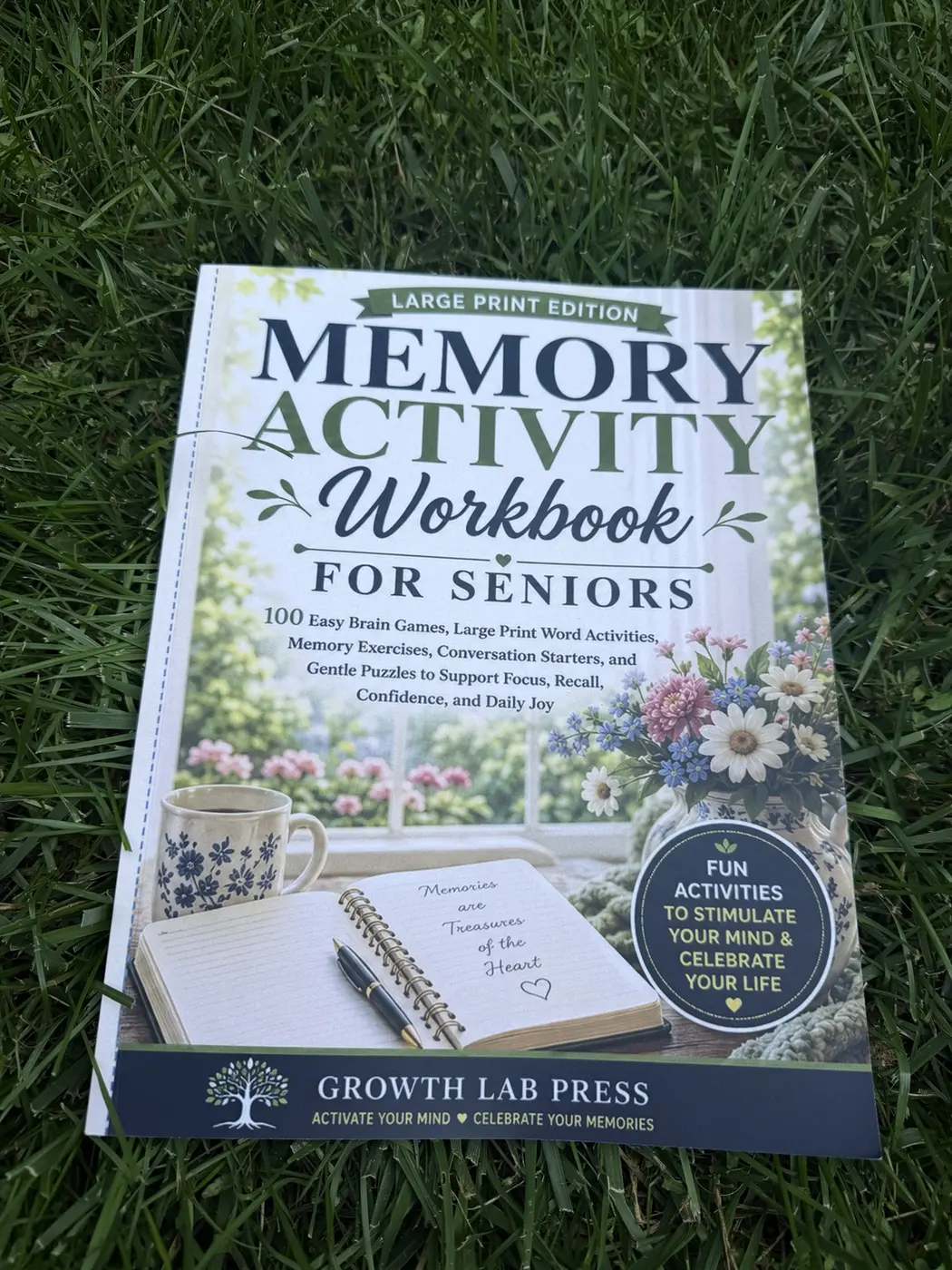
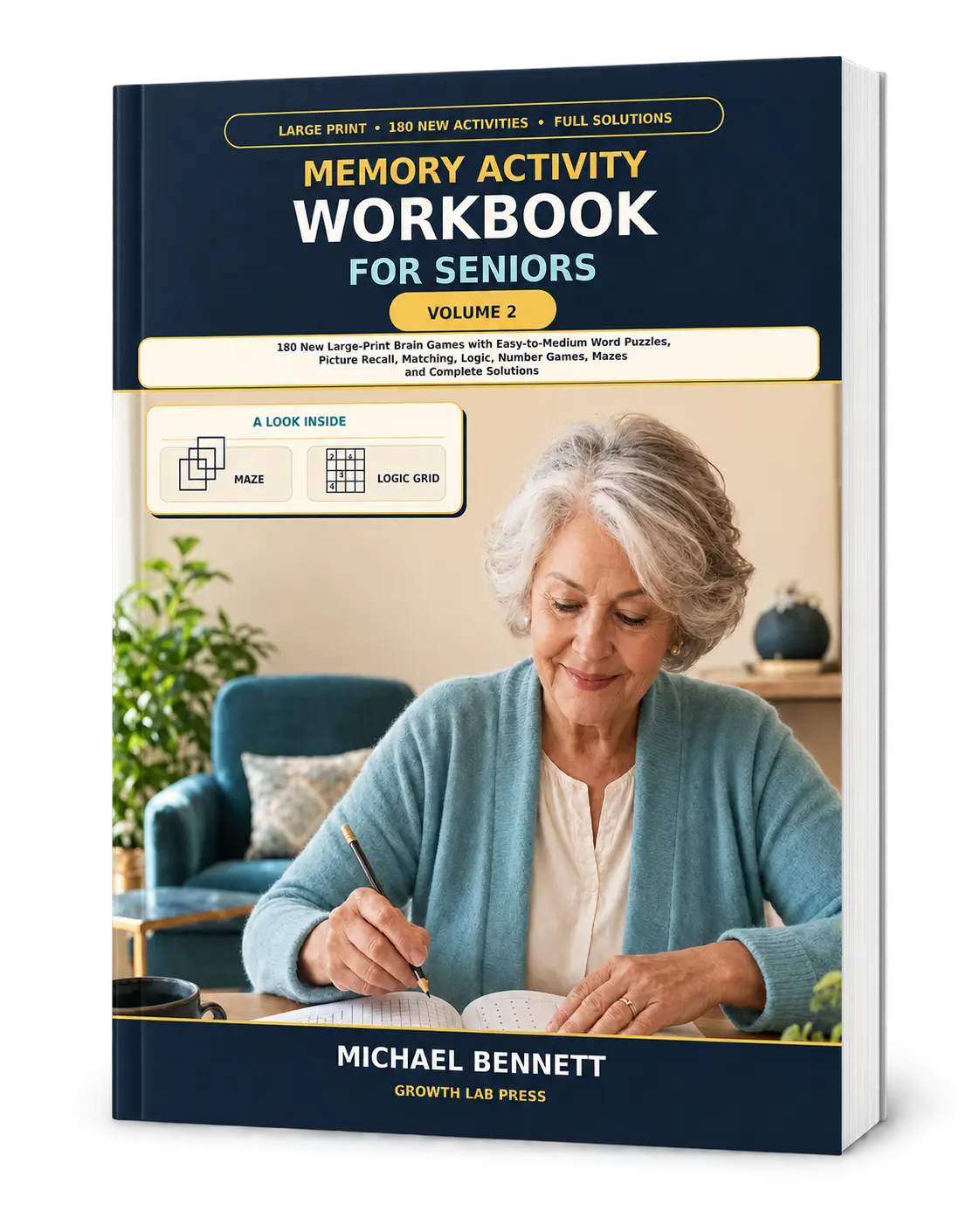
Memory Activity Workbook for Seniors includes large-print memory recall activities, word games, everyday prompts, conversation starters and reflection pages. Memory Activity Workbook for Seniors, Volume 2 contains 180 large-print word, number, matching, visual, logic, planning and maze activities with complete solutions.
The linked product pages show the current book details. These fifteen double-meaning puzzles remain a separate free activity created for this blog.
Common questions
What is a double-meaning word puzzle?
It gives two different definitions that share one answer, such as a tree branch and a branch office. The player finds the word and explains both meanings.
Are double-meaning words the same as homophones?
Not in this activity. Every answer keeps the same spelling, such as BOOK or WATCH. Homophones can sound alike while using different spellings, such as pair and pear.
How can I make these word puzzles easier?
Offer two choices, give the first sound, show an answer card or put the word into one sentence. Use five puzzles at a time rather than all fifteen.
Can double-meaning puzzles be played without writing?
Yes. Read both definitions aloud and let the player say an answer, point to a word card or ask for a hint.
Sources and further reading
Published by Growth Lab Press. Read our editorial standards.