Activities for seniors
15 Which One Doesn’t Belong Puzzles for Seniors, With Answers
Try 15 which-one-doesn’t-belong puzzles for seniors, with clear word groups, checked answers, reasons and simple options for playing aloud.
How to play which one doesn’t belong
Read the four items in one set. Choose the item that does not belong with the other three and explain why. For example, in APPLE, PEAR, BANANA and CARROT, the intended answer is CARROT because the other three are fruits.
A clear reason matters as much as the choice. Some groups can support a creative second answer, so the answer key gives the intended pattern rather than claiming that no other interpretation is possible.
These fifteen puzzles were created for this article and are not sample pages from the linked Growth Lab Press books. Start with one five-puzzle round, reveal its answers and continue only if the person or group wants more.
Round 1: familiar everyday groups
Choose the item that does not fit the everyday category shared by the other three.
- 1. APPLE — PEAR — BANANA — CARROT
- 2. ROBIN — SPARROW — EAGLE — SALMON
- 3. SPOON — FORK — PLATE — HAMMER
- 4. JANUARY — MARCH — MONDAY — OCTOBER
- 5. RED — BLUE — GREEN — CIRCLE
Show answers or guidance
1. CARROT: the others are fruits. 2. SALMON: the others are birds. 3. HAMMER: the others are used at the table for a meal. 4. MONDAY: the others are months. 5. CIRCLE: the others are colors.
Round 2: objects and categories
The intended answer in each set belongs to a different practical category.
- 6. BUS — TRAIN — BICYCLE — PILLOW
- 7. PIANO — VIOLIN — TRUMPET — REFRIGERATOR
- 8. OAK — PINE — MAPLE — TULIP
- 9. COTTON — WOOL — SILK — BRICK
- 10. BAKER — TEACHER — PILOT — BICYCLE
Show answers or guidance
6. PILLOW: the others are forms of transportation. 7. REFRIGERATOR: the others are musical instruments. 8. TULIP: the others are trees. 9. BRICK: the others are materials used to make fabric. 10. BICYCLE: the others are occupations.
Round 3: words, numbers and places
The final round uses a shared feature such as meaning, type of measurement or place category.
- 11. TWO — FOUR — SIX — NINE
- 12. NORTH — SOUTH — EAST — YESTERDAY
- 13. WHISPER — SHOUT — SPEAK — PURPLE
- 14. INCH — FOOT — MILE — TEASPOON
- 15. CANADA — BRAZIL — JAPAN — ATLANTIC
Show answers or guidance
11. NINE: the others are even numbers. 12. YESTERDAY: the others are compass directions. 13. PURPLE: the others describe ways of using the voice. 14. TEASPOON: the others measure length or distance. 15. ATLANTIC: the others are countries; the Atlantic is an ocean.
When another answer can also make sense
Odd-one-out games invite comparison, and language can support more than one pattern. In puzzle 3, someone might choose PLATE because the other three objects have handles. That is a valid observation even though HAMMER is the intended answer based on use at the table.
Ask, ‘What makes your choice different?’ If the explanation creates a consistent group of three, acknowledge it before sharing the answer key. This keeps the activity conversational instead of turning it into a rigid test.
When writing a new puzzle, choose the category first, select three clear members and add one item from a different category. Check whether an obvious second pattern changes the answer. If it does, revise one word or accept both reasons.
Make the puzzles easier or more challenging
For an easier version, name the category as a hint: ‘Three of these are months.’ You can also read two items at a time or let the player point instead of speaking. Repeat the full set whenever requested.
For more challenge, hide the category and ask for two different reasons. Puzzle 3 already supports this: HAMMER differs by purpose, while PLATE differs by shape and lack of a handle compared with the other three.
In a small group, let each person give a reason without voting on who is fastest. One reader can hold the answer key. Anyone may pass, request a hint or simply listen.
Prepare a comfortable printed page
Put one four-item set on each line, use strong contrast and leave generous space between puzzles. Keep the answer key on a separate page so it does not distract from the choices.
RNIB explains that large print is generally 16 to 18 point, while individual readers may prefer another size. Print one sample and ask the actual reader whether the type size and spacing are comfortable before preparing the full set.
If reading from paper or a screen is tiring, use the same puzzles aloud. Pause after all four words, repeat them slowly and provide the category as a hint without treating help as a penalty.
Choose more activities by the reader’s interests
Our guide to large-print activity books explains how to compare readability, page layout and activity style. The book-selection guide helps families choose among trivia, word activities, matching tasks and conversation prompts.
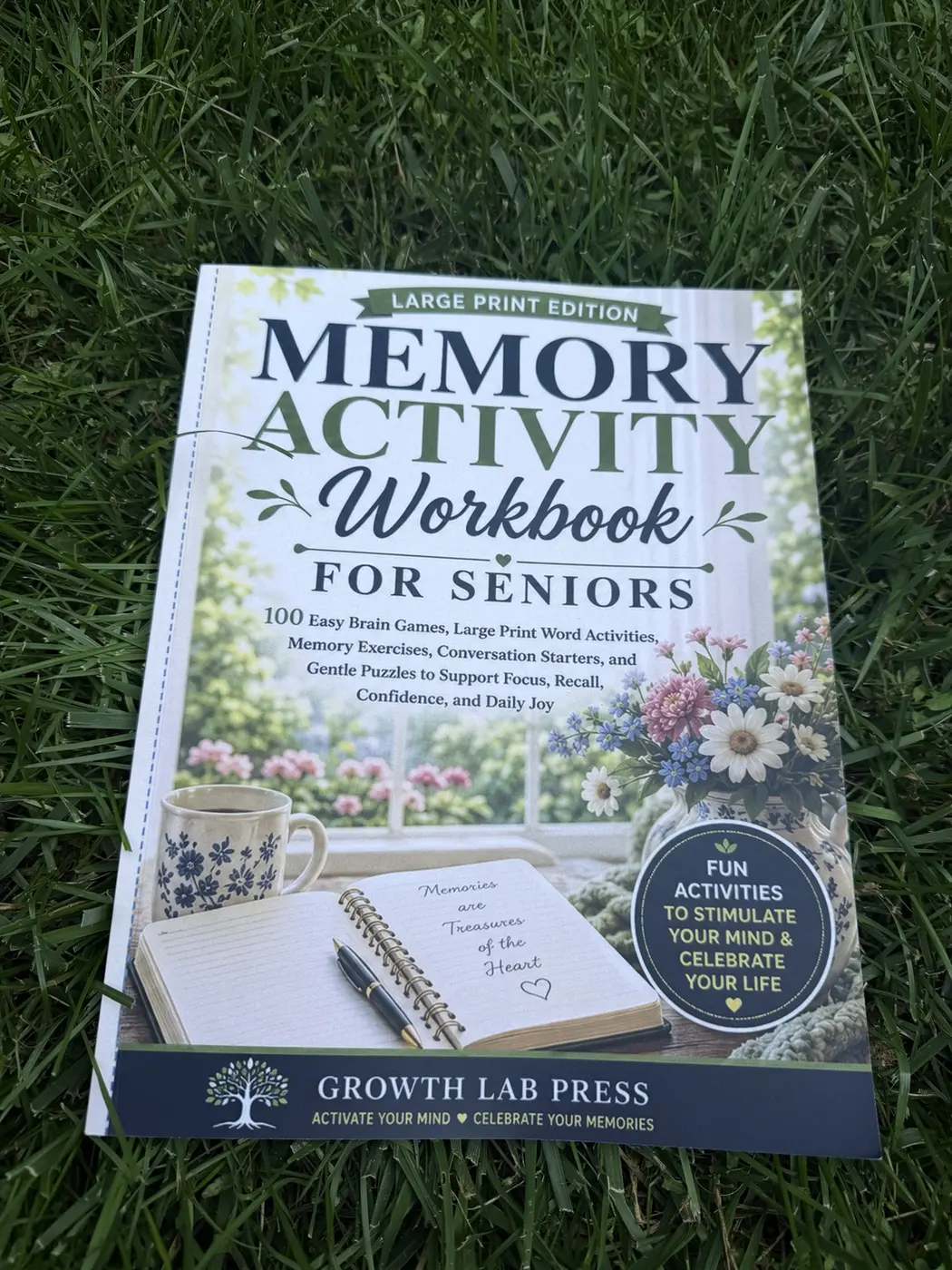
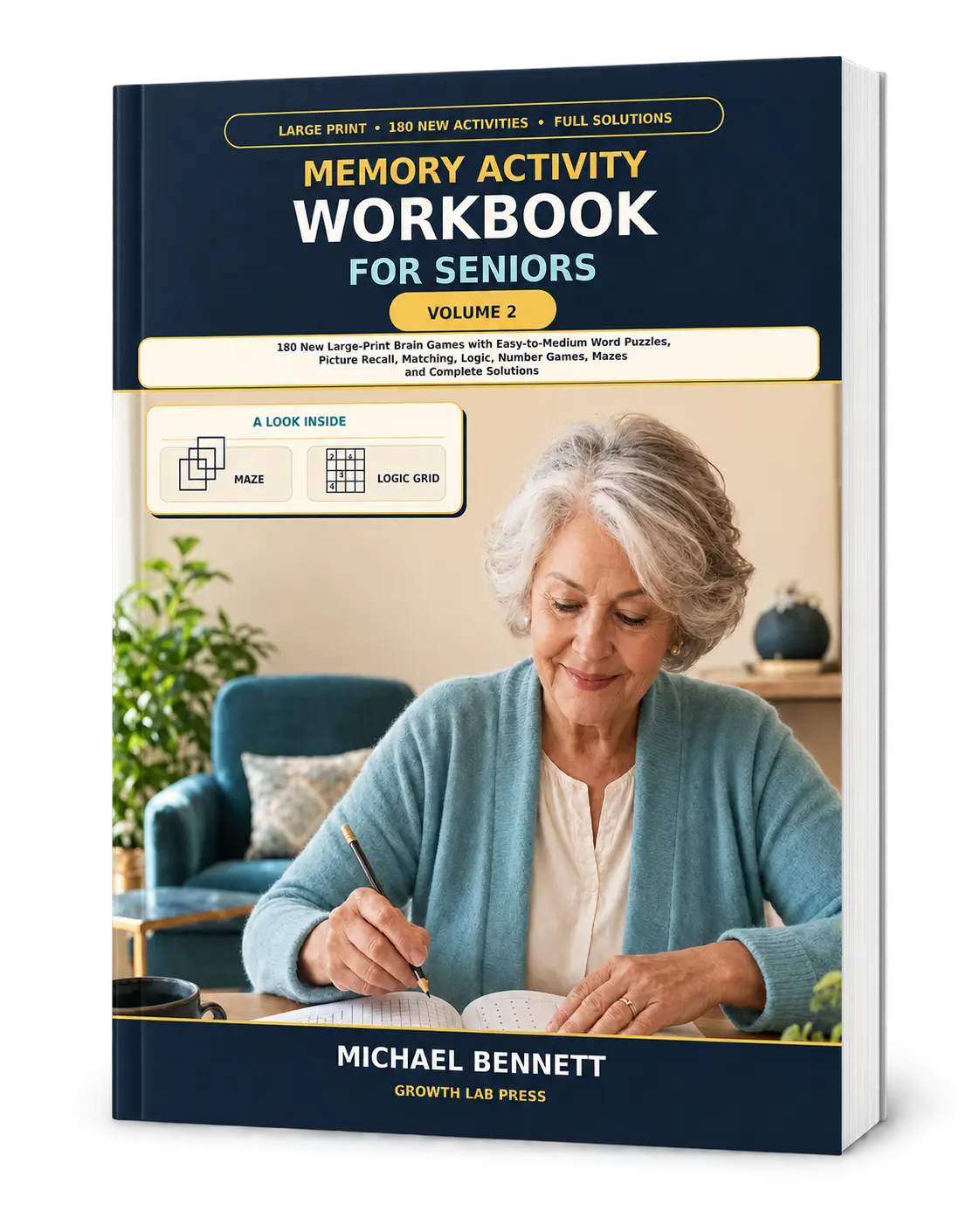
Memory Activity Workbook for Seniors includes large-print memory recall activities, word games, everyday prompts, conversation starters and reflection pages. Memory Activity Workbook for Seniors, Volume 2 contains 180 large-print word, number, matching, visual, logic, planning and maze activities with complete solutions.
The linked product pages show the current editions. These fifteen which-one-doesn’t-belong puzzles remain a separate free activity created for this blog.
Common questions
What is a which-one-doesn’t-belong puzzle?
It presents four items and asks the player to choose the one that does not share the main category or feature of the other three, then explain the reason.
Can a which-one-doesn’t-belong puzzle have two answers?
Yes. A different answer can be reasonable when it creates a consistent group of three. The answer key gives the intended pattern, but a clear alternative explanation can also be accepted.
How can I make odd-one-out puzzles easier?
Name the shared category, offer two choices, read the words slowly or let the player point. Begin with familiar groups such as fruits, birds, colors and months.
Can this activity be played without writing?
Yes. Read each set aloud and let the player say or point to a choice. Ask for a reason only if they want to explain it.
Sources and further reading
Published by Growth Lab Press. Read our editorial standards.