Activities for seniors
7 Easy Word Games for Seniors at Home, With Answers
Try seven easy word games for seniors with ready-to-use examples, answers and large-print setup tips for a relaxed afternoon or family visit.
Set up a comfortable word-game session
Ask which sounds more enjoyable: a word puzzle, a conversation or looking through a book together. An older adult who enjoys crosswords might want a challenge, while another reader might prefer familiar everyday words. Age alone does not tell you which level to choose.
For a first session, offer two or three questions and see whether the person wants to continue. There is no need to keep score or use a timer. Read aloud if preferred, and write down answers together if holding a pen is uncomfortable.
For a homemade large-print version, put one question on each line, use dark text on plain white paper and leave space between activities. Ask the reader to check the size before printing a whole set. Keep the answers on a separate sheet so they are easy to find without crowding the puzzle.
1. Finish the familiar pair
Read the first half of a familiar pair and invite the reader to complete it. Offer two choices if an open question feels difficult. For example, ask whether salt goes with pepper or a pillow. Accept other sensible answers and enjoy the conversation.
- Salt and ___
- Knife and ___
- Needle and ___
- Cup and ___
Show answers or guidance
Suggested answers: pepper, fork, thread, saucer.
2. Find the odd word out
Choose the word that does not fit the group, then explain why. A different explanation is welcome if it makes sense. This activity works well aloud because nobody needs to remember a long list.
- Apple, pear, carrot, peach
- Shirt, sock, coat, spoon
- Bus, train, bicycle, blanket
Show answers or guidance
Suggested answers: carrot is the vegetable among the fruits, spoon is cutlery among clothing, and blanket is bedding among forms of transport.
3. Name three things in a category
Pick a category connected to the person's interests. Gardening, cooking and favourite places give you plenty of choices. Ask for one answer first, then invite a second or third if the reader wishes. Take turns instead of putting one person on the spot.
- Name three things used in a garden.
- Name three foods served at breakfast.
- Name three items packed for a holiday.
Show answers or guidance
Example answers: spade, watering can and gloves; toast, porridge and eggs; shirt, toothbrush and shoes. Many other answers fit.
4. Fill in a missing letter
Write a familiar word with one letter missing. Add a short clue and keep the letter spaces clear. To make the activity easier, say the complete word aloud first and invite the reader to choose the missing letter.
- B _ O K: something to read
- C H _ I R: something to sit on
- G A R _ E N: a place to grow flowers
- K E T _ L E: something used to boil water
Show answers or guidance
Answers: BOOK, CHAIR, GARDEN, KETTLE. The missing letters are O, A, D and T.
5. Match simple opposites
Read a word and ask for its opposite. If preferred, write both sets of words on paper and draw lines between the matching pairs. Use everyday words before introducing anything less familiar.
- Hot, up, open, early
- Choose from: late, closed, cold, down
Show answers or guidance
Answers: hot and cold; up and down; open and closed; early and late.
6. Guess a word from three clues
Give the clues one at a time. Pause between them and invite a guess whenever the reader feels ready. Swap roles after a round so the person also gets to invent clues for you.
- I have pages. I have a cover. You read me.
- I have a handle. I keep rain off you. You open me outdoors.
- I have teeth. I have no mouth. You use me on your hair.
Show answers or guidance
Answers: book, umbrella, comb.
7. Turn one word into a story
Choose a familiar word such as kitchen, school, garden or music. Invite a memory or an opinion instead of asking for a correct answer. Someone who prefers to talk about today should feel free to do so.
For kitchen, try: What food do you enjoy making? Which meal would you choose for a family get-together? Is there a recipe you would like someone to write down?
Listen without correcting small details or pressing for names and dates. If the topic feels unwelcome, move to another word or stop. This round is a conversation, not a memory assessment.
Show answers or guidance
There is no answer key for this activity. The reader chooses what to share.
Choose what to try next
Ask which activity the reader enjoyed and keep that format for another day. Change the words to match hobbies or daily life. Someone who liked categories might enjoy naming flowers, while someone who enjoyed opposites might prefer another matching game.
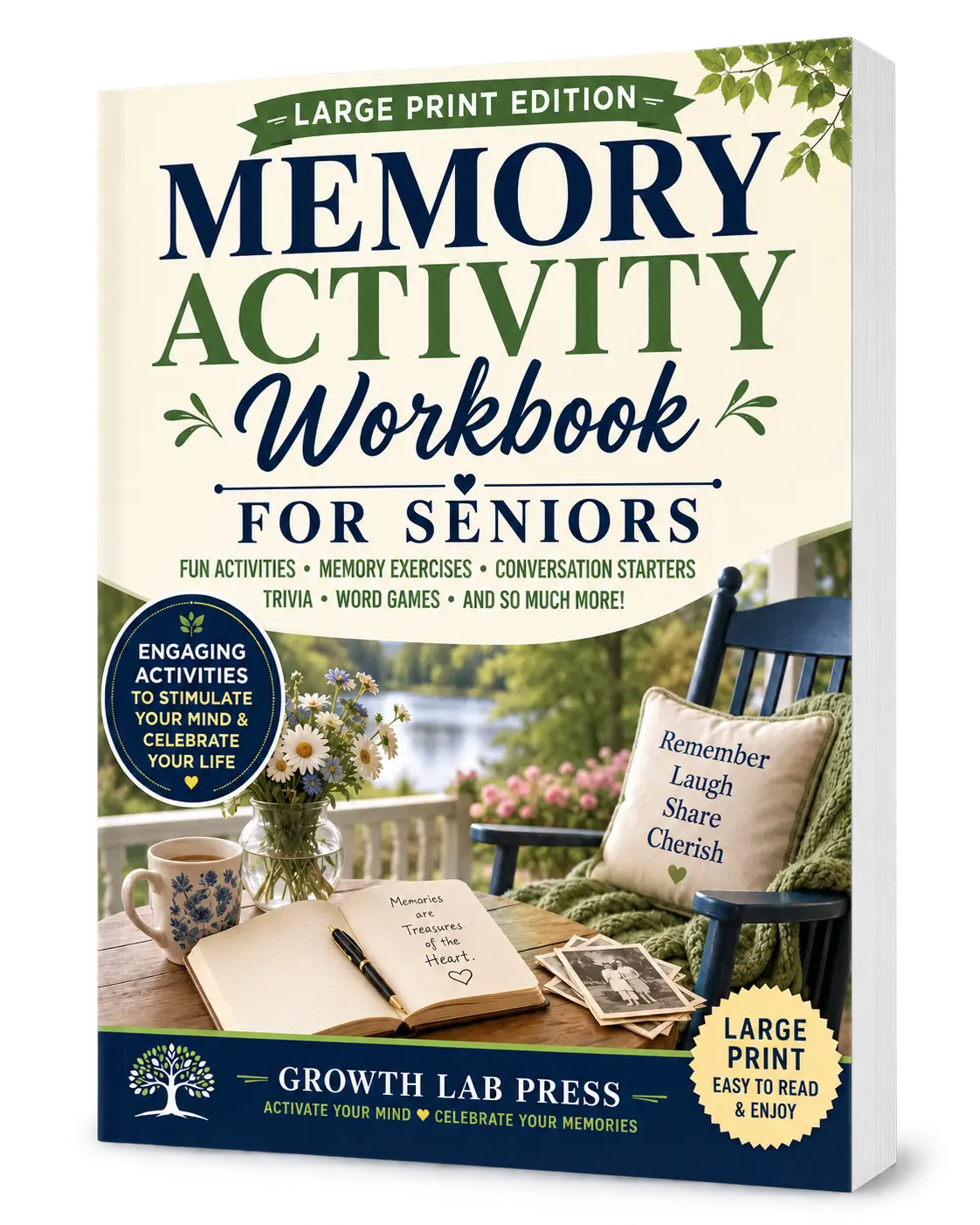
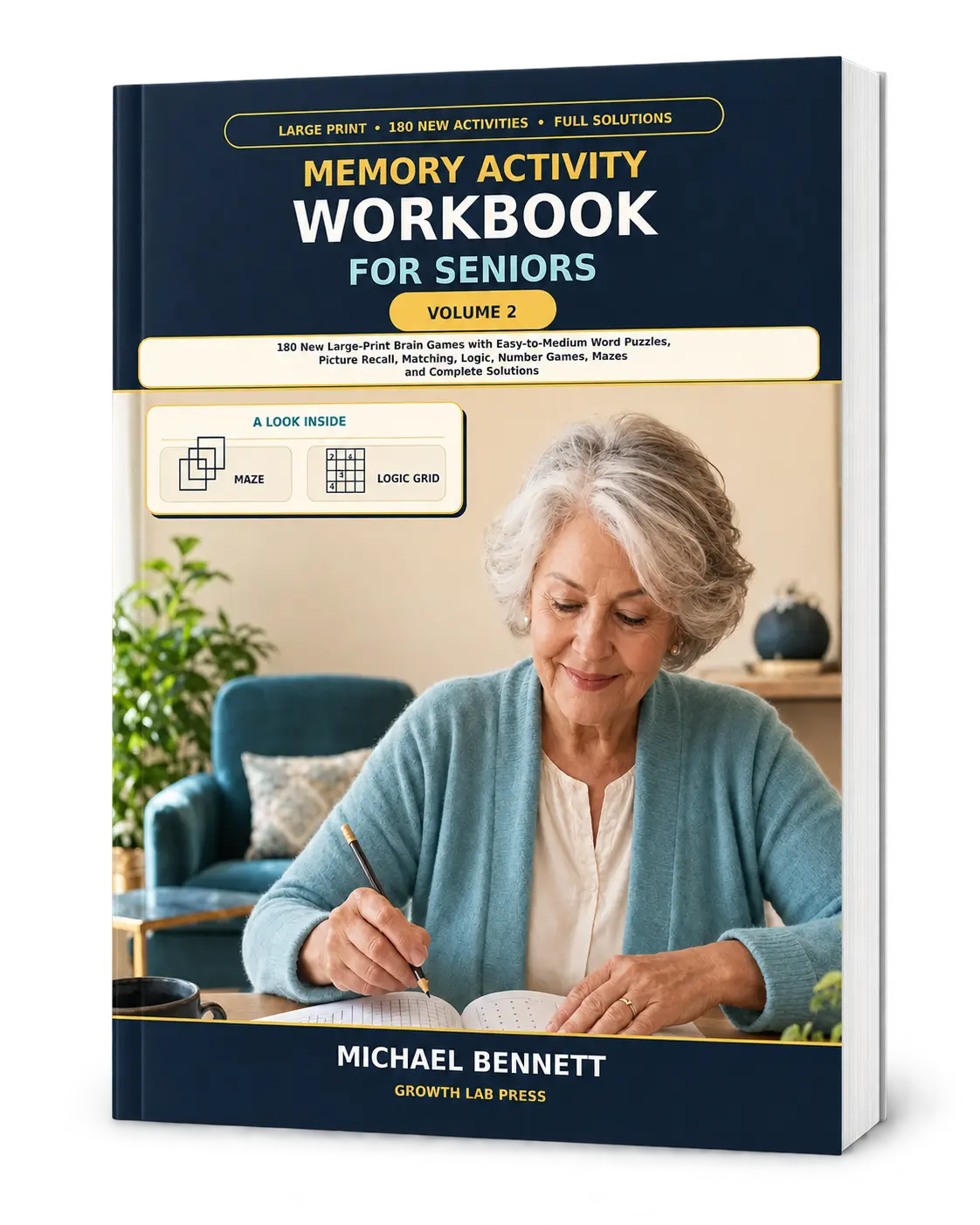
For ready-made pages, preview the Memory Activity Workbook for Seniors and Volume 2 below. Compare the actual print size, instructions and writing space before choosing. These activities are for recreation and shared enjoyment, without promises to prevent or treat memory conditions.
Common questions
What is an easy word game to start with?
Try familiar pairs such as salt and pepper. Offer two possible answers if helpful, and let the reader decide whether to continue.
Do we need a printer or special equipment?
No. Read the questions aloud or copy them onto paper. A printed page is optional. The examples and answers in this article are enough to start.
How long should a session last?
There is no fixed length for these recreational games. Start with a few questions, ask whether the person wants more, and finish when they prefer a break.
Are these examples pages from the workbooks?
No. These are original activities written for this article. The linked book pages show actual workbook samples so you know what each book contains.
Published by Growth Lab Press. Read our editorial standards.