Activities for seniors
15 Easy Finish-the-Saying Puzzles for Seniors, With Answers
Try 15 easy finish-the-saying puzzles for seniors, with familiar clues, complete answers and simple ways to play aloud or on a large-print page.
How to play finish the saying
Read the beginning of a familiar saying, pause at the blank and invite someone to complete it. Say the whole line after the answer. You can reveal the answer panel after each five-puzzle round or wait until the end.
These are common English sayings, so familiarity will vary by family, region and language background. Treat the activity as wordplay rather than a test. If someone uses a wording they know, compare the versions instead of insisting that only one form is acceptable.
The puzzle prompts and play options were arranged for this article. They are not sample pages from the linked Growth Lab Press books. Start with one round and continue only if the group wants more.
Round 1: complete one word
Each blank needs one word. Read the first half with its natural rhythm, then pause.
- 1. Better late than ___.
- 2. Practice makes ___.
- 3. Look before you ___.
- 4. Actions speak louder than ___.
- 5. Two heads are better than ___.
Show answers or guidance
1. NEVER: Better late than never. 2. PERFECT: Practice makes perfect. 3. LEAP: Look before you leap. 4. WORDS: Actions speak louder than words. 5. ONE: Two heads are better than one.
Round 2: complete the final phrase
These blanks need two or more words. Offer the first sound of the missing phrase if anyone wants a hint.
- 6. A stitch in time saves ___.
- 7. Birds of a feather flock ___.
- 8. Every cloud has ___.
- 9. Don’t judge a book ___.
- 10. Many hands make ___.
Show answers or guidance
6. NINE: A stitch in time saves nine. 7. TOGETHER: Birds of a feather flock together. 8. A SILVER LINING: Every cloud has a silver lining. 9. BY ITS COVER: Don’t judge a book by its cover. 10. LIGHT WORK: Many hands make light work.
Round 3: choose the correct ending
Read all three choices. The extra endings are real words or phrases, but only one completes the familiar saying.
- 11. Don’t put all your eggs in… A) one basket, B) the pantry, C) a straight line.
- 12. Too many cooks… A) arrive early, B) spoil the broth, C) wash the dishes.
- 13. The early bird… A) catches the worm, B) sings at noon, C) closes the gate.
- 14. When in Rome… A) take a map, B) visit the market, C) do as the Romans do.
- 15. Where there is smoke… A) there is fire, B) open a window, C) rain will follow.
Show answers or guidance
11. A: Don’t put all your eggs in one basket. 12. B: Too many cooks spoil the broth. 13. A: The early bird catches the worm. 14. C: When in Rome, do as the Romans do. 15. A: Where there is smoke, there is fire.
Accept familiar variations
Sayings often change slightly in everyday speech. Someone may say ‘The early bird gets the worm’ instead of ‘catches the worm,’ or ‘Where there’s smoke, there’s fire’ instead of using ‘there is.’ Both versions preserve the familiar wording and meaning.
If a completion is new to you, ask the person to say the whole version. You might discover a regional expression or a family variation. Write it beside the answer key rather than replacing their wording.
After a saying, invite an optional example: ‘When have you heard someone use that?’ Keep this separate from scoring. A person can enjoy the line without explaining it or sharing a personal story.
Use an easier or more challenging version
For an easier version, provide two choices and make one obviously unrelated: ‘Better late than never or better late than purple?’ You can also say the first sound of the answer. For more challenge, remove a longer ending or ask the player to choose a saying that fits a short situation.
To play as a small group, take turns reading rather than calling on people in a fixed order. Let anyone pass. One person can keep the answer key, or the group can open each answer together.
To create a new clue, begin with a saying your family actually uses. Remove the final word or phrase, read the remaining line aloud and confirm that the missing part is clear. Avoid quotations from modern songs, films or books; use familiar traditional expressions or write your own sentence.
Prepare a clear large-print page
Put one saying on each line, leave generous space around the blank and keep the answers on a separate page. RNIB’s product guidance describes 14-point Arial or an equivalent size as clear print and 16-point Arial or larger as large print. It also recommends clear instructions, good contrast and limiting unnecessary decoration.
Print one sample first and ask the reader whether the size, spacing and contrast work for them. On a screen, use the device’s zoom or text-size controls. The person’s preference matters more than using one size for everyone.
If reading is tiring, use the exact same puzzles aloud. Pause after the clue, repeat it when requested and offer choices without turning the hint into a penalty.
Choose more activities by the reader’s interests
If the saying round was enjoyable, ask whether the next activity should use more familiar phrases, a different word game or conversation prompts. Our large-print activity book guide explains page features to compare, and our book-selection guide helps match activity style to the person and setting.
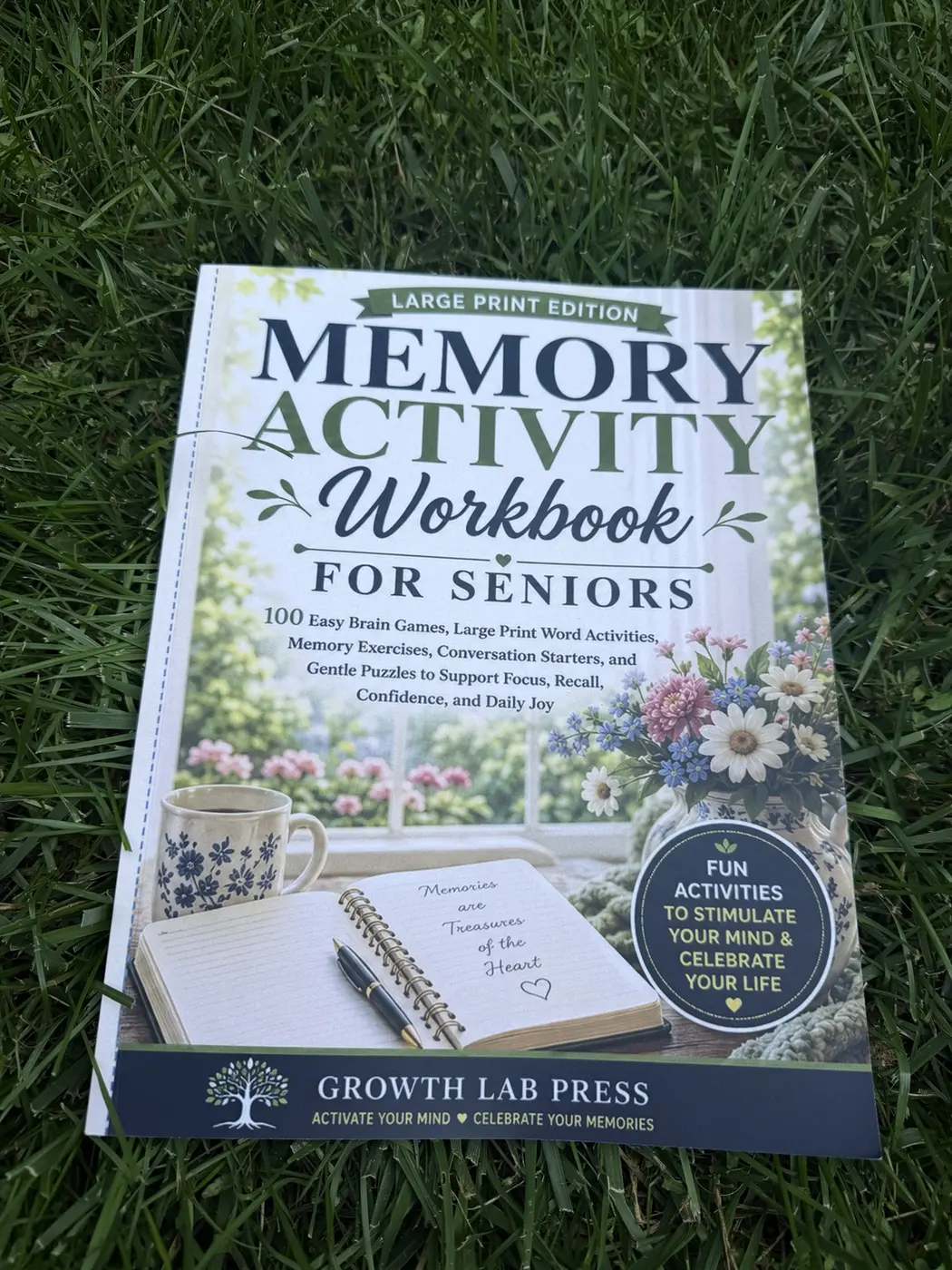
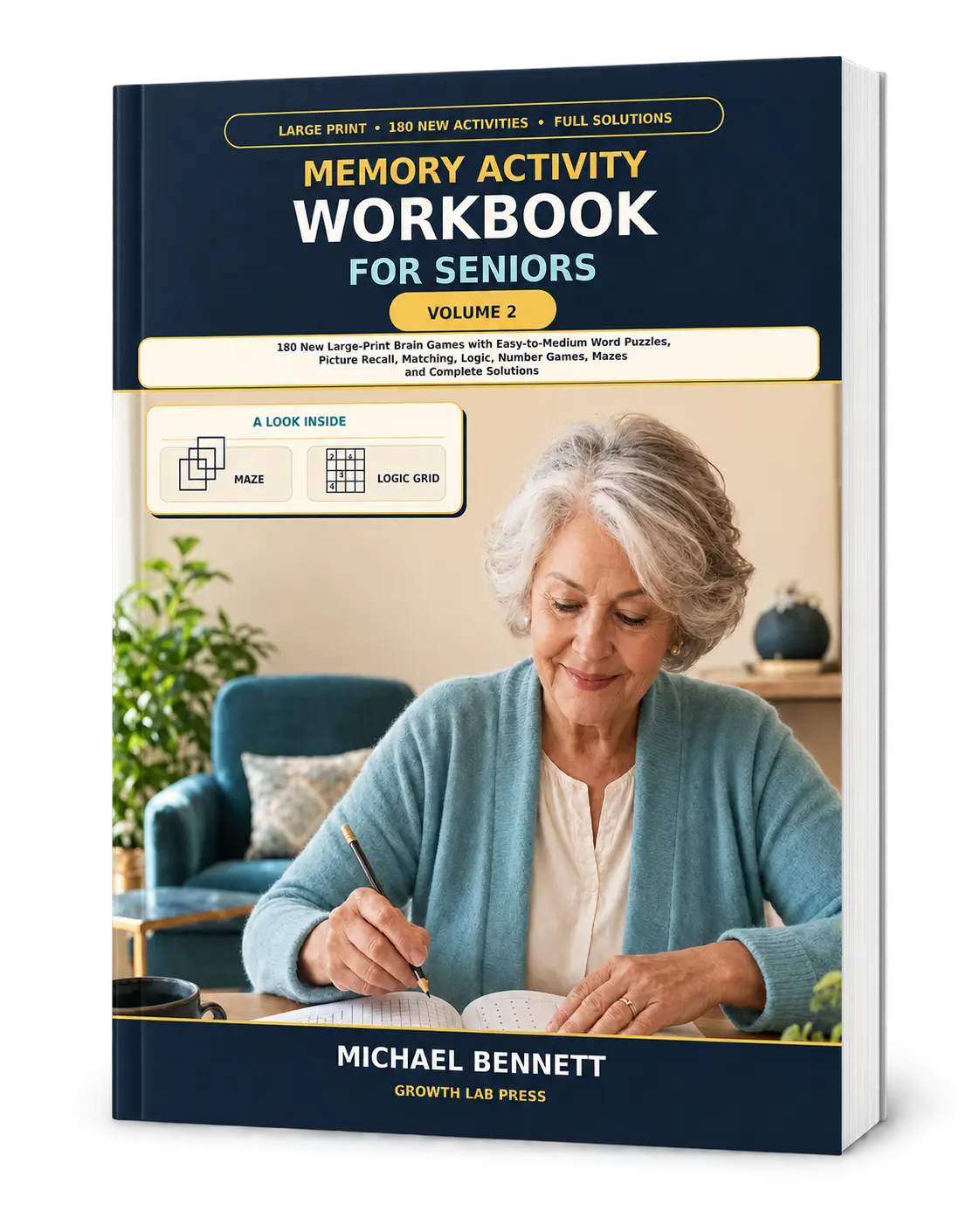
Memory Activity Workbook for Seniors includes large-print word games, everyday prompts, conversation starters and reflection pages. Volume 2 contains 180 large-print word, number, matching, visual, logic, planning and maze activities with complete solutions. The linked product pages show the current editions; these fifteen saying puzzles were created separately for this blog article.
Common questions
What is a finish-the-saying game for seniors?
One person reads the beginning of a familiar saying and pauses before the final word or phrase. The player completes it aloud, in writing or by choosing from two or three endings.
What if someone gives a different version of the saying?
Accept a familiar variation that completes the expression, then compare the two wordings. Regional and family versions can differ without making the activity wrong.
Can we play without printing anything?
Yes. Read one clue aloud, repeat it when needed and provide choices or the first sound as a hint. The answer key can stay on a phone or another screen.
How many sayings should we use at once?
Begin with the first five. Continue to another round only if the person or group wants more; completing all fifteen is optional.
Sources and further reading
Published by Growth Lab Press. Read our editorial standards.