Activities for seniors
15 Easy Opposite Word Puzzles for Seniors, With Answers
Try 15 easy opposite-word puzzles for seniors, with clear sentence clues, checked answers and simple options for playing aloud or on paper.
How to play the opposite-word game
Read each sentence and replace the word in capitals with its opposite. The sentence supplies the meaning, because a word can have different opposites in different situations. For example, the opposite of a LIGHT bag is heavy, while the opposite of a LIGHT room is dark.
Say the answer, write it or point to a choice someone else has prepared. Open the answer panel after each round or wait until the end. There is no timer and no need to keep score.
These are original blog puzzles, not pages from the linked Growth Lab Press workbooks. Start with five and continue only if the activity feels enjoyable.
Round 1: familiar everyday opposites
Complete each sentence with the opposite of the capitalized word.
- 1. The shop door was OPEN in the morning and ___ after closing time.
- 2. The tea was HOT when it was poured but ___ after sitting on the table.
- 3. The lamp was ON while we read and ___ when we left the room.
- 4. The jug was FULL before lunch and ___ after everyone had a drink.
- 5. The main road is WIDE, but the garden path is ___.
Show answers or guidance
1. CLOSED. 2. COLD. 3. OFF. 4. EMPTY. 5. NARROW.
Round 2: actions and directions
Listen for the action or direction that reverses the word in capitals.
- 6. This cushion feels SOFT, but the wooden seat feels ___.
- 7. We arrived EARLY for the first appointment and ___ for the second.
- 8. We walked UP the hill and then came ___.
- 9. The film will BEGIN at seven and ___ at nine.
- 10. I BORROW a book from Sam; Sam will ___ the book to me.
Show answers or guidance
6. HARD. 7. LATE. 8. DOWN. 9. END. 10. LEND.
Round 3: a little more challenge
The final five use longer words, but each sentence still points to one intended answer.
- 11. We planned an INDOOR lunch, but the sunshine persuaded us to eat ___.
- 12. Kim will ACCEPT the invitation, but Lee will ___ it.
- 13. Turning the dial right will INCREASE the volume; turning it left will ___ it.
- 14. The museum displayed an ANCIENT bowl beside a ___ copy made this year.
- 15. Fresh berries were SCARCE in winter but ___ in summer.
Show answers or guidance
11. OUTDOOR. 12. REFUSE. 13. DECREASE. 14. MODERN. 15. PLENTIFUL.
Why the sentence matters
Some words do not have one opposite that works everywhere. In puzzle 6, HARD is the intended opposite of SOFT because the sentence compares how two seats feel. In another sentence, a soft voice might be contrasted with a loud voice instead.
If someone gives a different word that makes sense in the sentence, discuss it rather than marking it wrong automatically. For puzzle 12, DECLINE could reasonably replace REFUSE. The answer key gives the intended answer, not the only possible English expression.
To make a new puzzle, choose a pair first and write one sentence that makes the relationship clear. Read it aloud without the answer. If two very different answers fit, add one more detail.
Make the activity comfortable on paper or aloud
For an easier round, give two choices: ‘Was the door closed or heavy?’ For a harder round, hide the capitalized word and describe it: ‘The door was not open after closing time. What was it?’ You can also let players take turns reading.
On paper, place one sentence on each line and keep the answer key on a separate page. RNIB’s product guidance describes 14-point Arial or equivalent as clear print and 16-point Arial or larger as large print. It also recommends clear instructions, good contrast and limiting unnecessary decoration. Test one sample with the actual reader before printing the full activity.
When playing aloud, repeat the complete sentence after the answer so the pair stays connected: ‘Open and closed.’ If hearing or word-finding makes the blank difficult, offer the first sound or two choices. A hint is part of the game, not a penalty.
Choose the next activity by interest
Ask whether the next round should use more opposites, a different word game or conversation prompts. Our guide to large-print activity books explains page features to compare, while our book-selection guide helps match an activity style to the person and setting.
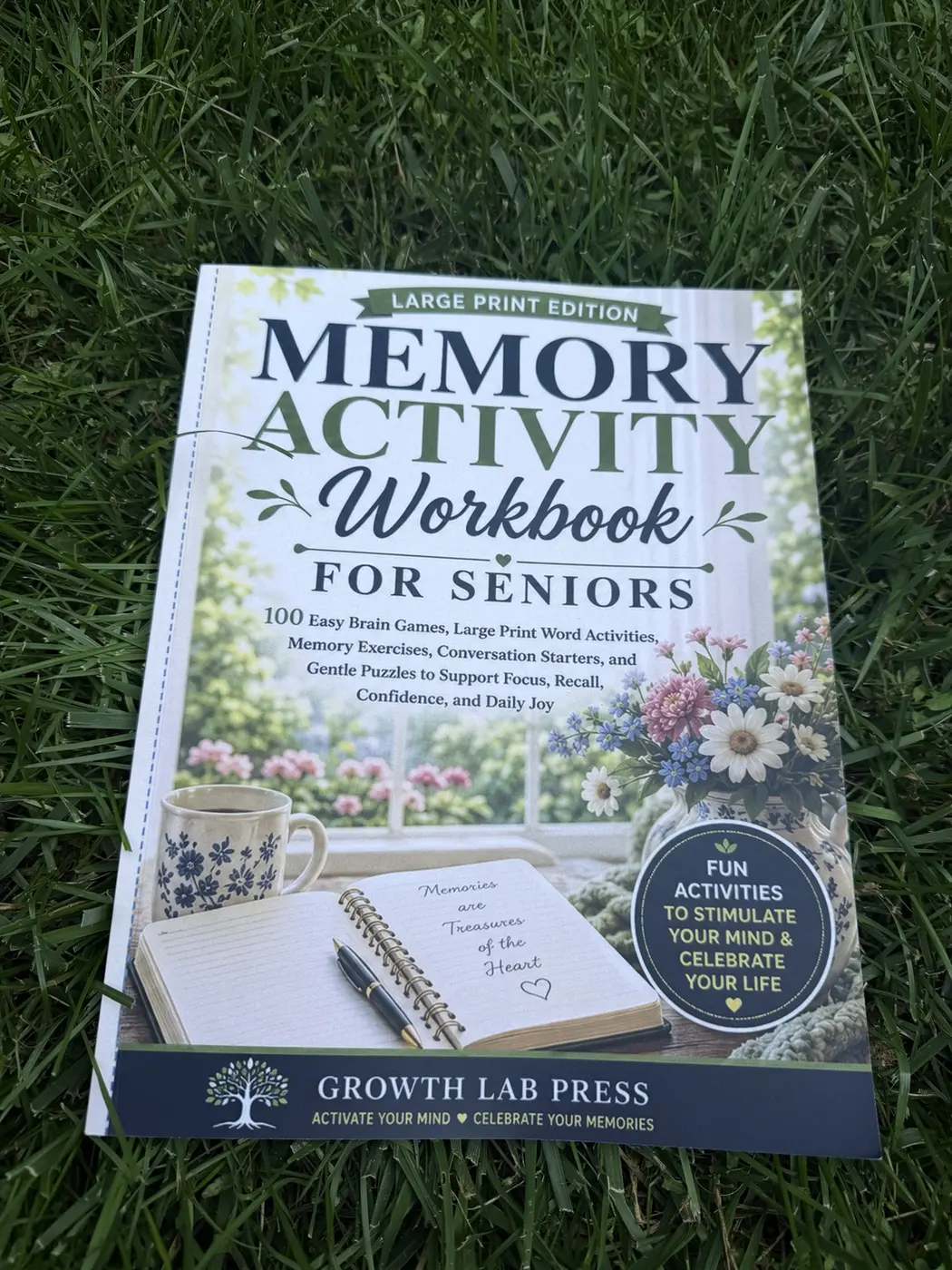
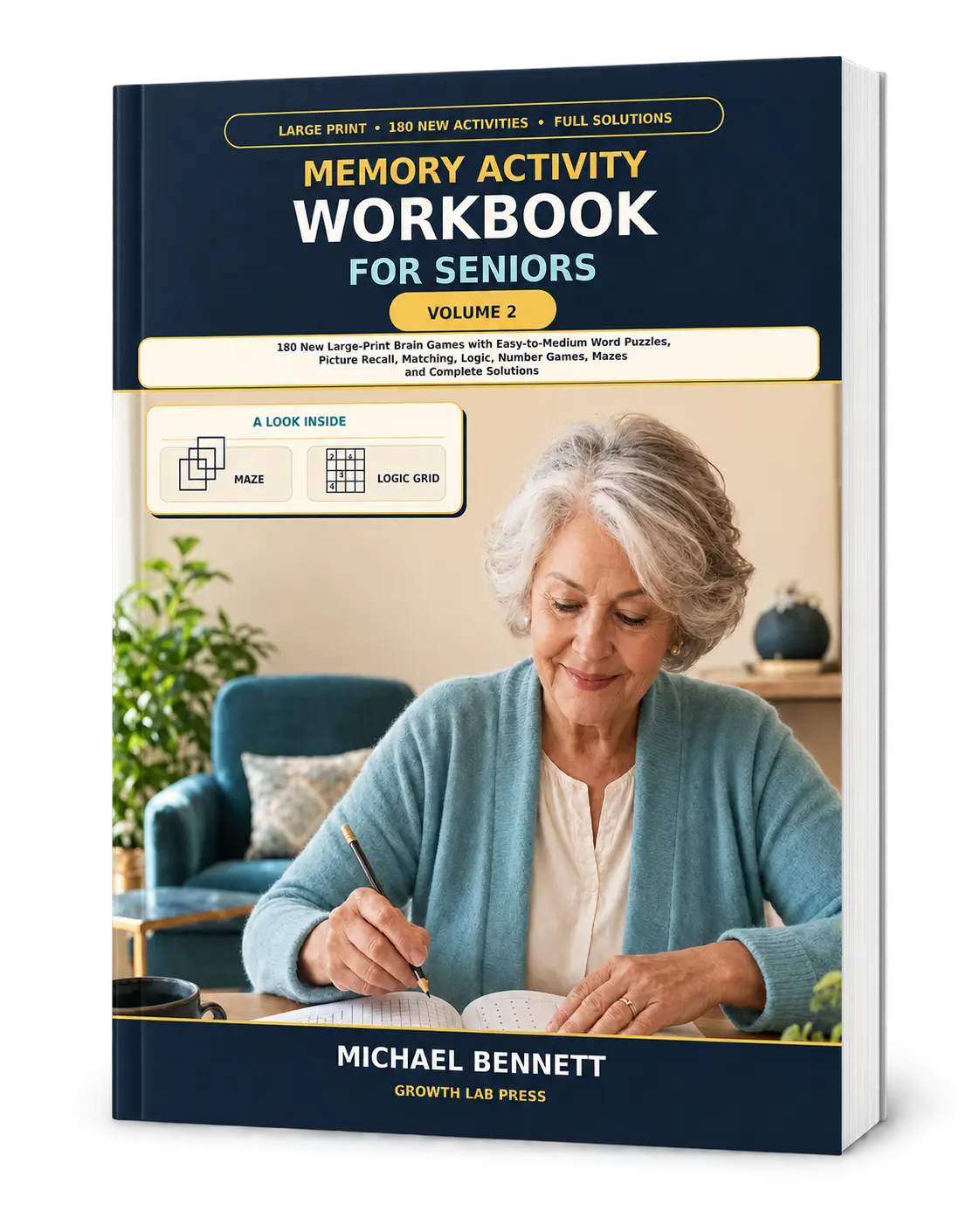
Memory Activity Workbook for Seniors includes large-print word games, everyday prompts and conversation starters. Volume 2 contains 180 large-print word, number, matching, visual, logic, planning and maze activities with complete solutions. The linked product pages show the current book details; these fifteen opposite-word puzzles were created separately for this article.
Common questions
What is an easy opposite-word game for seniors?
Read a short sentence with one capitalized word and ask for a word that reverses its meaning in that sentence. Begin with familiar pairs such as open and closed, hot and cold, or up and down.
Can an opposite-word puzzle have more than one correct answer?
Sometimes. Context usually narrows the choice, but another word may express the same contrast. Accept a sensible answer that completes the sentence, or explain which answer the clue intended.
How can we play without writing?
Read each sentence aloud and let the player answer verbally. Offer two spoken choices or the first sound as a hint, and repeat the completed sentence before moving on.
How many puzzles should we use in one visit?
Start with one five-puzzle round. Continue, pause or change activities according to the person’s interest; completing all fifteen is optional.
Sources and further reading
Published by Growth Lab Press. Read our editorial standards.