Family storytelling
15 Questions to Ask Grandparents About Childhood Games and Toys
Use 15 questions to ask grandparents about childhood games and toys, with gentle follow-ups and a simple way to preserve the rules and stories.
Begin with one game, toy or photograph
Choose three to five questions for one conversation instead of reading all fifteen as a checklist. A simple opening is: ‘What game did you most enjoy when you were about my age?’ Then follow the part of the answer your grandparent seems interested in telling.
A photograph, old toy, marble, skipping rope, pack of cards or familiar game name can provide a starting point, but no object is required. If you use a photograph, ask what was happening just before or after it was taken rather than assuming you know the story.
The Smithsonian Folklife and Oral History Interviewing Guide specifically suggests asking about childhood games, play verses, toys, who made them and the materials used. Its oral-history guidance also favours open questions and follow-ups over questions that can be answered only yes or no.
Questions 1–5: games, places and playmates
Start with a remembered game, then ask for the scene around it. The follow-up is optional and should never interrupt a story already underway.
- 1. What game did you play most often as a child? Follow-up: What did your family or friends call it?
- 2. How was the game played? Follow-up: What were the first three things a new player had to learn?
- 3. Where did you usually play it? Follow-up: What did that place look or sound like?
- 4. Who usually played with you? Follow-up: Did anyone have a special role or skill?
- 5. Did your version have a rule that other children used differently? Follow-up: How did you settle a disagreement?
Questions 6–10: toys, materials and making things
These prompts invite practical details about how a toy was obtained, used and cared for. Let the speaker define what counted as a toy; it might have been bought, handmade, borrowed or created from an everyday object.
- 6. Which childhood toy or plaything do you remember best? Follow-up: What did it look and feel like?
- 7. How did you get it? Follow-up: Was it bought, received as a gift, handed down or made?
- 8. Did you ever make your own toy or game equipment? Follow-up: What materials and tools did you use?
- 9. How did you look after or repair your toys? Follow-up: Who taught you what to do?
- 10. Was there a toy you hoped to receive for a birthday or holiday? Follow-up: What made it special to you then?
Questions 11–15: rhymes, collections and meaning
Finish with the sounds, customs and feelings connected with play. A song or rhyme may be easier to demonstrate than to describe, so offer time for the speaker to remember it in their own way.
- 11. Did any game include a counting rhyme, chant or song? Follow-up: Which words or tune do you remember?
- 12. What did you play indoors on a rainy day or quiet evening? Follow-up: Who usually chose the activity?
- 13. Did children collect or trade anything, such as cards, marbles, buttons or pictures? Follow-up: How did a trade work?
- 14. Was there a game adults discouraged or did not understand? Follow-up: What did children enjoy about it?
- 15. Which childhood game would you most like to teach someone today? Follow-up: What should that person remember about playing it fairly?
Use follow-ups that preserve how the game worked
Listen for a rule, object, person, place or phrase that needs one more detail. Useful follow-ups include: ‘What happened next?’ ‘How did someone win?’ ‘How many people were needed?’ ‘What did you use as markers?’ and ‘What words did everyone say at the start?’
Ask one question at a time. If the first answer is short, rephrase it as an invitation: ‘Tell me about the place where you played.’ Avoid suggesting the answer or correcting a rule from a modern version of the game; the aim is to preserve your grandparent’s version.
Names and rules may vary by neighbourhood, school, language or generation. Record the name exactly as the speaker remembers it, then add a plain description rather than replacing it with a more familiar name.
Record the conversation only with permission
The Library of Congress family-history guide recommends asking an older relative whether you may record the conversation. Explain who will receive the recording, and let the speaker pause, skip a question or stop whenever they choose.
If permission is given, place the phone on a stable surface and make a short test recording. Begin by saying the date, the speaker’s preferred name and the topic. Afterward, use a descriptive filename such as ‘Grandpa-childhood-games-2026-10-29’ and store a second copy according to the speaker’s wishes.
If recording is not wanted, take brief notes or ask whether you may write the story afterward and bring it back for review. Permission to have a conversation is not automatically permission to share it publicly.
Turn one memory into a family game card
Create a one-page card with the remembered game name, number of players, place, equipment, starting setup, rules, how a round ended and any rhyme or special phrase. Add the storyteller’s name and the date of the conversation only with their approval.
For example, a made-up card might read: ‘Button Line — three or more players; five buttons per player; draw a line in chalk; take turns sliding one button toward the line; closest button wins the round.’ This example only shows the format. It is not a claim about a traditional game or a sample from either linked book.
Ask your grandparent to review the finished card. They may correct a step, remember a local name or add the story of a particular match. Mark uncertain details as approximate instead of filling the gap yourself.
Continue childhood stories in a guided journal
Our life-story question guide offers more prompts about childhood, home, school, work, traditions and turning points. The guided-journal gift guide explains how to compare readability, question range, writing space and family fit.
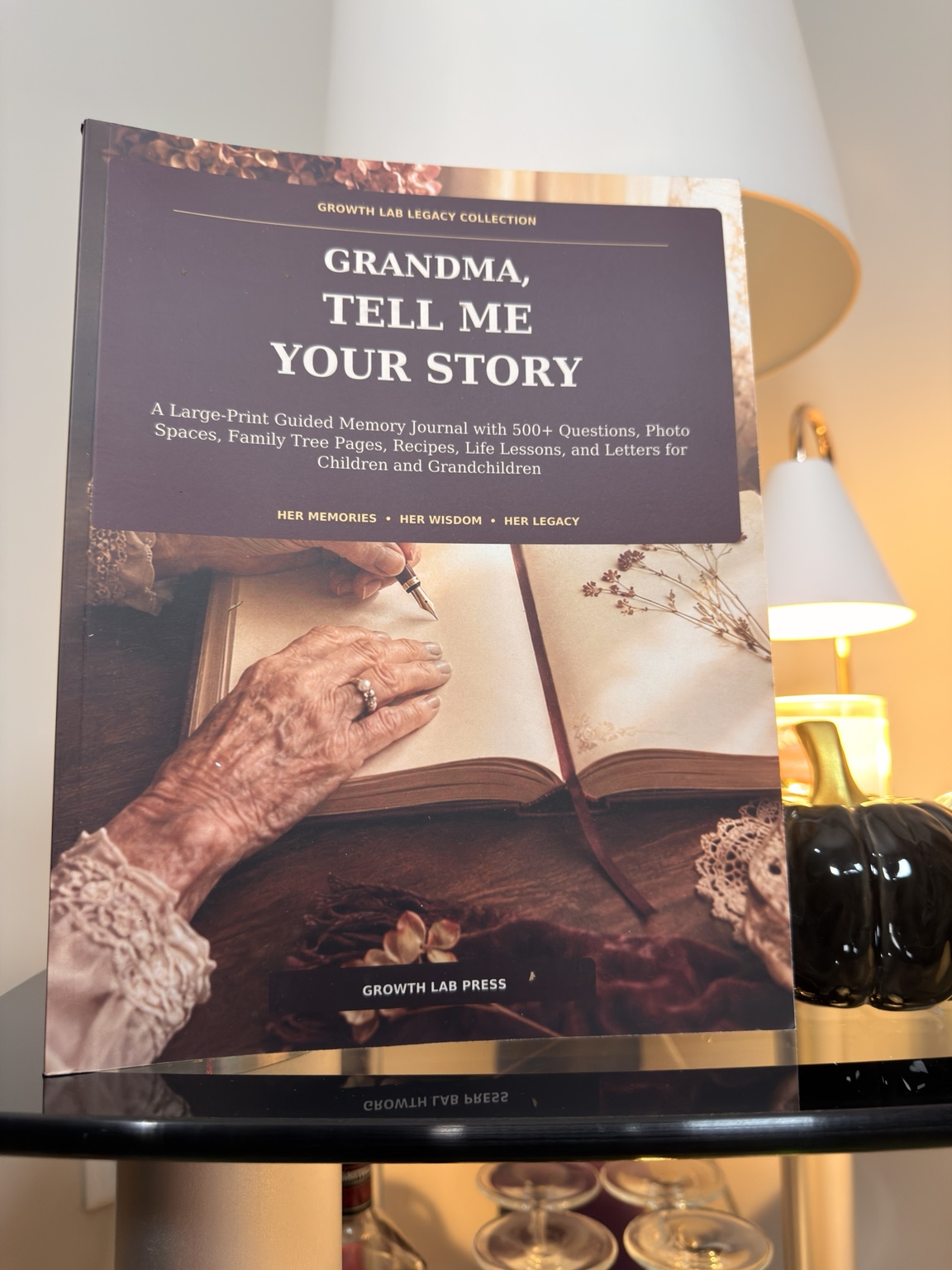
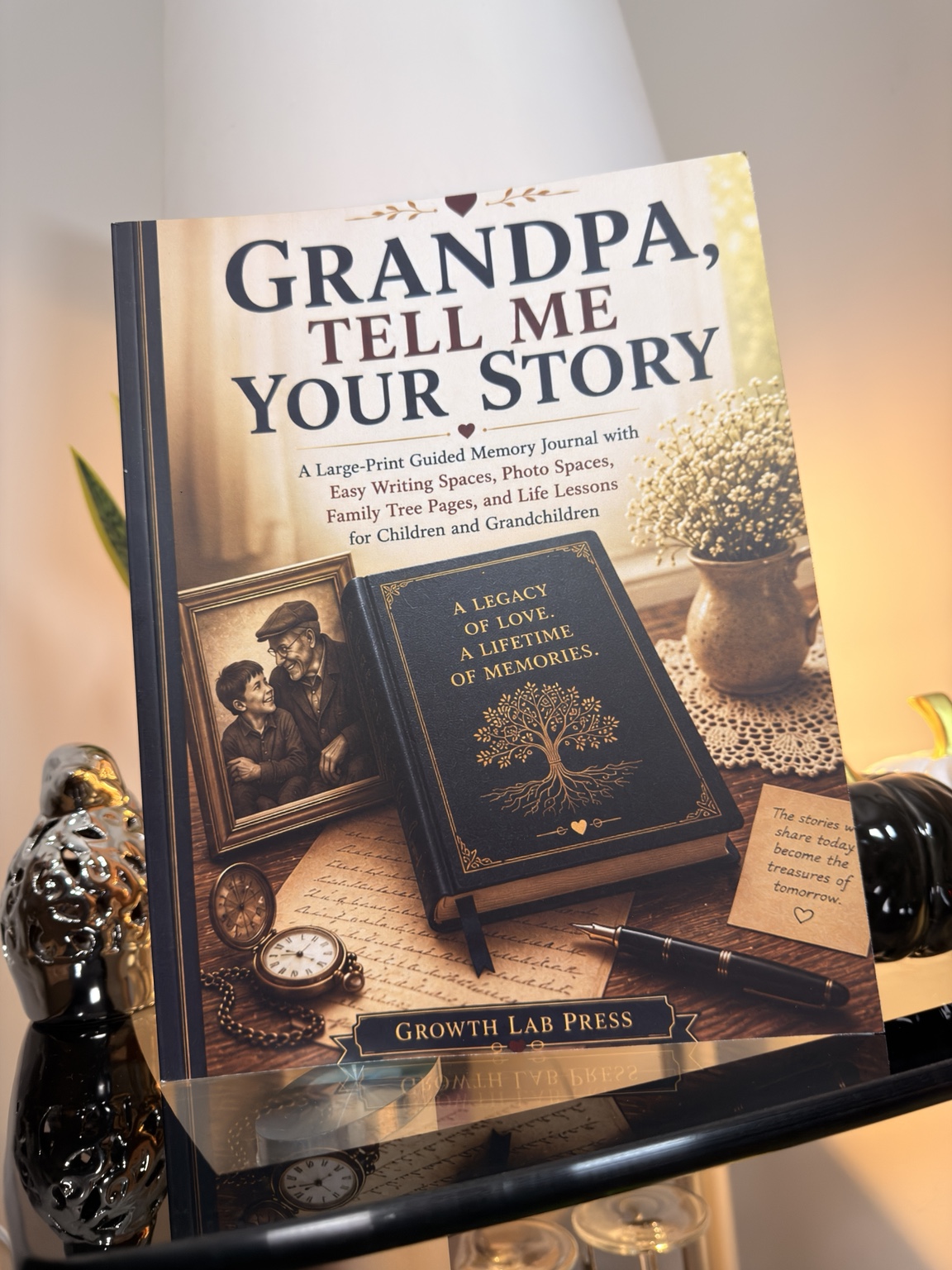
Grandma, Tell Me Your Story is a large-print guided memory journal with 531 questions, photo spaces, family tree pages, recipes, life lessons and letters. Grandpa, Tell Me Your Story is a guided keepsake journal for preserving memories, milestones, family traditions and wisdom. Both current product pages list paperback and hardcover formats.
Use the fifteen questions in this article as a separate family conversation beside the journal. They are original blog prompts, not sample pages from either book, and a family member can write or type when the storyteller prefers speaking.
Common questions
What should I ask grandparents about childhood games?
Ask what they played, where and with whom they played, the rules, equipment, rhymes, local names and which game they would teach someone today. Follow one detailed memory instead of rushing through every question.
What if my grandparent cannot remember the exact rules?
Record the parts they do remember and label uncertain details as approximate. A place, playmate, rhyme or handmade toy can still make a valuable family story even when the complete rules are lost.
How many questions should I ask in one visit?
Start with three to five. Save the rest for another visit, and stop the list whenever one answer develops into a story worth following.
Should I record my grandparent talking about childhood toys?
Only with permission. Explain how the recording will be stored and shared, test the sound first and let the speaker pause or stop at any time.
Sources and further reading
Published by Growth Lab Press. Read our editorial standards.