Family storytelling
15 Questions to Ask Grandparents About Their First Car
Use 15 questions to ask grandparents about their first car, learning to drive, memorable journeys and the people who shared the ride.
Prepare a relaxed first-car conversation
Choose three to five questions for one visit rather than treating all fifteen as a checklist. Begin with an easy detail, such as the car’s color or where it was kept, and follow the parts of the story your grandparent wants to tell.
A photograph can help, but it is not required. If you have one, ask who is pictured, where the car was parked and what happened before or after the photograph. Do not worry if the exact model or year is uncertain; write that detail down to check later only if your grandparent wants to.
If your grandparent never owned a car, adapt the prompts to the first family car, a borrowed vehicle, a motorcycle, a bicycle, public transit or another memorable way of travelling. The subject is their experience, not car ownership.
Questions 1–5: getting the first car
Start with how the car entered the story. Use the follow-up only when the first answer invites more detail.
- 1. What was the first car you drove regularly? Follow-up: What color, shape or feature do you remember most?
- 2. Was it your own car, a family car or one you borrowed? Follow-up: Who else used it?
- 3. How did you get the car? Follow-up: Did you save for it, receive it or arrange payments?
- 4. What do you remember about the day you first brought it home? Follow-up: Who saw it first?
- 5. Where did you learn to drive? Follow-up: Who taught you, and what advice did they repeat?
Questions 6–10: daily life and memorable journeys
These prompts connect the car with ordinary routines and one memorable trip. Ask for a scene rather than a complete travel history.
- 6. Where did you usually drive that car? Follow-up: Was it mainly for work, shopping, school or visiting people?
- 7. Who most often rode with you? Follow-up: Where did you go together?
- 8. What was the first long trip you took in it? Follow-up: What happened along the way?
- 9. Did the car have a radio or another favorite feature? Follow-up: What did you listen to or use most?
- 10. Do you remember a breakdown, flat tire or wrong turn? Follow-up: Who helped, and how did the day end?
Questions 11–15: cost, change and meaning
Finish with questions that place the car in a wider family story. Let your grandparent skip any detail about money or personal events.
- 11. What did fuel, repairs or insurance feel like to pay for then? Follow-up: Which expense surprised you?
- 12. How did having access to a car change your daily life? Follow-up: What became easier or newly possible?
- 13. Did you ever decorate, repair or modify the car? Follow-up: Which job did you do yourself?
- 14. What eventually happened to that car? Follow-up: Was it difficult to let it go?
- 15. If that car were parked outside today, where would you drive it first? Follow-up: Who would you invite along?
Use follow-up questions that bring the scene closer
Listen for a person, place, object or action in the answer. Then ask one concrete follow-up: ‘What did the inside smell like?’ ‘What was in the glove compartment?’ ‘Who sat in the front seat?’ or ‘What happened when you arrived?’
Avoid interrupting to correct a date or vehicle name. A note such as ‘possibly 1962’ keeps the conversation moving and leaves room to verify the detail later. If two relatives remember the event differently, preserve both accounts instead of forcing one version during the visit.
Silence may simply mean the person is thinking. Wait briefly before rephrasing. If a question does not lead anywhere, choose another without pressure; a short answer can still preserve a useful detail.
Record and label the story with permission
The Library of Congress family-history guide encourages asking an older relative whether you may record a conversation. Ask before starting, explain who will receive the recording and let the speaker pause or stop at any time.
Place the phone on a stable surface nearby, record a short test and play it back to check the sound. At the beginning, say the date, the speaker’s preferred name and the topic: ‘Your first car.’ Keep background noise low and avoid handling the phone while the person is speaking.
Afterward, use a descriptive filename such as ‘Grandma-first-car-2026-10-27.’ Write down the names of people and places mentioned, then store a second copy where the family can find it, following the speaker’s wishes.
Turn the answers into a one-page keepsake
Choose one photograph or draw a simple outline of the car. Add the make or description if known, the approximate year, the main driver, a favorite destination and one short quotation or careful paraphrase from the conversation.
A useful caption might read: ‘Grandpa’s blue first car, used for work and Sunday visits, around 1968.’ Mark uncertain dates as approximate. If you quote exact words, compare them with the recording before sharing the page.
Give your grandparent a chance to review the keepsake. They may remember another name, correct a detail or prefer that part of the story remain private.
Continue the family story in a guided journal
Our life-story question guide offers prompts about childhood, family, school, work, traditions and turning points. The guided-journal gift guide helps families compare readability, question range and writing space before choosing a book.
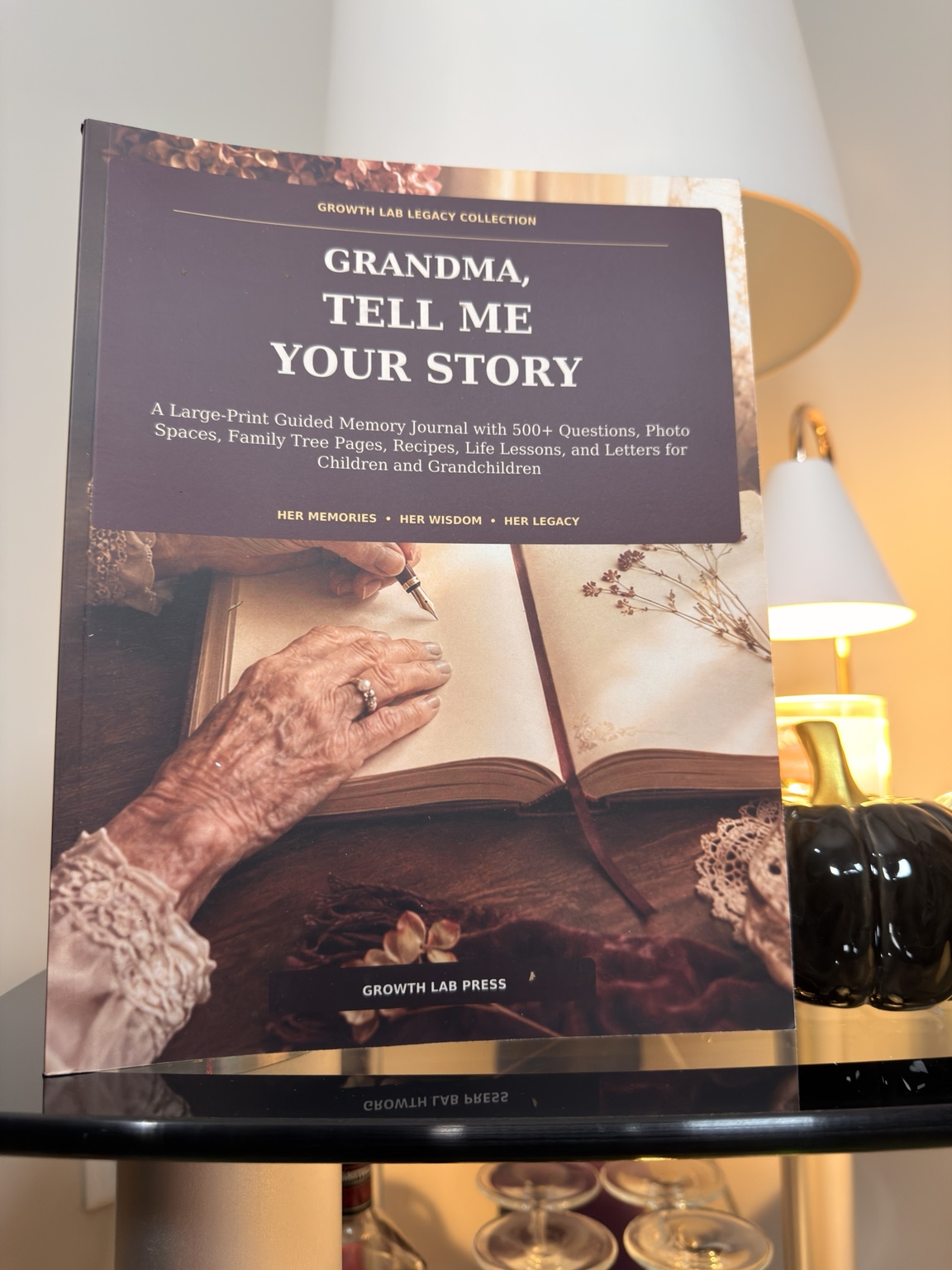
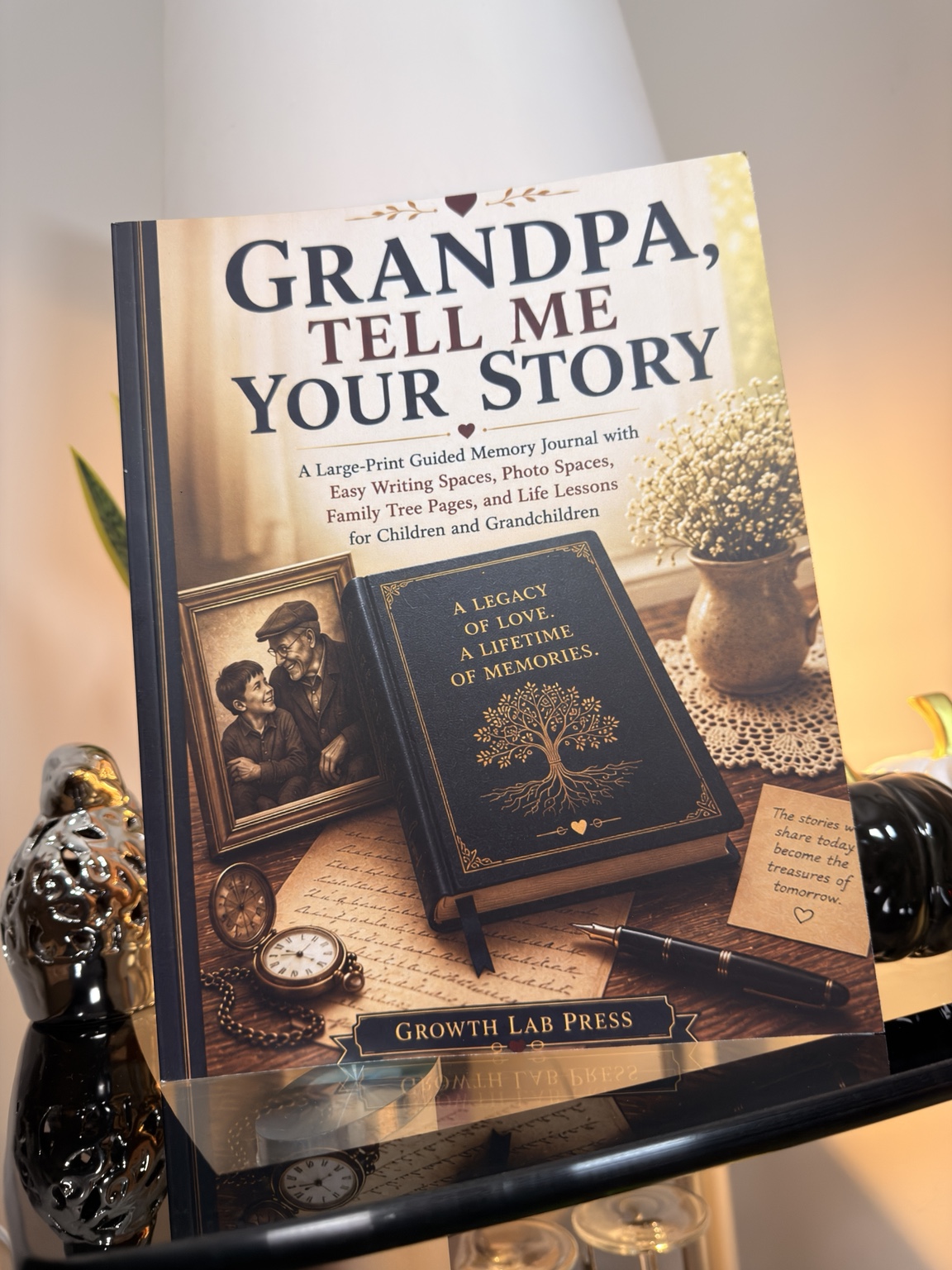
Grandma, Tell Me Your Story is a large-print guided memory journal with 531 questions, photo spaces, family tree pages, recipes, life lessons and letters. Grandpa, Tell Me Your Story is a guided keepsake journal for preserving memories, milestones, family traditions and wisdom. Both are available in paperback and hardcover.
Use these first-car questions as a conversation beside the journal; they are not sample pages from either book. A family member can write or type the answers when the storyteller prefers speaking.
Common questions
What should I ask a grandparent about their first car?
Ask what the car looked like, how they got it, who taught them to drive, where they went, who rode with them, what it cost to keep and what eventually happened to it.
What if my grandparent never owned a car?
Ask about the first family or borrowed car they used, or adapt the questions to a motorcycle, bicycle, bus, train or another memorable way they travelled.
How many questions should I ask in one visit?
Begin with three to five. Follow one interesting answer instead of rushing through the list, and save the remaining prompts for another conversation.
Should I record my grandparent’s car story?
Only with permission. Explain how the recording will be stored and shared, make a short sound test and let the speaker stop whenever they choose.
Sources and further reading
Published by Growth Lab Press. Read our editorial standards.