Family storytelling
15 Questions to Ask Grandparents About the Music They Loved
Use 15 warm questions to ask grandparents about favorite songs, dancing, concerts and family music, with follow-up prompts and recording tips.
Prepare a relaxed music conversation
Choose three to five questions for one visit instead of treating all fifteen as a checklist. Begin with a favorite song or singer, then follow the details your grandparent wants to share. A quiet room and an unhurried pace make it easier to listen.
If you plan to record, ask first and explain what you will do with the recording. The Library of Congress recommends asking an older relative for permission before recording a conversation, then using a smartphone or digital recorder to capture stories for later transcription and sharing.
You do not need to play any music to use these prompts. If your grandparent chooses a song, use a legal copy or streaming service and keep the volume comfortable enough for conversation.
Questions 1–5: favorite songs and singers
Start with questions that are easy to answer briefly. Use the follow-up only when the first answer invites more detail.
- 1. What song did you love most when you were young? Follow-up: Where did you usually hear it?
- 2. Who was your favorite singer or musical group? Follow-up: What did you like about their sound or style?
- 3. Was there a song everyone in your family knew? Follow-up: Who usually started singing it?
- 4. What music played on the radio in your home? Follow-up: Who chose the station or program?
- 5. Did you own a record, cassette or other music item that felt special? Follow-up: How did you get it?
Questions 6–10: dancing, performances and places
These prompts connect music with a place or event. Ask for one scene rather than a complete history.
- 6. Where did people go to dance when you were a teenager or young adult? Follow-up: What was the place like?
- 7. Which dance did you most enjoy? Follow-up: Who taught you the steps?
- 8. Do you remember a concert, school performance or community show? Follow-up: Who went with you?
- 9. Was there a musician in your family or neighborhood? Follow-up: What instrument did they play?
- 10. What song reminds you of a journey, holiday or particular place? Follow-up: What happened there?
Questions 11–15: people, celebrations and family meaning
The final questions invite stories about relationships and traditions. Let your grandparent skip any prompt that feels too personal.
- 11. Was there a song connected with meeting or courting someone important to you? Follow-up: What do you remember about that time?
- 12. What music was played at weddings or family celebrations? Follow-up: Did your family have a favorite?
- 13. Did adults and young people in your home enjoy the same music? Follow-up: What did they disagree about?
- 14. Is there a song that reminds you of a parent, grandparent, sibling or friend? Follow-up: What story belongs with that person?
- 15. Which song or musical tradition would you like younger relatives to remember? Follow-up: Why does it matter to you?
Follow the story instead of the list
When an answer includes a person, place or object, ask one specific follow-up: ‘What did the room look like?’ ‘Who else was there?’ or ‘What happened next?’ A concrete detail often gives the story a beginning and setting.
Avoid correcting a title, date or lyric during the conversation. Write uncertain details in your notes and check them later if your grandparent wants you to. The purpose is to preserve their account, not to conduct a music quiz.
Silence can simply mean the person is thinking. Wait a moment before rephrasing. If a question goes nowhere, move to another one without pressure. A short answer is still an answer.
Save the music story clearly
At the start of a recording, say the date, the speaker’s preferred name and the general topic. Keep the phone nearby on a stable surface, then make a brief test recording and play it back before continuing.
Afterward, give the file a descriptive name such as ‘Grandpa-music-stories-2026-10-24.’ Write down the names of songs, people and places mentioned. Keep a second copy in a location your family can access, with the speaker’s permission.
For a one-page keepsake, add the question, a short quotation or paraphrase, the song title and one related photograph. If exact wording matters, check the transcription against the recording before sharing it.
Continue the story in a guided journal
Our life-story question guide offers prompts across childhood, school, work, traditions and turning points. The guided-journal gift guide helps families compare question range, readability and writing space before choosing a book.
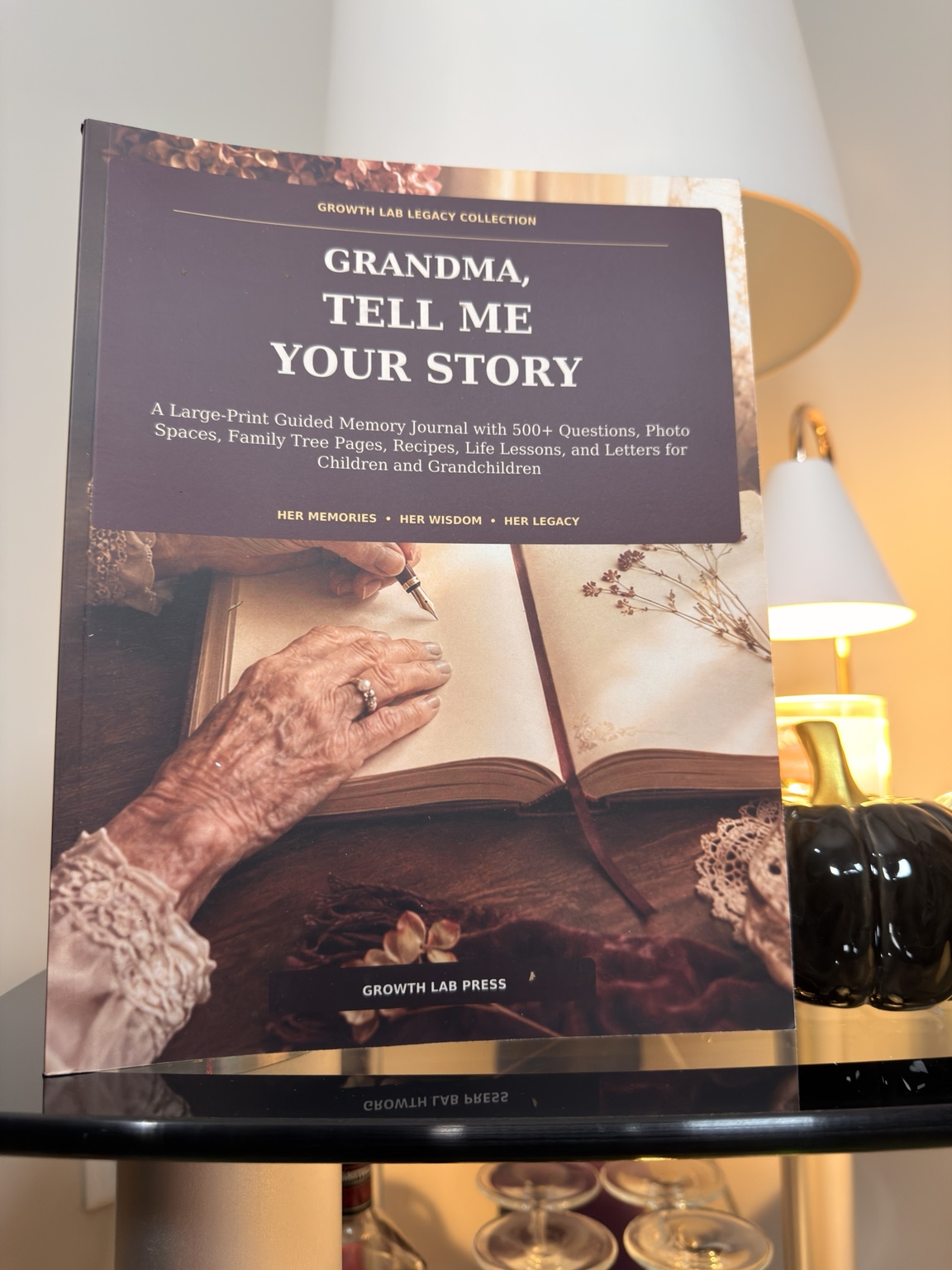
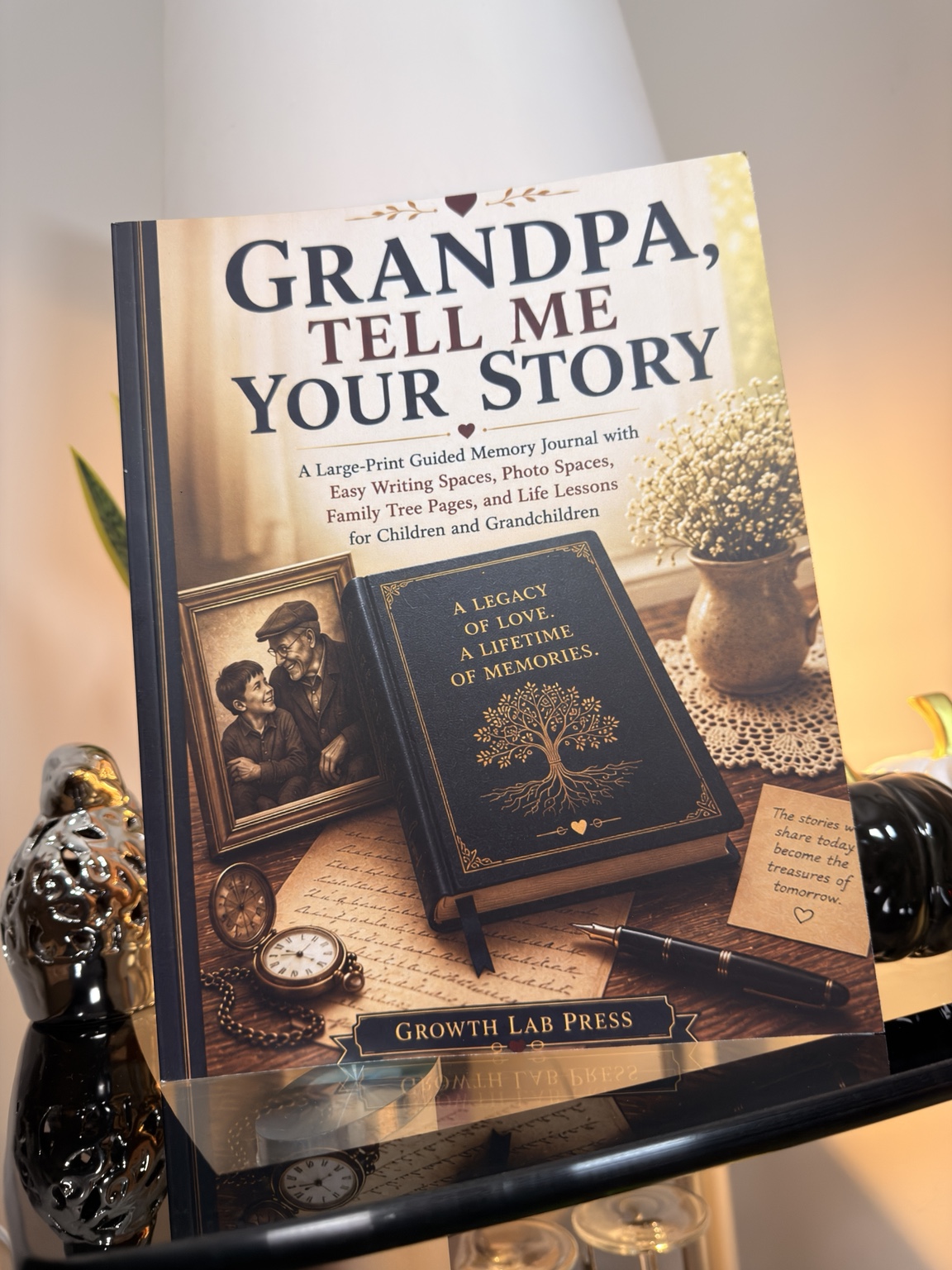
Grandma, Tell Me Your Story is a large-print guided memory journal with 531 questions, photo spaces, family tree pages, recipes, life lessons and letters. Grandpa, Tell Me Your Story is a guided keepsake journal for preserving memories, milestones, family traditions and wisdom. Both are available in paperback and hardcover.
Use these music questions as a conversation alongside the journal rather than claiming they are pages from either book. A family member can write or type the answer if the storyteller prefers speaking.
Common questions
What are good music questions to ask grandparents?
Ask about a favorite song, singer, dance, radio program, concert, family musician or music played at celebrations. Specific prompts are easier to answer than a broad request such as ‘Tell me about music.’
How many questions should I ask in one visit?
Start with three to five. Follow an interesting answer instead of rushing to complete the list, and save the remaining questions for another conversation.
Should I record my grandparent’s answers?
Only with permission. Explain how the recording will be stored and shared, make a short sound test and let the speaker pause or stop at any time.
What if my grandparent cannot remember a song title?
Ask about where they heard it, who was with them, the kind of music or a few remembered words. Do not turn the conversation into a test; note the clues and look up the title later if they want help.
Sources and further reading
Published by Growth Lab Press. Read our editorial standards.