Family storytelling
How to Record the Story Behind a Family Keepsake
Give a family keepsake a written story with eight conversation prompts, a simple record template and an example that separates memories from guesses.
Start with an object someone wants to talk about
A family keepsake does not have to be an antique. A mug, sewing tin, football scarf or well-used recipe notebook can be the starting point. Ask your parent or grandparent to choose something they would enjoy discussing. You are collecting its personal story, not assessing its price.
Try this invitation: ‘Would you like to tell me about one thing you have kept? I could write a few lines so the story stays with it.’ If they would rather talk without notes, do that. If the object is elsewhere, use a photo or simply describe it together.
Leave fragile or awkward objects where they are. This conversation does not require cleaning, repairing, opening or moving anything. A description is enough to begin.
Agree on what you will record and who may see it
Explain whether you want to take notes, make an audio recording or photograph the object. Ask separately before sharing the result. For example: ‘May I write this in our family notebook? Would you like it kept just between us, or may I send a copy to the family?’
The Smithsonian’s oral-history guidance recommends explaining how an interview will be used and letting the person choose which questions to answer or when recording should stop. Apply that approach to this small family project: skipping a question is always an option.
Avoid turning the conversation into a decision about who will inherit the item. If the keeper raises that subject, keep it separate from the story record.
Eight prompts for the story behind the keepsake
These original prompts are a menu, not a checklist. Choose two or three and follow the answer that interests the storyteller. An ordinary detail, such as where a tin sat on a kitchen shelf, can be all you need for a short entry.
- 1. What do you call this item, and did anyone have a special name for it?
- 2. What is the earliest occasion when you remember seeing or using it?
- 3. How did it come into your care?
- 4. Can you describe one ordinary day when it was being used?
- 5. Is there a mark, colour or detail you would want us to notice?
- 6. Who comes to mind when you look at it, and what do you remember doing together?
- 7. Has its use changed since you first knew it?
- 8. What would you like someone to understand about why you kept it?
Follow one detail without supplying the answer
If someone says, ‘That was always on the table,’ ask, ‘Which table do you picture?’ or ‘What else was happening around it?’ Avoid jumping to ‘Was that at Grandma’s house?’ unless you are checking something the person has already said. Let their description supply the setting.
You can also ask, ‘Did you see that yourself, or is it a story someone told you?’ Keep both kinds of account, but label them. If two relatives remember different origins, save each version with its speaker’s name instead of merging them into a single confident claim.
Do not estimate an object’s age from its appearance and present that as fact. Write ‘date unknown’ or ‘remembered as being in the house by…’ when that is the most accurate description.
Copy this short keepsake record
Use one notebook page or a digital note. Give the record and any photos the same simple reference, such as Keepsake-01. That connects the story to the right object even if several relatives own similar items. Keep a second copy of the record somewhere you can find it.
- Item name and reference: what the family calls it; Keepsake-01.
- Identifying description: colour, shape and a visible detail that distinguishes it.
- Story shared by: name and relationship, plus the conversation date.
- Remembered scene: a few sentences about a specific use or occasion.
- How it reached its present keeper: the account given, including any uncertainty.
- Exact words: a short quotation, only if you captured the wording accurately.
- Still unknown: dates, names or origins that have not been established.
- Photo and sharing note: matching file reference and who may receive a copy.
Example: the blue button tin
This is a fictional example showing how to write the record, not a customer story or a historical claim.
Item: Blue button tin, Keepsake-01. Description: round blue tin with a white flower on the lid. Story shared by: a family member during a conversation on 20 October 2026. Remembered scene: the tin sat beside the sewing machine, and spare buttons were sorted into it after clothes were mended.
Origin: the storyteller remembers receiving it from an aunt but does not recall the year. Still unknown: who bought the tin originally and what it first contained. Photo: Keepsake-01-front. Sharing: approved for the family notebook; ask again before posting online.
Notice what the entry leaves open. It does not claim the tin was manufactured in a particular decade or belonged to an earlier generation without evidence. The ordinary sewing-room scene is already a complete contribution.
Read it back and choose a home for the story
Read your short account aloud and ask, ‘Does this say what you wanted it to say?’ Correct anything the storyteller wants changed. If your wording is a summary, label it as a summary rather than placing quotation marks around it. Leave out details they do not want kept.
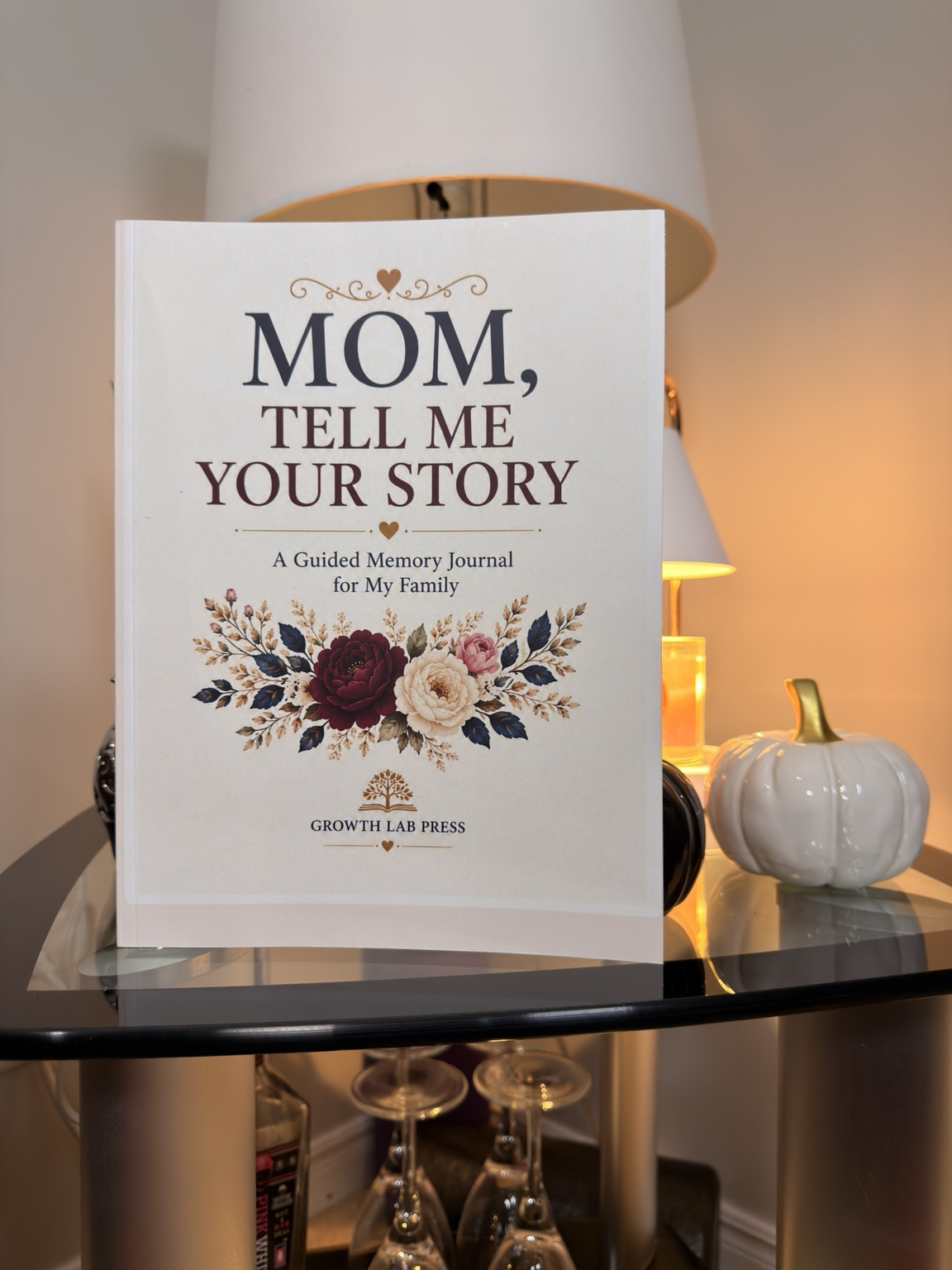
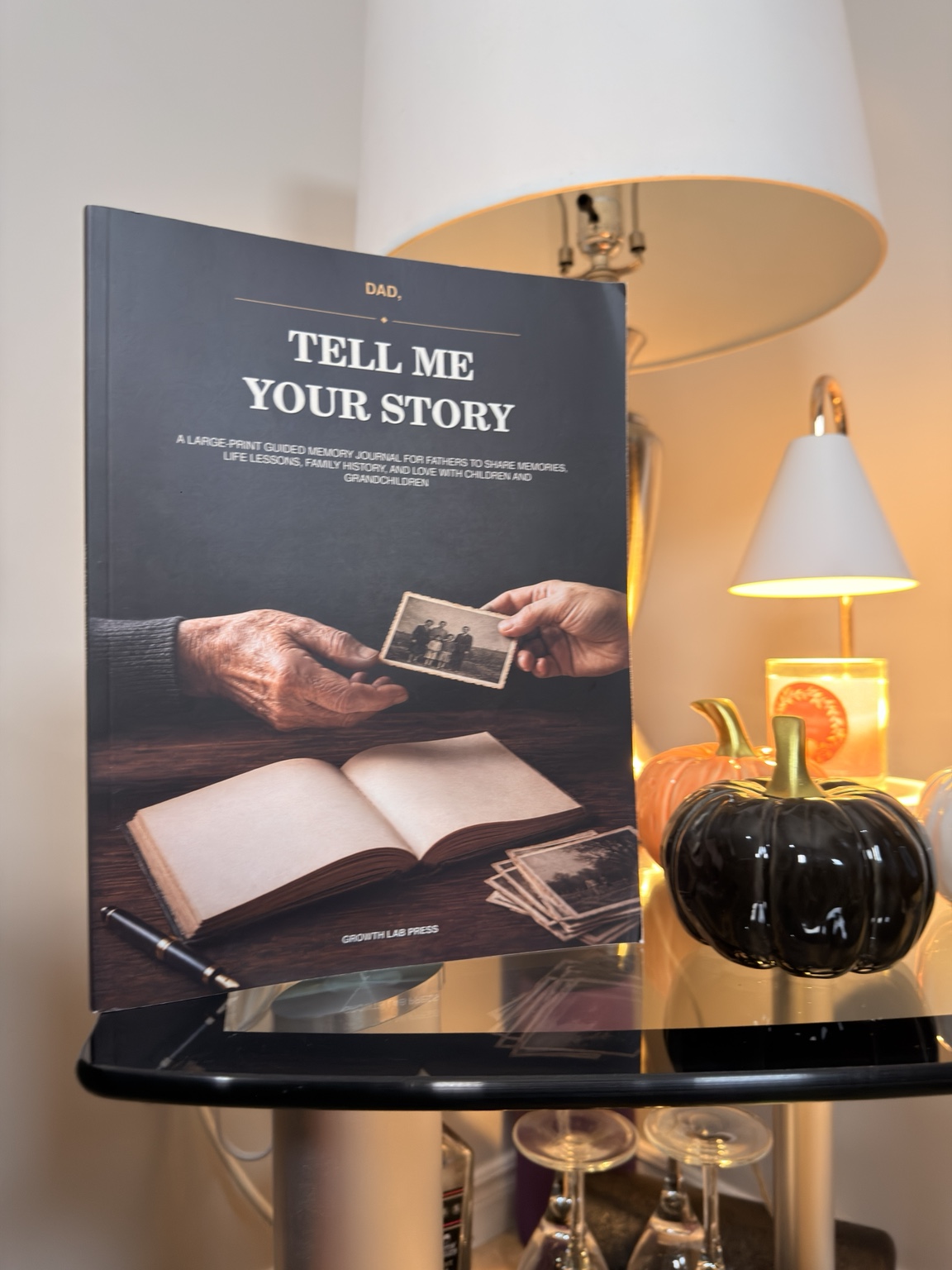
A guided journal can hold the personal account, with the keepsake reference pointing to a photo or separate note. Mom, Tell Me Your Story is a guided life-story and legacy journal for mothers. Dad, Tell Me Your Story is a large-print guided journal for fathers to share memories, life lessons and family history. Their linked pages show the current books and real photos; these prompts were created for the blog rather than taken from those books.
For a broader conversation, continue with our Life Story Questions to Ask Parents and Grandparents guide. If you are choosing a journal as a gift, our family-story-journal guide covers readability and writing space. A plain notebook works for this activity too.
Common questions
What if our family has no heirlooms?
Choose something kept for personal reasons, including a recent gift or an everyday item. You can also record a description of an object that is no longer available. Label whether you are working from the object, a photograph or a recollection.
How long should the keepsake story be?
A few clear sentences are enough: identify the object, describe one remembered scene and say why it was kept. Add more only if the storyteller wants to continue.
What if nobody knows when the object was made?
Write ‘date unknown.’ A remembered occasion when it was used is different from a manufacturing date. You can add later evidence without rewriting the original recollection as certainty.
Should we record the object’s financial value?
This activity records personal meaning, not an appraisal. Keep any separate valuation information apart from the family story, and do not guess a price from appearance or age.
Sources and further reading
Published by Growth Lab Press. Read our editorial standards.