Family storytelling
15 Questions to Ask Grandparents About Their Childhood Home
Use 15 warm questions to help grandparents describe their childhood home, daily routines, neighbourhood and family life, with a simple recording plan.
Prepare a comfortable childhood-home conversation
Choose three or four questions for the first visit rather than trying to complete all 15. Tell your grandparent why you are asking and let them decide whether to talk, write, draw or look at photographs.
If you want to record audio or video, ask permission before you start. The Library of Congress suggests asking older relatives whether you may record the conversation, then using a phone or digital recorder to preserve stories that can be transcribed and shared later.
A childhood home may also bring up loss, hardship or family conflict. Make every question optional. An exact street address is not necessary, especially if the information will be shared publicly.
- Bring one photograph, map or familiar object if available
- Choose a quiet time and place
- Ask permission before recording
- Begin with three or four questions
- Let the storyteller skip any subject
Questions 1–5: Picture the house
Start with what your grandparent can see in their mind. These questions move from the outside of the home to the rooms and places that mattered most.
- 1. What is the first thing you picture when you think of the home where you grew up?
- 2. What did the outside of the house or building look like?
- 3. How were the rooms arranged, and which room felt like the centre of family life?
- 4. Where did you sleep, and did you share the room with anyone?
- 5. Which small detail in the home do you remember most clearly?
Questions 6–10: Remember an ordinary day
Everyday routines often reveal details that formal family records leave out. Ask one question, listen fully and use a short follow-up only when it fits the story.
- 6. What sounds did you usually hear in the house in the morning?
- 7. What smells from cooking, heating, soap or the outdoors remind you of home?
- 8. How did your family get water, light and heat?
- 9. What household chores were you expected to do?
- 10. What meal or snack do you most connect with that home?
Questions 11–15: Family, neighbours and change
The final prompts place the home within a wider circle of relatives, neighbours and community life. They also leave room for the storyteller to say what changed over time.
- 11. Who visited the home most often, and what usually happened when they came?
- 12. What were the neighbours and nearby streets, fields or shops like?
- 13. Where did children play, read, listen to music or spend free time?
- 14. How did the home change while you lived there, or what changed when your family moved?
- 15. If you could show the family one place in that home today, which place would you choose and why?
Use gentle follow-up questions
A prepared list should guide the conversation, not control it. The Smithsonian's oral-history guidance recommends open-ended questions, close listening, chronological structure and respect for the way a person remembers and chooses to tell an experience.
When an answer contains an interesting person, object or routine, invite one more detail. Avoid firing several questions at once or correcting a date in the middle of a story.
- What happened next?
- Who else was there?
- What did that look or sound like?
- Can you give me an example?
- How did you feel about it at the time?
- Would you like to tell me more, or move to another question?
Turn the memory into a simple house map
If your grandparent enjoys drawing or directing, sketch a simple floor plan together. Begin with a rectangle, add the front door and place only the rooms they remember. The drawing does not need to be measured or architecturally accurate.
Add short labels such as kitchen table, radio, shared bedroom, garden gate or favourite chair. A grandchild or family member can hold the pen while the grandparent explains where each place belongs.
Photograph or scan the finished map with permission. Label it with the storyteller's name or chosen family title, the general place and the date of the conversation. Keep private addresses and other identifying details out of copies intended for public sharing.
Save the story without rewriting the speaker
After the conversation, give the recording a clear filename and write down the date, participants and main subject. Back up important files in a second safe location.
When turning the recording into notes or a transcript, preserve the speaker's meaning and natural expressions. If a name or date is uncertain, mark it for later checking instead of silently replacing the remembered version.
Share the finished text, map or recording only with the storyteller's permission. Ask whether any passage should remain private or be removed before relatives receive a copy.
Try this simple opening
You might begin: I would love to understand what home felt like when you were young. Could I ask you three questions about it? We can stop or skip anything at any time.
Then ask question 1 and wait. Do not rush to fill a quiet pause. If the answer is brief, use one gentle follow-up such as: What part can you see most clearly?
End while the conversation still feels comfortable: Thank you. I especially liked hearing about the kitchen table. Would you like to continue another day? This gives your grandparent control over whether the project continues.
Continue the childhood-home story in a guided journal
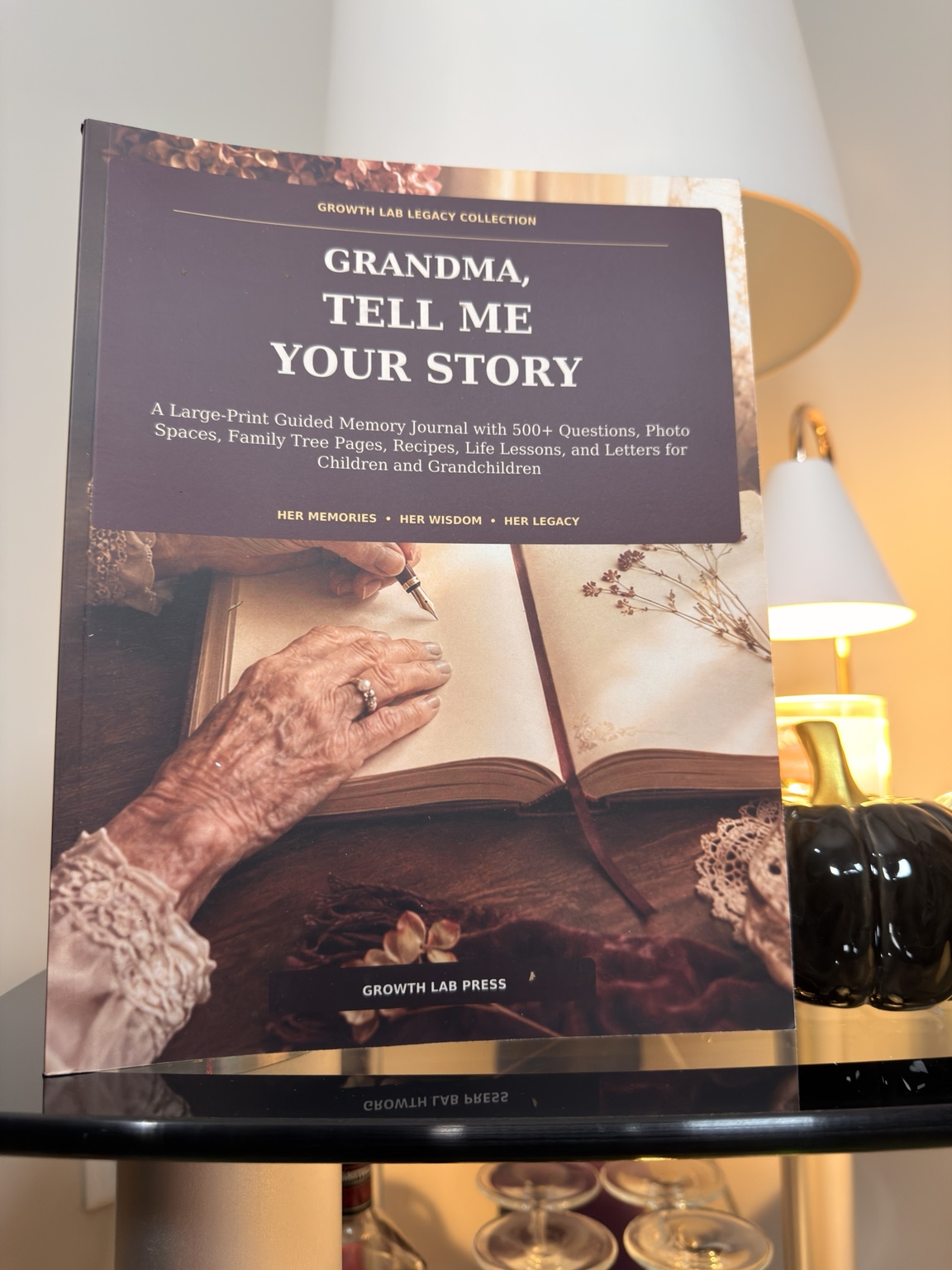
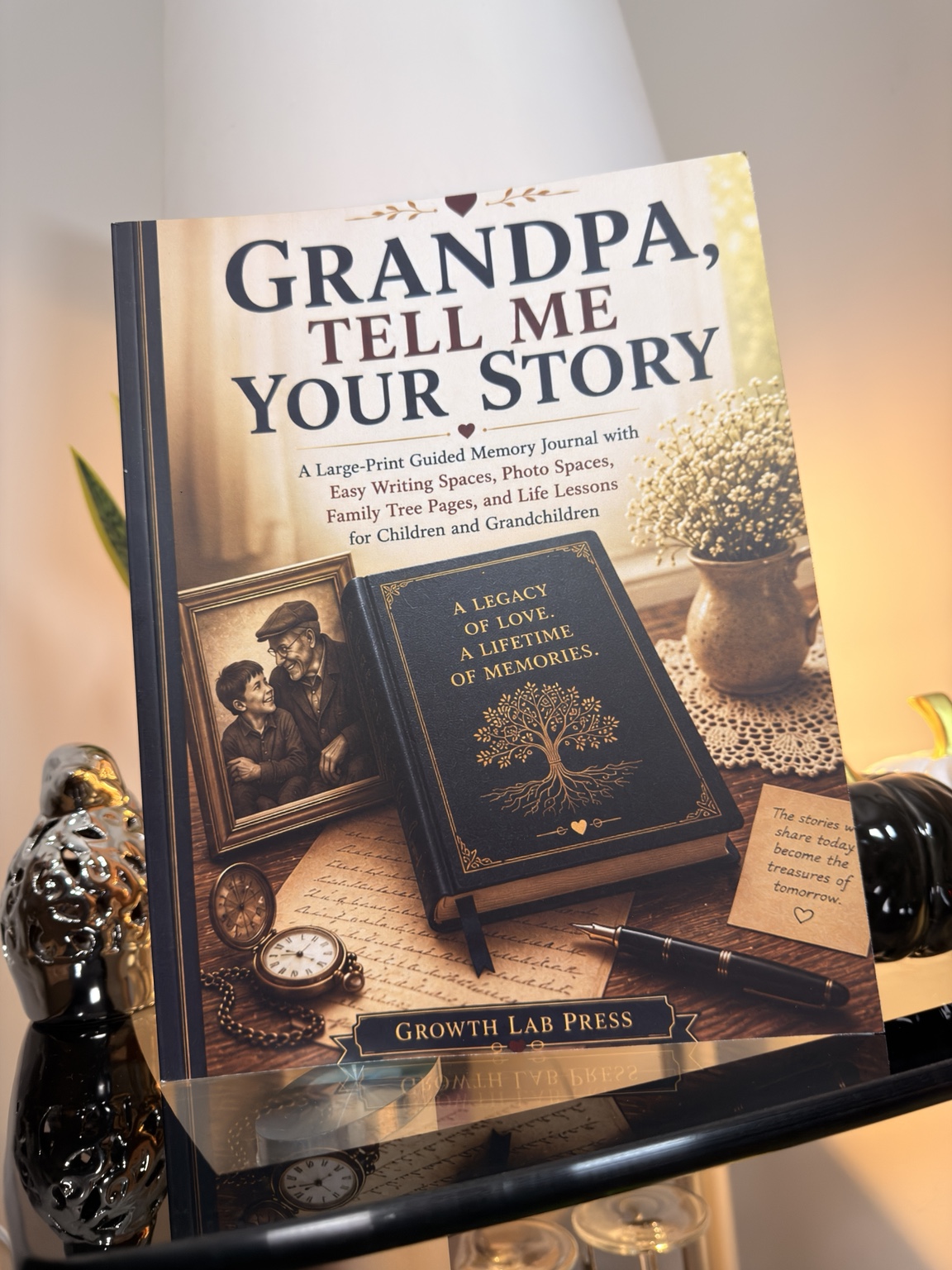
Grandma, Tell Me Your Story is a large-print guided memory journal with 531 thoughtful questions, photo spaces, family tree pages, recipes, life lessons and letters. Grandpa, Tell Me Your Story is a guided keepsake journal for preserving memories, milestones, family traditions and hard-earned wisdom. Both books are written by Michael Bennett and are available in paperback and hardcover.
The related life-story guide offers broader prompts about memories, traditions and lessons. The gift-selection guide explains how to compare readability, writing space, question range and family fit before choosing a journal.
Use the product links below to review the current descriptions and formats. The 15 childhood-home questions in this article were created for this guide and are not presented as sample pages from either journal.
Common questions
What should I ask first about a grandparent's childhood home?
Begin with an easy visual prompt: What is the first thing you picture when you think of the home where you grew up? Let the answer guide the next question.
How many questions should I ask in one visit?
Start with three or four. A useful conversation follows the stories that matter rather than trying to finish the full list.
Should I record my grandparent's answers?
Only with permission. Explain how the recording will be saved and shared, and let your grandparent pause, remove a passage or keep the conversation private.
What if my grandparent does not remember an exact address or date?
Do not turn the conversation into a test. Record what they remember, mark uncertain details for later checking and avoid publishing private addresses.
Sources and further reading
Published by Growth Lab Press. Read our editorial standards.