Family storytelling
18 Questions to Ask Grandparents About Family Traditions
Use 18 thoughtful questions to record a grandparent's family traditions, celebrations, sayings and changing customs, plus a simple preservation plan.
Choose one family tradition for the first conversation
Begin with one tradition rather than trying to document every holiday, celebration and custom in a single visit. A tradition might be a birthday routine, a yearly journey, a Sunday meal, a naming custom, a song, a way of welcoming guests or an ordinary habit that the family repeated.
Tell your grandparent why you are asking and make every question optional. A useful opening is: I would love to understand how our family did this and what you remember most. Could I ask you a few questions?
The Smithsonian Folklife and Oral History Interviewing Guide advises treating prepared questions as guideposts rather than a rigid script. It recommends clear, open-ended questions and following the stories that arise. The Library of Congress also suggests asking permission before recording an older relative's conversation.
Prepare to listen and record respectfully
Choose a quiet, comfortable place and start with three or four questions. If you plan to use a phone or recorder, explain how the recording will be stored and who may receive it. Ask permission before pressing record, and stop whenever the storyteller asks.
Bring one object that may help: a photograph, invitation, serving dish, piece of clothing, handwritten note or decoration connected with the tradition. Let the object prompt the story without assuming that your description of it is correct.
Do not publish private family details, home addresses or another person's story without permission. If the tradition involves grief, conflict, religion, migration or financial hardship, let your grandparent decide how much to share.
- Choose one tradition and three or four starting questions
- Bring one relevant photograph or object if available
- Ask permission before recording or photographing
- Let the storyteller skip any question
- Plan another visit instead of rushing to finish
Questions 1–6: Find the beginning of the tradition
Start with the grandparent's own experience rather than asking for a perfect historical account. The first six questions establish when, where and with whom the tradition happened.
- 1. What family tradition from your childhood can you picture most clearly?
- 2. What is your earliest memory of taking part in it?
- 3. Where did it usually happen, and what did that place look like?
- 4. Who seemed to organize or lead the tradition?
- 5. Who normally joined in, and was anyone given a special role?
- 6. How did you know it was time for the tradition to begin?
Questions 7–12: Rebuild the sights, sounds and routines
Specific actions and sensory details can make a family record more useful than a label such as holiday dinner. Ask one question at a time and wait through a quiet pause before adding a follow-up.
- 7. What preparations happened first, and who did each job?
- 8. Which foods, objects, clothes or decorations belonged to the tradition?
- 9. Were there songs, prayers, jokes, greetings or family sayings that were always included?
- 10. What were children expected to do, and what were they told not to do?
- 11. Did guests or neighbours take part, and how were they welcomed?
- 12. Which small detail would someone outside the family probably never know?
Questions 13–18: Follow how the tradition changed
Traditions are not fixed. Families adapt them when people move, marry, work different hours, gain new relatives or lose access to familiar places and materials. These questions preserve the changes as part of the story.
- 13. How was the tradition different in your parents' or grandparents' time?
- 14. What changed when your generation became responsible for it?
- 15. Did moving, marriage or new family members add anything to the custom?
- 16. Is there a part of the tradition that stopped, and what happened?
- 17. Which part would you most like the family to continue?
- 18. If you were teaching the tradition to us next week, what would we do first?
Use follow-up questions that invite detail
A short follow-up can turn a general answer into a scene. If your grandparent says everyone helped prepare, ask who did which task. If they mention a special object, ask where it came from and who kept it.
Avoid combining several questions or correcting a date while the story is unfolding. Record uncertain details as uncertain and check names or dates later if the storyteller wants you to.
- What happened next?
- Who taught you how to do that?
- What did the room sound or smell like?
- Can you show me how it was done?
- What made that part important to you?
- Who else might remember this differently?
Turn the interview into a one-page family tradition card
After the conversation, create a one-page record that another relative could understand. Give the tradition a simple name and use the storyteller's own words where possible. The card can accompany a longer audio recording without replacing it.
For example: Sunday welcome meal — held at Grandmother's home after the morning service — eldest child set the table — visitors received the first plate — rice dish changed after the family moved — storyteller wants the greeting and shared meal to continue.
Read the card back to your grandparent. Ask what should be corrected, added or kept private. A polished family record should still sound like the person who shared it.
- Tradition name
- When and where it happened
- People and their roles
- Objects, foods, words or music
- Steps in the usual order
- Changes across generations
- What the storyteller wants preserved
Save recordings, photographs and notes clearly
Give each recording and photograph a useful filename that includes the subject and conversation date. Write a short note naming the participants and the general tradition. Keep a second copy of important files in another safe location.
If you make a transcript, preserve the speaker's meaning and natural expressions. Mark an unclear word or uncertain name instead of quietly guessing. Ask before sharing the transcript, recording or tradition card outside the family.
Add related photographs only when people pictured in them are comfortable with that use. A private family archive does not need to become a public social-media post.
Try this opening and closing script
Opening: I keep thinking about the way our family celebrated together. I would like to understand how it worked when you were young. May I record a few questions, or would you rather I take notes?
First question: What family tradition from your childhood can you picture most clearly? Listen to the full answer, then choose one follow-up that fits what was said.
Closing: Thank you for explaining that. I am going to write a short tradition card and show it to you before sharing it. Is there anything from today's conversation that you want kept private?
Continue family-tradition stories in a guided journal
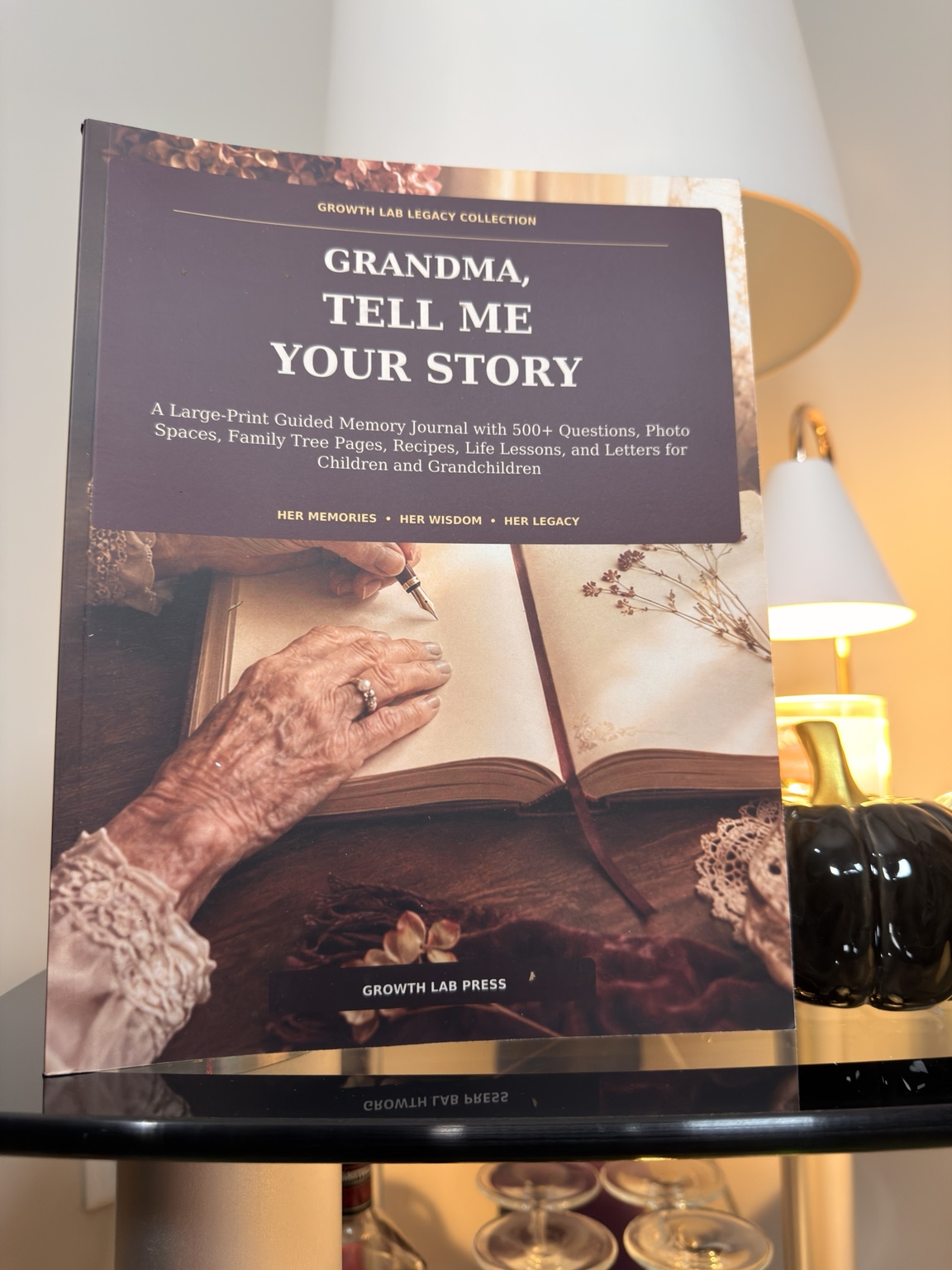
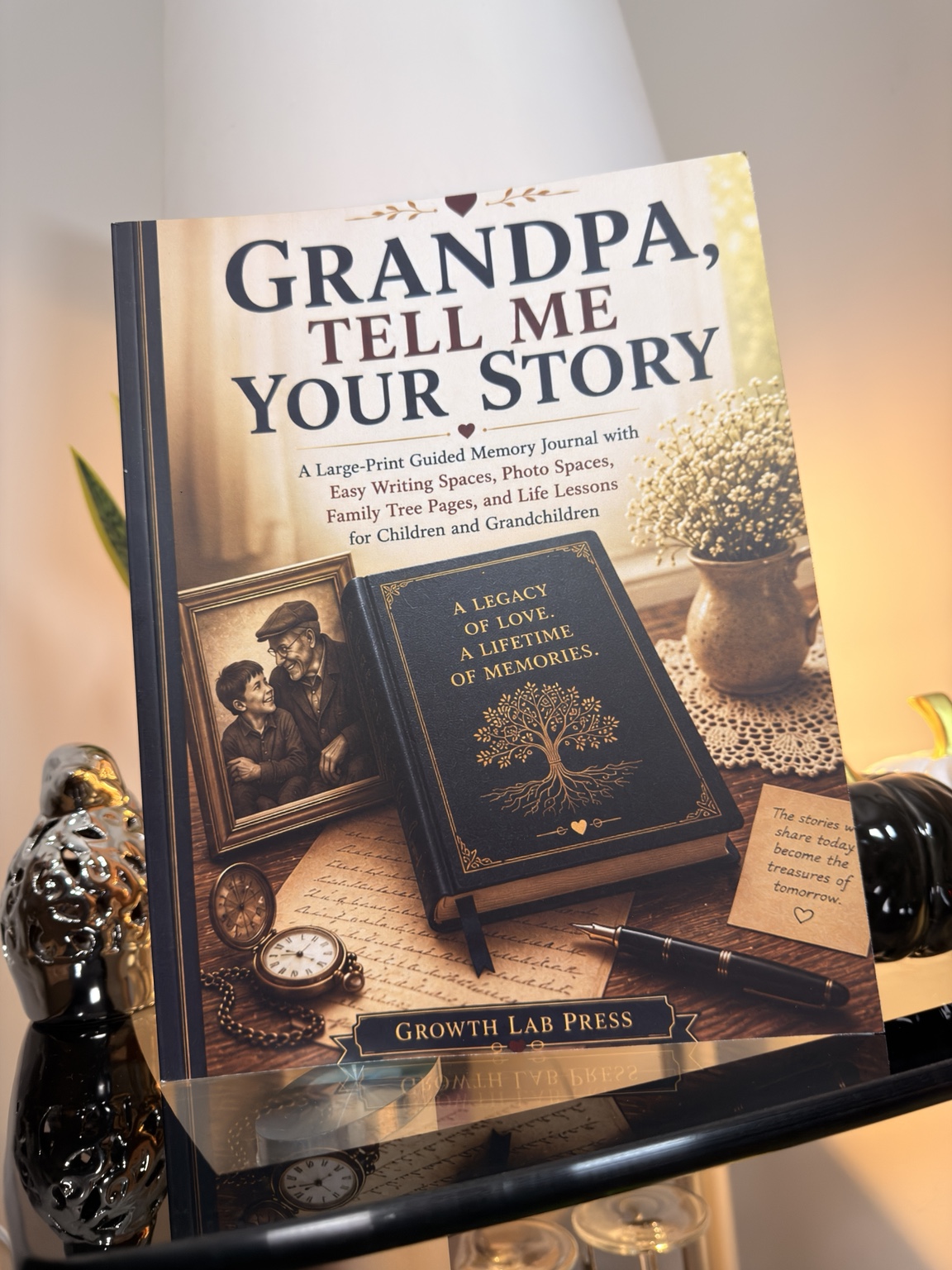
Grandma, Tell Me Your Story is a large-print guided memory journal with 531 thoughtful questions, photo spaces, family tree pages, recipes, life lessons and letters. Grandpa, Tell Me Your Story is a guided keepsake journal for memories, milestones, family traditions and hard-earned wisdom. Both books are written by Michael Bennett and are available in paperback and hardcover.
The related life-story guide offers broader questions about childhood, family, turning points and everyday life. The journal-selection guide helps compare readability, writing space, question range and family fit.
Use the product links below to review the current descriptions and formats. The 18 family-tradition questions in this article were created for this guide and are not presented as sample pages from either journal.
Common questions
What is a good first question about family traditions?
Ask: What family tradition from your childhood can you picture most clearly? It invites a personal memory without assuming which holiday, celebration or custom matters most.
How many questions should I ask in one visit?
Start with three or four and follow the story that interests your grandparent. Plan another conversation instead of trying to complete all 18 questions at once.
Should I record my grandparent talking about family traditions?
Only with permission. Explain how the recording will be stored and shared, and let the storyteller pause, remove a passage or choose notes instead.
What if different relatives remember the tradition differently?
Keep both accounts and label who shared each one. Family memories can differ; the goal is to preserve each person's experience rather than force one official version.
Sources and further reading
Published by Growth Lab Press. Read our editorial standards.