Family storytelling
15 Questions to Ask Grandparents About Their School Days
Use 15 warm questions to record a grandparent's school-day stories, plus gentle follow-ups, a simple note template and a fictional example.
Begin with one ordinary school-day scene
Instead of asking a grandparent to explain all of their school years at once, begin with one scene: the route to school, the classroom door, a lunch break or the moment the final bell rang. A specific starting point is easier to picture and gives you natural details to follow.
Explain why you are asking and what you hope to keep. If you want to make an audio or video recording, ask permission before you start and say who may hear it. The Smithsonian Institution Archives recommends explaining how an oral-history interview may be used, making clear that the person can choose which questions to answer and allowing the recorder to be turned off at any time.
Use the list below as a guide, not a test. Ask one question at a time, listen without interrupting and let the conversation move toward a story that matters to your grandparent. A name, date or spelling can be checked later.
15 questions to ask a grandparent about school
These questions were written for this article. Choose three or four for one conversation rather than rushing through all 15. Replace school with lessons, training or another form of education when that better fits the person's experience.
Questions beginning with what, how and tell me about usually invite more than a yes-or-no answer. The Smithsonian oral-history guide likewise recommends open-ended questions, simple wording and follow-ups such as who, where and how.
- 1. What is the first school building or learning place you remember?
- 2. How did you usually travel to school, and who went with you?
- 3. What happened from the moment you arrived until the first lesson began?
- 4. What did your classroom look, sound or smell like?
- 5. Which teacher do you remember most clearly, and what made that person memorable?
- 6. Which subject or lesson did you enjoy, and what did you do in that class?
- 7. Was there a subject you found difficult or disliked? What made it difficult?
- 8. What books, slates, notebooks, pens or other supplies did you use?
- 9. What did you eat or do during the lunch break?
- 10. What games, clubs, sports or playground activities did you enjoy?
- 11. Who were your school friends, and what did you do together?
- 12. What rules were students expected to follow?
- 13. What school celebration, trip, performance or funny moment do you still remember?
- 14. What did you hope to do when you finished school?
- 15. What would you want a younger family member to understand about school in your time?
Turn a short answer into a fuller story
A short answer is not a failure. It may mean the question was too broad, the person needs time to think or a different detail will be easier to recall. Wait quietly for a moment before moving on.
Repeat one useful word from the answer and invite more. If your grandparent says, We walked, you might ask, Who walked with you? or What did you pass along the way? If they mention a teacher, ask what that teacher said or did on a typical day.
Avoid putting your own answer inside the question. Instead of asking, School must have been stricter then, wasn't it?, ask, What rules do you remember? This leaves room for an answer that may differ from your expectation.
- Who else was there?
- What happened next?
- Where were you when that happened?
- How did you feel about it at the time?
- What detail do you remember most clearly?
- Is there a photograph, report card or object connected with that story?
Use a photograph or object without guessing for them
A class photograph, school badge, book, uniform button or report card can provide a helpful starting point. Ask what the person notices first. Then ask who, where and approximately when. Do not identify a person or date as certain when it remains a family guess.
The Smithsonian guide suggests bringing photographs and other visuals because they can help prompt details. It also advises asking for the spelling of names and places that were not understood. Photograph or scan an item only with the owner's permission, and record who supplied the identification.
Write uncertainty clearly. Useful labels include Grandma's estimate, family identification not yet confirmed and date based on school year. A careful note preserves the story without turning an uncertain detail into a fact.
Keep the story with a simple school-memory note
Use one note for each story instead of mixing several memories into a long unlabeled file. This makes it easier to add a photograph, check a place name or return with a follow-up question later.
Copy the fields below into a notebook or shared family document. Fill only what is known. If you make a recording, use the same date and short title in both the recording filename and the written note.
- Story title: a short phrase in the speaker's own words
- Person speaking, interviewer and date recorded
- School name and location, if known
- Approximate years or age during the story
- People named and their relationship to the speaker
- Main story in the speaker's words
- Exact quotation worth preserving
- Photograph or object connected with the memory
- Names, dates or details still to check
- Permission for private family use or wider sharing
See how one answer becomes a useful family record
This fictional example shows the note format; it is not a story from either linked journal. Question: How did you travel to school, and who went with you? Answer: Grandpa Daniel said he walked with his older brother and two neighbours. They met beside a small grocery shop and carried their lunches in reused tins.
Gentle follow-up: What did you notice on the way? Grandpa Daniel remembered crossing a wooden footbridge after heavy rain and waiting for younger children before continuing. He was unsure of the shop owner's surname and estimated that the story took place when he was nine or ten.
Record note: speaker's estimate, about age nine or ten; school name not yet recorded; shop owner's surname to check with Aunt Rosa; no photograph attached; audio approved for private family use only. The note keeps the vivid details while leaving uncertain information visibly uncertain.
Close the conversation and save it carefully
End with a light question such as, What part of school would you enjoy seeing again? or, Is there another school story you would like us to remember? Thank the person and ask whether they would like to correct, remove or add anything after hearing the note read back.
Give the recording and note a clear name, such as Daniel-school-walk-2026-10-03. Check that the audio plays before deleting anything from the recording device, and keep a second copy in a different safe place. The Smithsonian oral-history guide recommends identifiable filenames, checking the file and making duplicate copies.
Do not publish a recording, photograph or sensitive story simply because it was shared with you. Keep the agreed permission with the note and ask again if the intended audience changes.
Continue the school story in a guided journal
The related life-story guide offers more questions about childhood, family, traditions and turning points. The journal-gift guide helps you compare readability, writing space, question style and ways to use a journal when the recipient prefers speaking to writing.
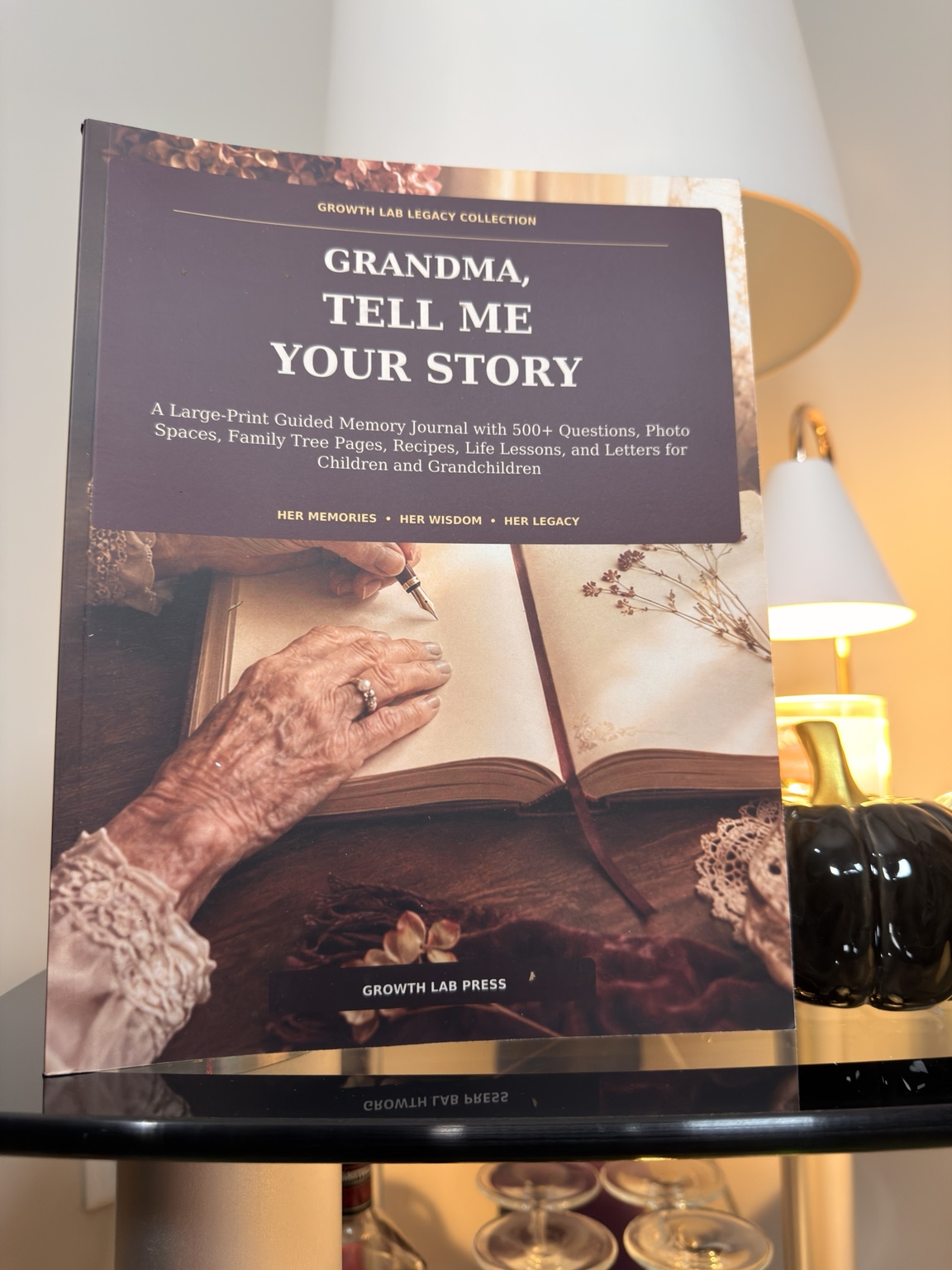
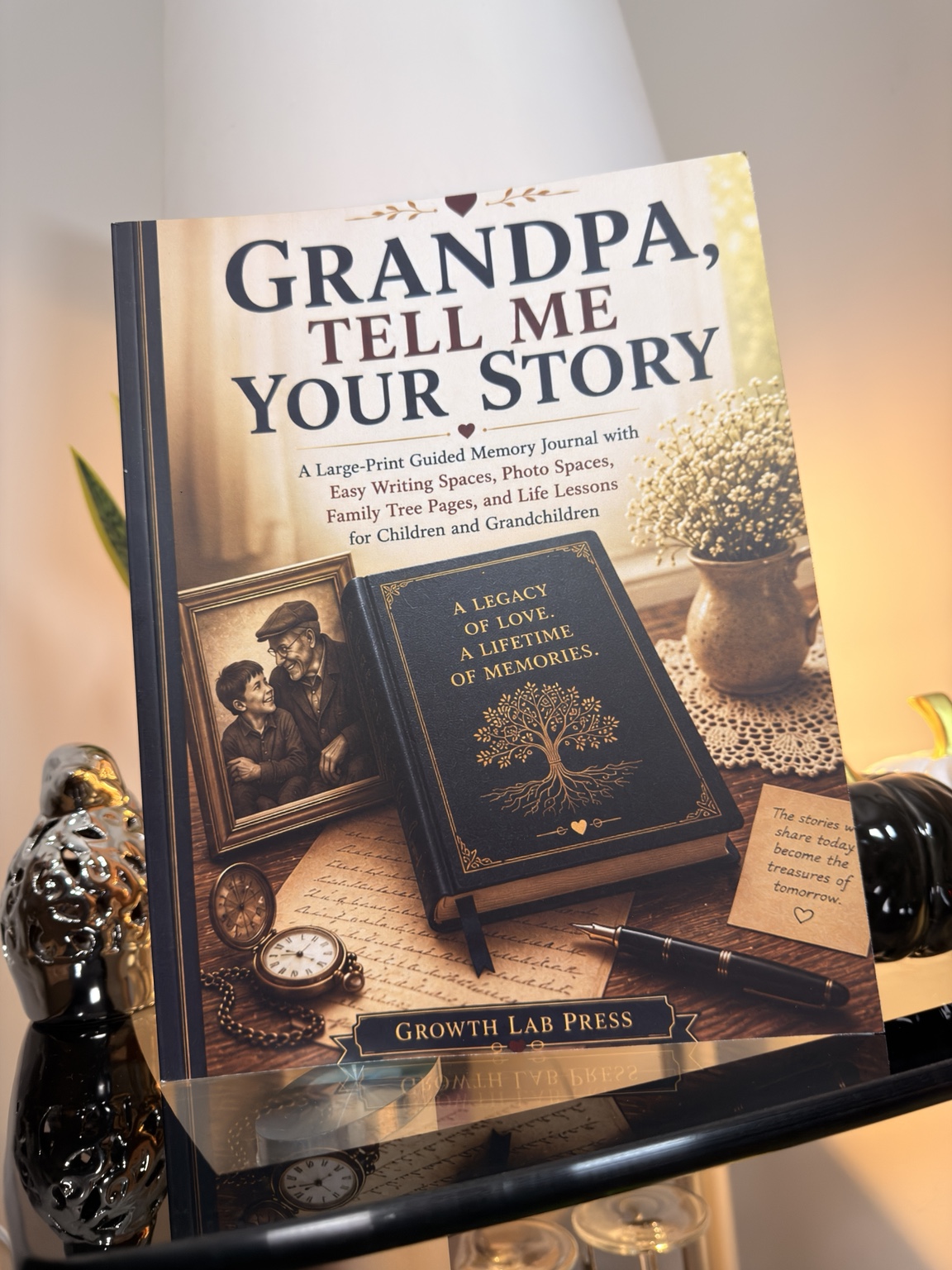
Grandma, Tell Me Your Story is a large-print guided memory journal with 531 questions, photo spaces, family tree pages, recipes, life lessons and letters. Grandpa, Tell Me Your Story is a guided keepsake journal for memories, milestones, family traditions and wisdom. Both are available in paperback and hardcover and are written by Michael Bennett.
Use the product links below to inspect the current book previews and formats. The 15 school-day questions in this article are original blog prompts and are not presented as sample pages from either journal.
Common questions
What is a good first question to ask a grandparent about school?
Ask: What is the first school building or learning place you remember? It begins with one concrete scene and allows the person to decide which part of the memory to describe.
How many questions should I ask in one visit?
Start with three or four. Follow the stories that interest your grandparent, and save the remaining questions for another conversation rather than rushing through the list.
What if my grandparent does not remember a date or name?
Record what they do remember, label estimates clearly and make a separate note of details to check. Do not turn a family guess into a confirmed fact.
Can I record the conversation on my phone?
Ask permission before recording, explain how the file may be used and allow the person to pause or stop it. Afterward, check that the file plays and keep a backup with a clear filename.
Sources and further reading
Published by Growth Lab Press. Read our editorial standards.