Family storytelling
15 Questions to Ask Parents About Their First Job
Use these 15 open-ended questions to record a parent’s first-job story, including the workplace, pay, people, routines and lessons they remember.
Begin with one first-job scene
Do not begin by trying to document an entire working life. Start with one place: the first paid job your parent remembers. It may have been a regular position, seasonal work, helping in a family business or a small job done for neighbours. Let your parent decide what counts as the beginning of their work story.
Ask permission before taking notes or recording. Explain whether the story will stay private, be shared with relatives or become part of a family keepsake. The Smithsonian Institution Archives recommends explaining how an oral-history interview may be used and making clear that the person can decline a question or stop the recorder.
Choose a quiet time and begin with an easy factual question. Then move toward sights, sounds, routines and feelings. The aim is to preserve your parent's experience in their own words, not to test dates or force a polished life lesson.
Prepare a short, comfortable conversation
Select four or five questions for the first conversation. Keep the full list nearby, but follow the story instead of rushing through every item. A photograph, old uniform, payslip, tool, lunch container or workplace name can provide a concrete starting point when your parent wants one.
The Smithsonian's oral-history guidance recommends open-ended questions, one question at a time and simple follow-ups such as who, what, where, when, how and why. It also advises avoiding leading questions that place the interviewer's assumption inside the answer.
For example, replace You must have hated the long hours, didn't you? with What was a normal shift like? If the first answer is brief, wait, then ask for one detail rather than immediately changing subjects.
- Agree on notes, audio or no recording
- Choose four or five questions
- Bring one relevant photograph or object, if available
- Write down unfamiliar names and places to check later
- Leave time to stop, correct or add to the story
Ask these 15 questions about a parent's first job
These original prompts move from the basic setting to people, routines, money and reflection. Ask them in any order that feels natural. A useful interview may spend most of its time on only two or three questions.
- 1. What do you consider your first real paid job?
- 2. How old were you, and how did you hear about the work?
- 3. Where was the workplace, and what did it look like when you arrived?
- 4. What did you wear, carry or bring with you on your first day?
- 5. How did you travel to work, and how long did the journey take?
- 6. Who showed you what to do at the beginning?
- 7. What tasks were you responsible for during a normal shift?
- 8. What sounds, smells or small details do you still connect with that workplace?
- 9. Who did you work beside, and what do you remember about them?
- 10. What part of the job was easiest to learn, and what part took practice?
- 11. How were hours, breaks and days off arranged?
- 12. How were you paid, and what do you remember doing with your first pay?
- 13. Was there a mistake, surprise or funny moment you still remember?
- 14. What did that first job teach you about work, money or people?
- 15. What would someone starting the same kind of job today find most different?
Use follow-up questions that uncover details
A first answer often contains the doorway to the fuller story. If your parent says, My aunt found the job for me, ask how the aunt knew the employer. If they say the workplace was busy, ask what a busy moment looked or sounded like. If they remember buying something with their first pay, ask why they chose it and whether anyone went with them.
Repeat a key phrase instead of changing the subject. You might say, You mentioned a blue apron—what do you remember about it? This keeps the follow-up connected to your parent's words.
Do not correct an uncertain date during the conversation. Record an estimate as an estimate and make a separate note to check a document later. Personal experience and verifiable facts can sit together as long as the record clearly distinguishes them.
- Can you describe that place more closely?
- Who else was there?
- What happened next?
- How did you feel about it at the time?
- What did that word or job title mean there?
- Is there an object, photograph or document connected with it?
Record pay and prices without turning a memory into a fact
Questions about first pay can produce vivid stories, but the exact amount may be difficult to remember. Write the number exactly as your parent gives it, together with any uncertainty: about twelve dollars for the week, according to Dad's estimate is clearer than presenting twelve dollars as independently confirmed.
Ask what the pay meant in daily life. Did it help at home, go into savings, pay for transport or buy one memorable item? That answer may be more important to the family story than an exact figure.
If a payslip, diary, advertisement or union card is available, photograph it only with permission. Keep the document description beside the interview note, and do not assume a general historical wage or price proves what one person received.
Turn one answer into a useful family-history note
This fictional example demonstrates the method; it is not a story from the linked journals. Question: How did you travel to your first job? Answer: Mom Elena said she took an early bus to a bakery and walked the final two blocks. She carried a packed lunch because she did not want to spend any of her first week's pay.
Follow-up: What did you notice when you arrived? She remembered the smell of bread before she opened the door and a supervisor who gave her a white apron. She estimated that she was seventeen but was unsure of the bakery's street number.
Record note: Elena's first bakery job; about age seventeen, according to her estimate; bus route and street number not yet checked; white apron and bread aroma remembered clearly; approved for a private family journal; no public sharing permission requested. The note preserves detail without disguising uncertainty.
Save the story so another relative can understand it
The Library of Congress suggests asking an older relative for permission to record a conversation and notes that a phone or digital recorder can capture stories for later transcription and sharing. Permission should match the actual use. A private family recording is not automatic permission to post the audio online.
Give the file and written note the same clear label, such as Elena-first-bakery-job-2026-10-05. Include the speaker, interviewer, date, approximate place, names mentioned, details to verify and the agreed audience. Check that an audio file plays before removing it from the recording device, and keep another copy in a safe location.
Read the short note back to your parent. Invite corrections and ask whether there is a question they expected but did not hear. Their correction belongs in the record.
- Speaker, interviewer and conversation date
- Job title, employer and place, if known
- Approximate age and year
- People named and their relationship
- Memorable routine, object, sound or phrase
- Details still to verify
- Permission for private use or wider sharing
Continue the work story in a guided journal
The related life-story guide offers more prompts about childhood, family, traditions and turning points. The journal-gift guide helps you compare readability, writing space, question style and ways to help when a parent prefers speaking to writing.
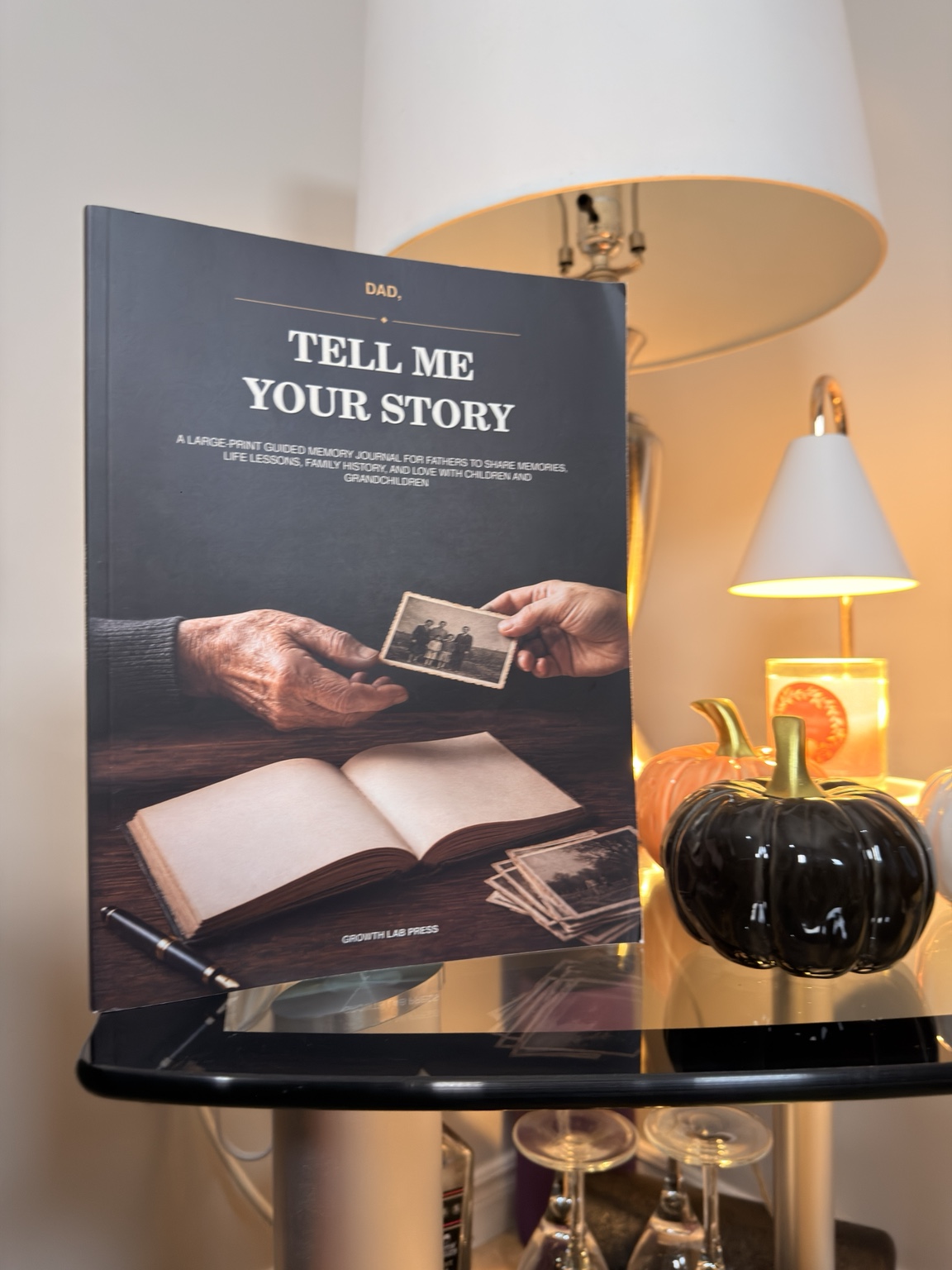
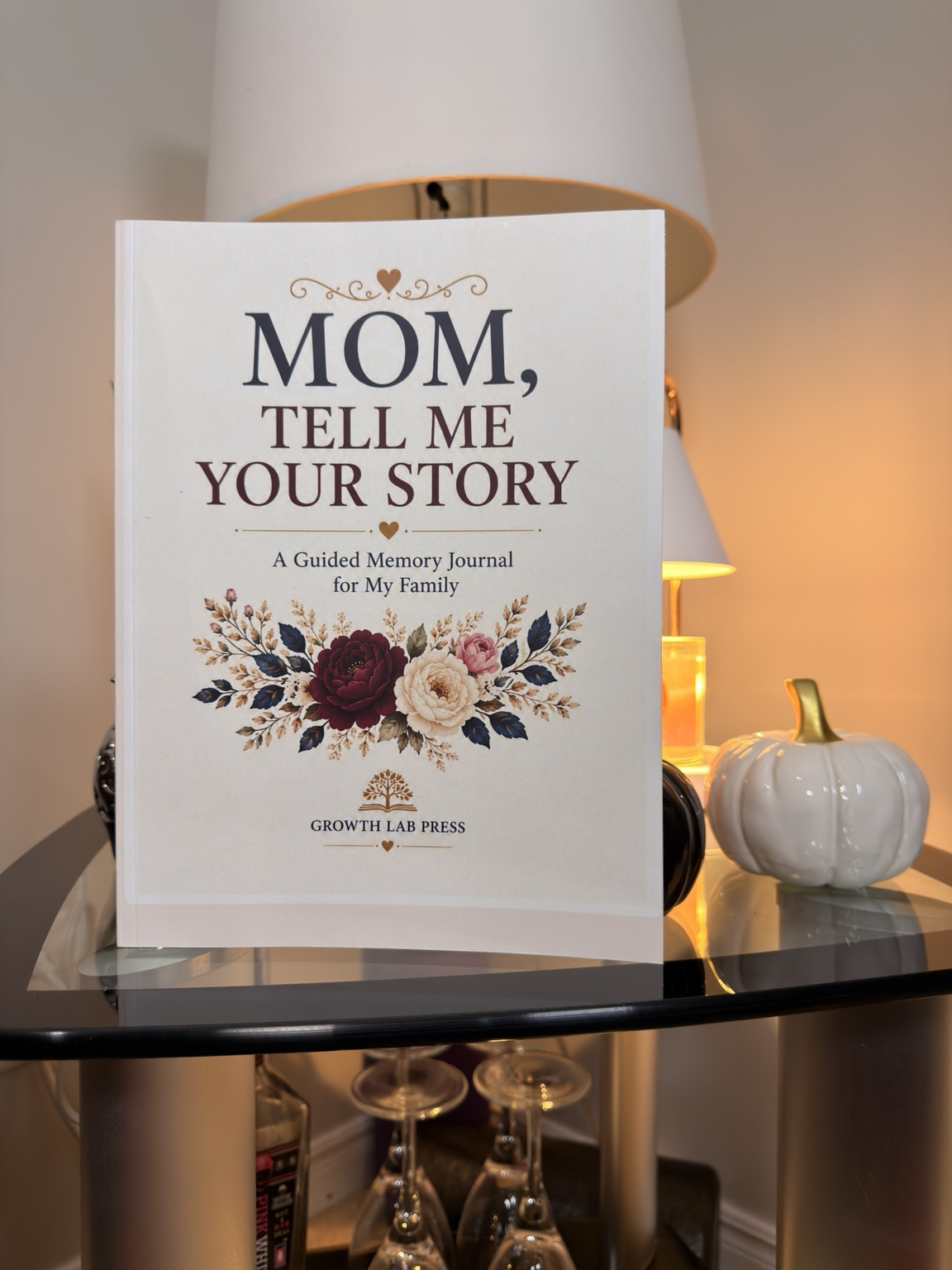
Dad, Tell Me Your Story is a large-print guided memory journal for fathers to record memories, family history, life lessons and love. Mom, Tell Me Your Story is a large, easy-read guided life-story journal for mothers to preserve memories, wisdom and family history. Both are available in paperback and hardcover and are written by Michael Bennett.
Use the product links below to inspect the current descriptions and formats. The 15 first-job questions in this article are original blog prompts and are not presented as sample pages from either journal.
Common questions
What is the best first question to ask a parent about work?
Ask: What do you consider your first real paid job? It lets your parent define the starting point and usually leads naturally to their age, workplace and how they found the job.
How many first-job questions should I ask at once?
Begin with four or five. Follow the details your parent wants to share and save the remaining questions for another conversation rather than rushing through the list.
What if my parent cannot remember the year or exact pay?
Record their estimate clearly as an estimate. Keep uncertain details on a separate checklist and verify them later only when a reliable family document or record is available.
Can I record my parent's first-job story on my phone?
Ask first, explain who may hear the recording and allow your parent to pause or stop. Keep the agreed permission with the file, and ask again before sharing it with a wider audience.
Sources and further reading
Published by Growth Lab Press. Read our editorial standards.