Family storytelling
How to Read Old Family Letters Together: A Simple Activity
Turn one old family letter into a shared activity with a readable transcript, six conversation prompts and a simple way to label uncertain details.
Start with one letter and one invitation
An old letter can give a family visit a clear starting point: one person, one message and a few details to explore together. Try an ordinary postcard or a short note about a journey, a garden or a family visit. You do not need to sort an entire box before beginning.
Ask, “Would you like to read this together, or would you prefer something else?” Check with the person who keeps the letters before copying them. Agree who may see the result, and let anyone skip a passage or stop. Private correspondence does not need to become a public family-history project.
For a first session, set out a readable copy and a separate sheet for notes. Offer to read aloud or let your relative lead. Choose a stopping point together, such as one paragraph or one page.
Make a reading copy and keep the original
The U.S. National Archives advises using digital copies to reduce handling and retaining originals after digitizing. Its guidance also warns against automatic-feed scanners for fragile or valuable papers. See its digitizing guide in Sources and further reading before copying delicate material.
For this activity, use a copy you can comfortably enlarge. Keep the envelope image with the letter if you have one. Give the pages a shared label, such as Letter-01-page-01 and Letter-01-envelope, so the pieces remain easy to connect.
Keep an unchanged image alongside your working transcript. A clearer reading version can sit beside it, with any explanatory additions clearly identified.
Write the words first, then add explanations separately
The National Archives transcription guidance recommends preserving the words as written, including spelling, and marking unreadable words with [illegible]. It also suggests comparing letter shapes elsewhere in the same document. You can use that approach for a family reading copy without turning every uncertain word into a research task.
Use three labels on your notes: Letter text, Family recollection, and Still uncertain. That makes room for a useful memory without silently inserting it into the writer’s words.
- Letter text, fictional example: “Dear May, We reached the cottage on Tuesday. Tom brought the [illegible] and we had tea outside.”
- Family recollection, fictional example: “I remember Tom bringing a folding table on our visits.”
- Still uncertain: The unreadable word has not been identified. The recollection alone does not establish that the letter says “table.”
- Next step: Look for the writer’s other examples of the same letters, or leave the gap and continue reading.
Six questions to explore the story around the letter
Pick one or two prompts that fit the passage. These are original conversation ideas, not a quiz or excerpts from a Growth Lab Press book. “I don’t know” is a complete answer; you can enjoy the letter without resolving every detail.
- Who wrote this, and what name did you use for them?
- Which phrase sounds most like the person you remember?
- What can you tell me about the place mentioned here?
- Was the ordinary event in this letter something your family did often?
- Is there a detail you remember differently, or one you are unsure about?
- What would you like a younger relative to understand when they read this?
Finish with a small context note
Copy the following fields onto your note sheet. Leave unknowns visible. In particular, distinguish a date written inside a letter from a postmark or a date someone remembers.
- Item label: Letter-01; number of pages and whether an envelope is included.
- Writer and recipient: names as written; relationship if known.
- Date: wording on the letter; “undated” if none is visible.
- Conversation: who added the recollection and the date you spoke.
- Uncertainties: names, words or dates still unresolved.
- Sharing: who may receive the copy; any passages to keep private.
- Location: where the original, images and transcript are kept.
Use a journal for the story the letter starts
If the conversation leads to a memory your relative wants to keep, add their approved account to a journal and note which letter prompted it. You can write a short entry such as “The cottage visits, discussed while reading Letter-01.” Keep the transcript with its source images so a later reader can distinguish the two records.
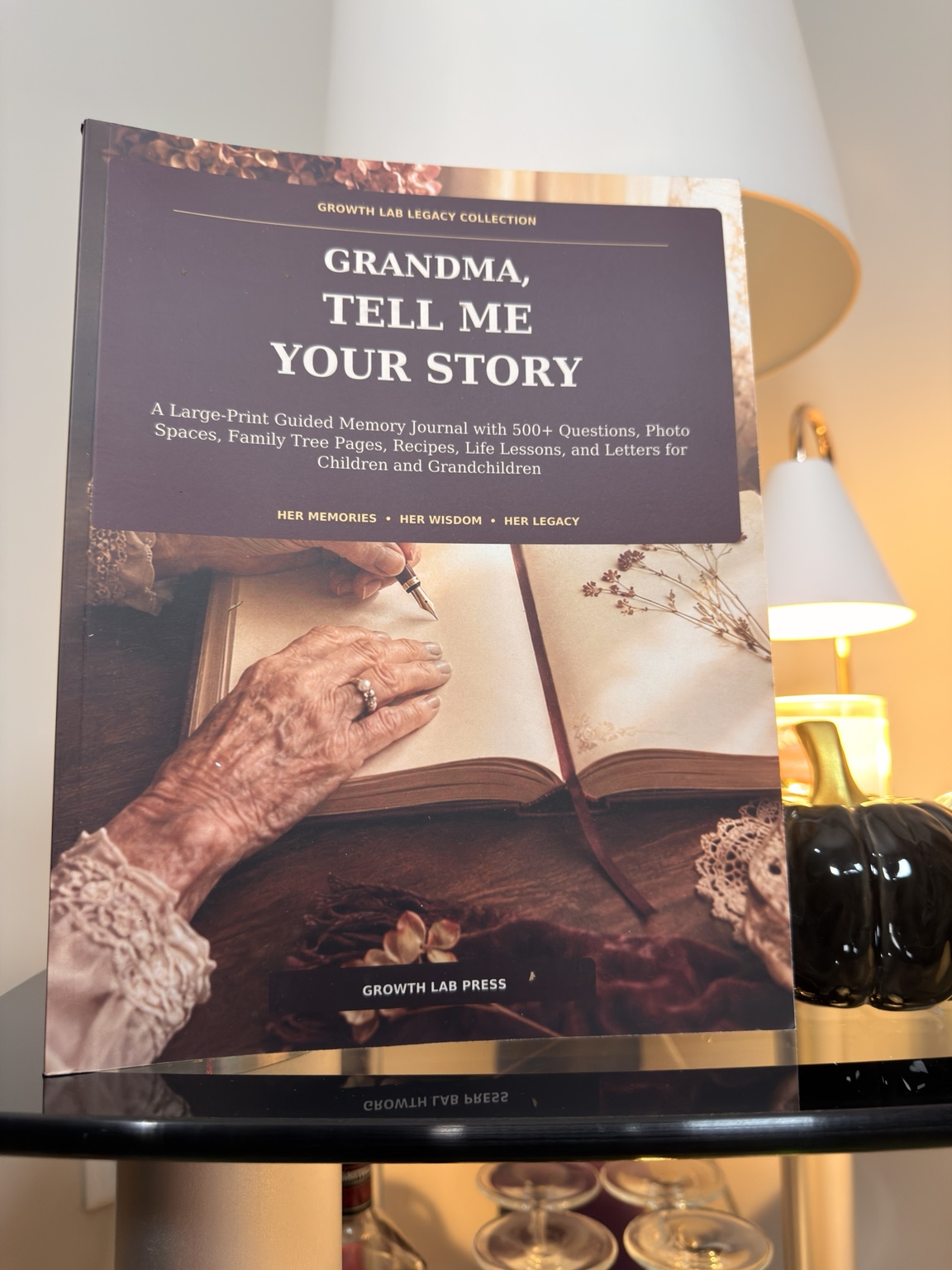
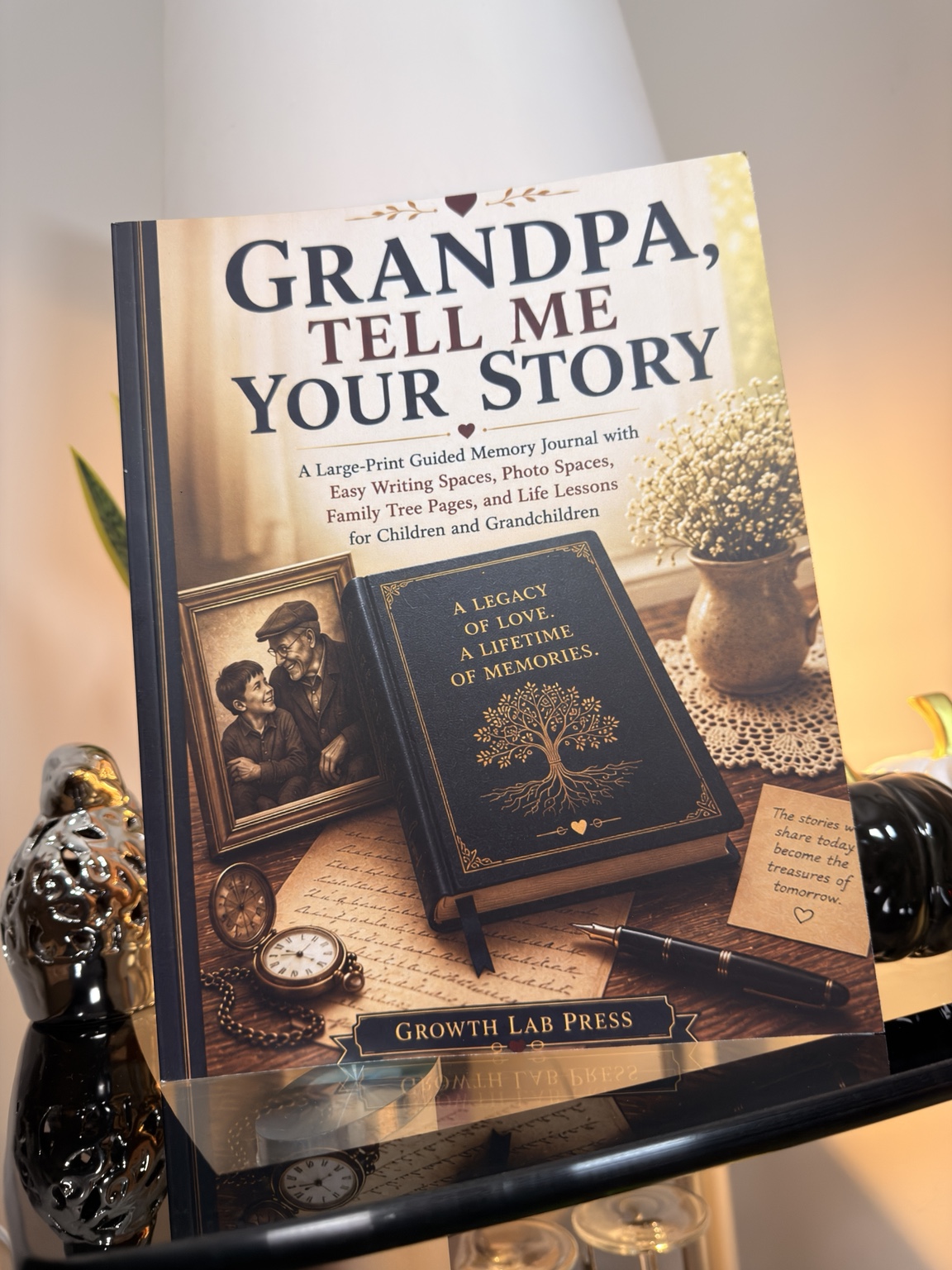
Grandma, Tell Me Your Story includes guided questions, photo and family tree pages, recipes and traditions. Grandpa, Tell Me Your Story is a guided keepsake journal for memories, milestones and family traditions. The linked book pages show the current editions and real book photos.
For more open prompts, use our Life Story Questions to Ask Parents and Grandparents guide. Our guide to choosing a family story journal can help if you want a place for future conversations. A plain notebook also works for this activity.
Common questions
What if nobody can read part of the handwriting?
Mark the word [illegible] and continue. Put possible readings in a separate uncertainty note. Keep the original image so you or another relative can revisit it later.
Should I correct spelling in an old letter?
Keep the original spelling in the transcript. If you make a modernized reading version, label it separately and retain the faithful transcript and image.
What if the letter brings up an uncomfortable subject?
Stop or choose another activity. Ask whether the person wants the notes kept, revised or left out. There is no requirement to finish the letter or share it with others.
Can we do this without an old letter?
Yes. Invite someone to write a short note about an ordinary day now. With their permission, date it and keep it for a future family reading session.
Sources and further reading
Published by Growth Lab Press. Read our editorial standards.