Family storytelling
How to Record a Family Recipe: 12 Questions to Ask
Record a parent or grandparent's family recipe with 12 practical interview questions, a clear note template and an example that separates facts from guesses.
Start with one recipe the cook wants to share
Ask your parent or grandparent to choose one dish that matters to them. It could be a celebration cake, a weekday soup, a packed lunch or a drink made for visitors. A familiar everyday recipe can hold just as much family history as a holiday meal.
Explain what you hope to make: private notes, an audio recording, a family recipe card or a small family cookbook. Ask permission before recording, photographing or sharing anything. The Library of Congress oral-history guide encourages asking an older relative whether you may record the conversation, and Smithsonian interview guidance treats recipes and their origins as useful family-folklore questions.
Keep the first session narrow. Write the name of the dish at the top of the page and let the cook decide whether to talk, demonstrate or do both. If they do not want to answer a question, leave it blank and move on.
Use a recipe record that keeps facts and stories together
Divide your notes into fields so another family member can see what is known, what needs checking and where the information came from. Write the cook's own words in quotation marks when a phrase matters, such as until it looks right. Do not quietly replace an uncertain detail with a guess.
Copy this template onto paper or into a shared family document. Add only the fields that suit the recipe.
- Recipe name and any family nickname for it
- Person sharing the recipe, interviewer and date recorded
- Who taught the cook and where the recipe came from
- Occasions, seasons or people connected with the dish
- Ingredients, amounts, brands and usual substitutions
- Equipment, pan size, temperature and approximate yield
- Method in the order the cook actually follows
- Sight, smell, sound or texture cues used to judge each step
- Details to test or confirm later
- Permission for private family use or wider sharing
12 questions to ask about a family recipe
Ask a few questions at a time instead of reading the whole list like a form. Follow an answer that opens a useful story. The Smithsonian's family-recipe guidance notes that the story behind a recipe matters alongside its ingredients and technique, and that an interview can happen separately if cooking and talking together feels awkward.
These 12 prompts were written for this article. Choose the ones that fit the cook and the dish.
- 1. What do you call this dish, and has our family ever used another name for it?
- 2. Who first taught you to make it, and what do you remember about learning?
- 3. When did our family usually serve it?
- 4. Which ingredient makes the biggest difference to the finished dish?
- 5. Are any of your measurements done by eye, by hand or with a particular cup or spoon?
- 6. Can you show me what the mixture should look or feel like at an important step?
- 7. What smell, sound or colour tells you it is ready for the next step?
- 8. Which pan, pot or tool do you normally use, and does its size matter?
- 9. What substitution works when an ingredient is unavailable?
- 10. What mistake did you learn to avoid?
- 11. Has the recipe changed since you first made it?
- 12. What story would you like our family to remember whenever we make it?
Record by-eye cooking without pretending it is exact
A cook may say a handful, a splash or enough flour. Write that phrase first. Then ask for a demonstration: Which hand? Which glass? About how full? Take a photograph of the utensil only with permission. If you later measure the amount, label it as your test, not as the cook's original wording.
Watch for sequence as well as quantity. Someone may list every ingredient correctly but forget that one is divided between two steps. Read the method back in order: First you do this, then this. Ask what happens next and where waiting time belongs.
Keep uncertainty visible. Useful labels include cook's usual method, family estimate and not yet tested. A transparent note helps the next person decide what to confirm instead of mistaking a polished sentence for a verified instruction.
See a short fictional recipe-history example
This made-up example shows how the template works; it is not a recipe from either linked book. Recipe name: Sunday Apple Crumble. Shared by: Grandma Lee. Recorded by: her granddaughter on 30 September 2026. Source: Grandma Lee says she learned the basic method from her older sister and later reduced the sugar. Occasion: served after Sunday lunch in autumn.
Technique note: Grandma Lee described the topping as ready when it feels like coarse crumbs. She demonstrated the texture but did not give an exact mixing time. Equipment note: she normally uses the blue oval baking dish; its capacity has not yet been measured. Family estimate: six servings. Detail to test: weigh a handful of oats during the next cooking session.
Story note: the family used apples from a neighbour's tree when available. Sharing permission: the written entry may go in the private family cookbook; ask again before posting the recording or photographs publicly. This format preserves the useful detail without turning an uncertain measurement into a false fact.
Review the entry with the person who shared it
Read the finished entry back or print a copy for review. Ask whether names are spelled correctly, whether the method is in the right order and whether any part should stay private. Add corrections with a date instead of hiding the change.
Keep the recipe notes, recording and photographs under the same simple reference, such as Family-recipe-001. Save a second copy in a place your family can access. If you prepare a cookbook, Smithsonian guidance suggests that collected family recipes can be organised and shared in that form; the people who contributed should still know how their material will be used.
When you cook from the notes, record what you changed and what happened. A tested revision can sit beside the original account. Neither version needs to erase the other.
Continue the family story beyond one dish
One recipe may lead naturally to stories about school lunches, first jobs, migration, gardens, markets or celebrations. The related life-story guide offers more questions for parents and grandparents, while the journal-gift guide helps you compare formats before choosing a book.
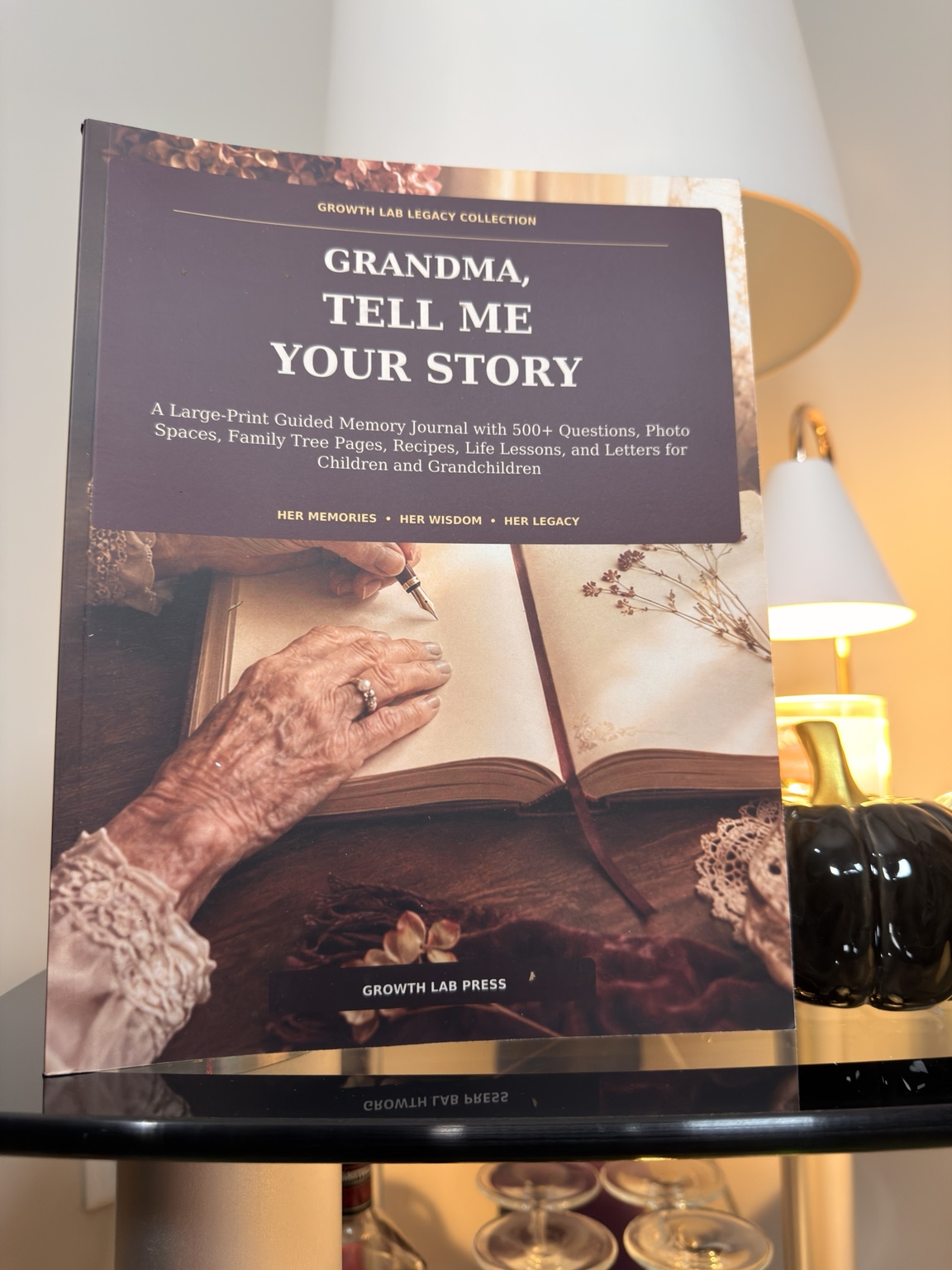
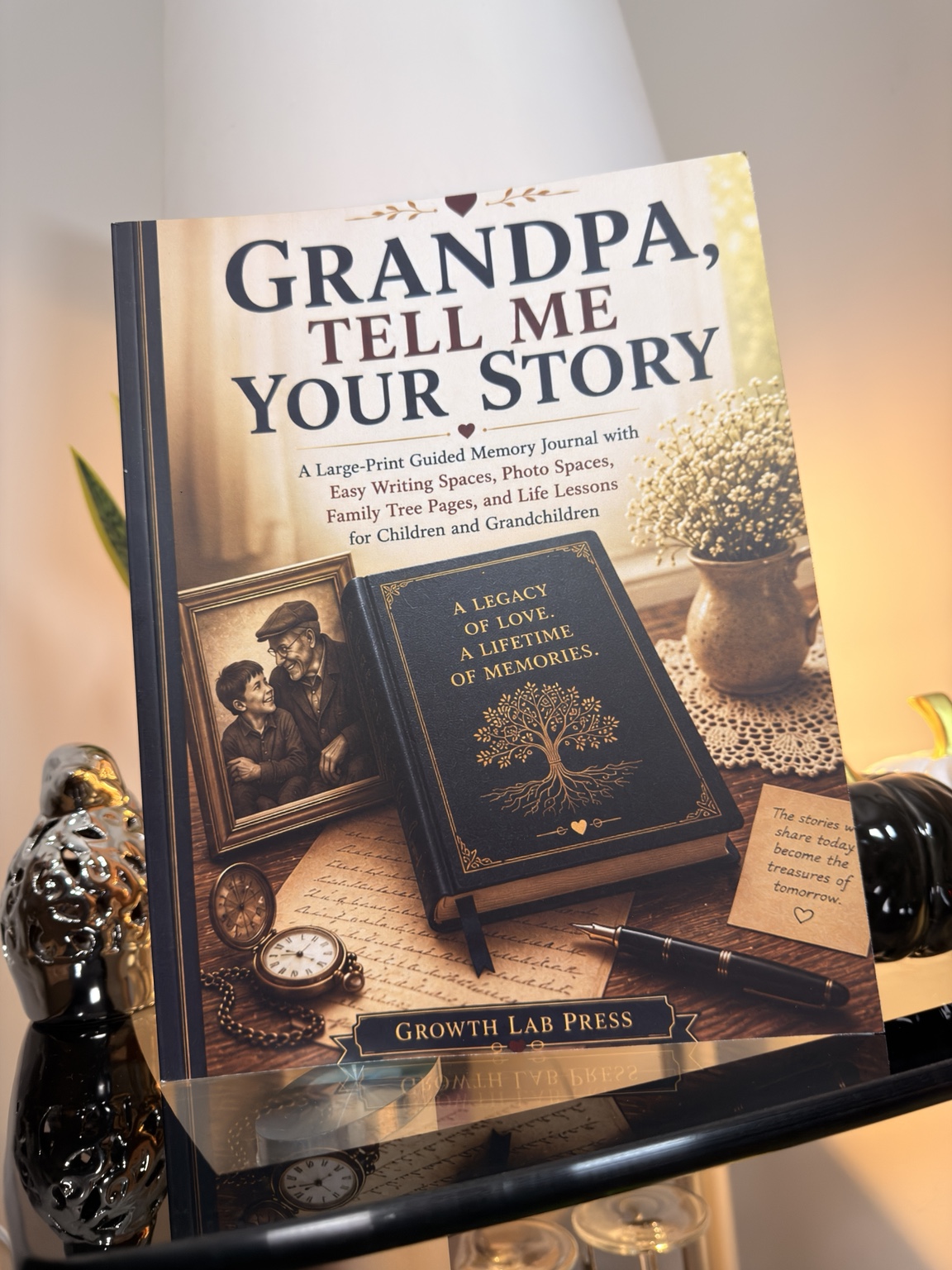
Grandma, Tell Me Your Story includes 531 guided questions as well as spaces for photos, family trees, recipes, life lessons and letters. Grandpa, Tell Me Your Story uses guided, large-print pages for memories, milestones, family traditions and wisdom. Both books are by Michael Bennett.
Use the product pages below to check current formats and preview the actual books. The 12 recipe questions in this article are original blog prompts and are not presented as sample pages from either journal.
Common questions
What is the best first question about a family recipe?
Ask: Who taught you to make this, and what do you remember about learning? It invites both practical details and a family story without demanding an exact ingredient list immediately.
Should I record audio or video while someone cooks?
Ask permission first and explain who will see or hear it. Audio may capture the explanation, while video can show a technique. Written notes remain useful for ingredients, sequence and details that need checking.
What if the cook does not use exact measurements?
Write their original phrase, ask them to demonstrate it and label any later measurement as a family estimate or test. Do not present your guess as their exact instruction.
How many recipes should we record in one visit?
Start with one. A complete, comfortable conversation about one meaningful dish is more useful than rushing through a long list. Continue another day if the person wants to.
Sources and further reading
Published by Growth Lab Press. Read our editorial standards.