Family storytelling
How to Record Family Stories Over the Phone
Save a parent's or grandparent's stories from a phone call with a simple setup, original prompts, a short call plan and a one-page keepsake template.
Choose one story before you call
An invitation to tell an entire life story can feel too large. For your first call, offer two small subjects: a favourite outing or a skill someone taught them. Ask which sounds more interesting and agree on a comfortable time to talk.
Try this invitation: On our next call, could we spend about ten minutes on one family memory? I would love to save a page about it. Would you rather tell me about an outing you enjoyed or something you learned from a relative?
The ten-minute plan below is an optional starting point. Finish sooner or continue only if both of you want to. A short, complete story is enough for one call.
Agree on recording and sharing before starting
Explain whether you want to take notes, make an audio recording or both, and who will receive the finished story. The Library of Congress recommends asking older relatives for permission before recording their conversations.
Offer a clear choice: May I record this so I can listen carefully, or would you prefer that I write a few notes? I will let you check the page before sharing it with the family.
If the answer is no to audio, use notes only with agreement. Let the storyteller pause, skip a subject or keep part of the conversation private. Ask separately before putting a recording or story on a public website.
Use the simplest setup that captures both voices
For notes only, keep a notebook beside the phone and write short phrases rather than trying to transcribe every sentence. Leave spaces to fill in names and details later.
For audio, one practical option is a phone on speaker with a separate phone or digital recorder nearby. Start with the equipment you already have. With everyone's agreement, record a short test of both people speaking, stop it and listen back before beginning the story.
If you already use a call or meeting tool with recording, test that exact setup too. Do not assume an ordinary voice-recorder app on the same phone will capture both sides of a call. Confirm how to save and play the recording.
The Oral History Association's remote-interviewing guidance emphasizes the narrator's preferences, available equipment and comfort with technology. Choose a method both of you can manage; if recording becomes a distraction, switch to agreed notes.
- Charge the devices and check that a test file saves
- Use a quiet room at each end of the call
- Check that both voices are understandable on playback
- Keep a notebook ready if the connection drops
Try this ten-minute family story call
Use this original call plan as a loose guide. Ask one question at a time and leave room for an answer before moving on.
- Minutes 0–2: Say hello, check the sound and confirm the topic and saving method.
- Minutes 2–6: Ask the opening question and listen to one complete memory.
- Minutes 6–8: Follow one detail: a person, place, object or unexpected moment.
- Minutes 8–10: Read back your main notes, ask what should stay private and agree on what happens next.
Five prompts that work without sharing a screen
These questions do not require a photograph, document or video call. Choose one that fits the person; the rest can wait for another conversation.
- What is an ordinary outing you used to look forward to, and what happened from leaving home to coming back?
- Who taught you a practical skill, and what do you remember about the first time you tried it?
- What object in your home has a story that most of the family has never heard?
- Tell me about a neighbour or friend who made an ordinary day memorable.
- What small routine from that time would you like a younger relative to understand?
Make room for pauses and unclear details
On an audio call, a pause can be hard to interpret. Allow a little silence, then ask whether the person would like more time or a different question. If the line cuts out, say that you missed the sound rather than guessing the words.
Use one follow-up tied to what you heard. If they mention a bus ride, ask what happened on that particular journey. Avoid supplying an emotion or ending they have not described.
Simcoe County Archives recommends brief notes for later clarification and avoiding frequent interruptions. Save uncertain names or dates for the end of the story. Ask for a spelling or an approximate time only when it would help the record.
Turn the call into a one-page story
Choose a descriptive heading and write a short account using only details actually shared. Mark whether the page is a summary from your notes or a transcript from a recording. Use quotation marks only for wording you captured accurately.
The fictional example below shows the format; it is not a customer's story or a real interview.
- Story title: The Saturday bus to the market
- Storyteller and call date: Dad — 16 October 2026
- Where and when the memory happened: A market trip during childhood; exact year not yet confirmed
- People: Dad and his aunt
- Story summary: They took an early bus, bought vegetables and carried the bags home together. The detail he wanted saved was how carefully his aunt chose the tomatoes.
- Check next time: The market's name and the bus route
- Sharing choice: Send the page to Dad for review before giving copies to relatives
- Recording reference, if agreed: Dad-market-story-2026-10-16
Read the page back and save a second copy
At the next call, read the draft aloud or send it in a format the storyteller uses comfortably. Ask: Have I kept the meaning right? Is anything missing? Is there anything you want removed? Keep a disputed or uncertain detail labelled rather than filling the gap yourself.
Save the original recording separately from an edited copy or written summary. Use matching filenames so the page and recording can be found together. Simcoe County Archives recommends backups on different media and periodic checks that digital files remain accessible.
For example, keep the original audio and reviewed page in a family folder, with a second copy on another storage device or a private backup service you already use. Check the sharing settings before inviting anyone else.
Give each finished story a place in a guided journal
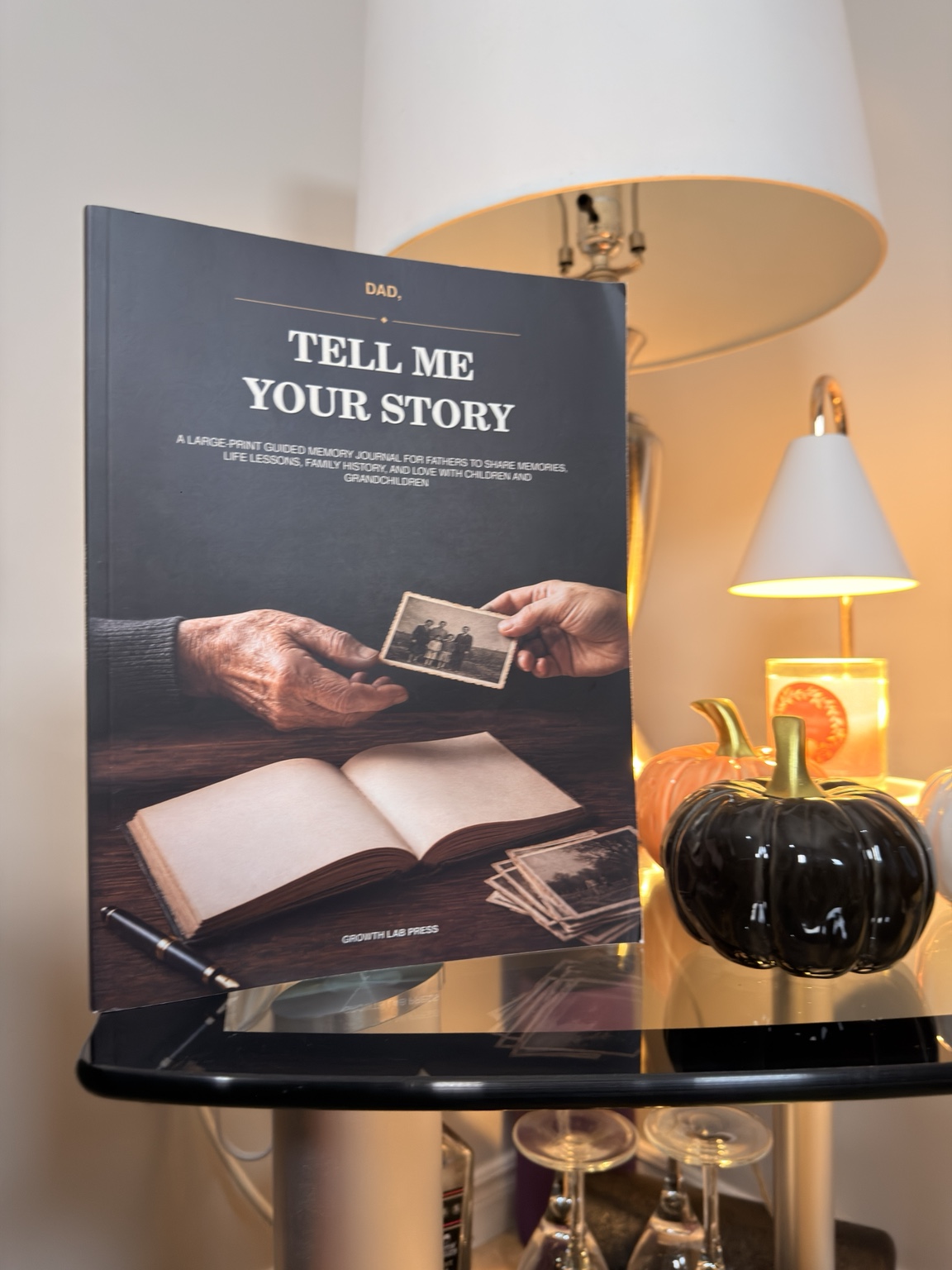
Dad, Tell Me Your Story is a large-print guided memory journal for fathers covering memories, family history, life lessons and love. Its current description allows Dad to answer aloud with a family member helping to record the story.
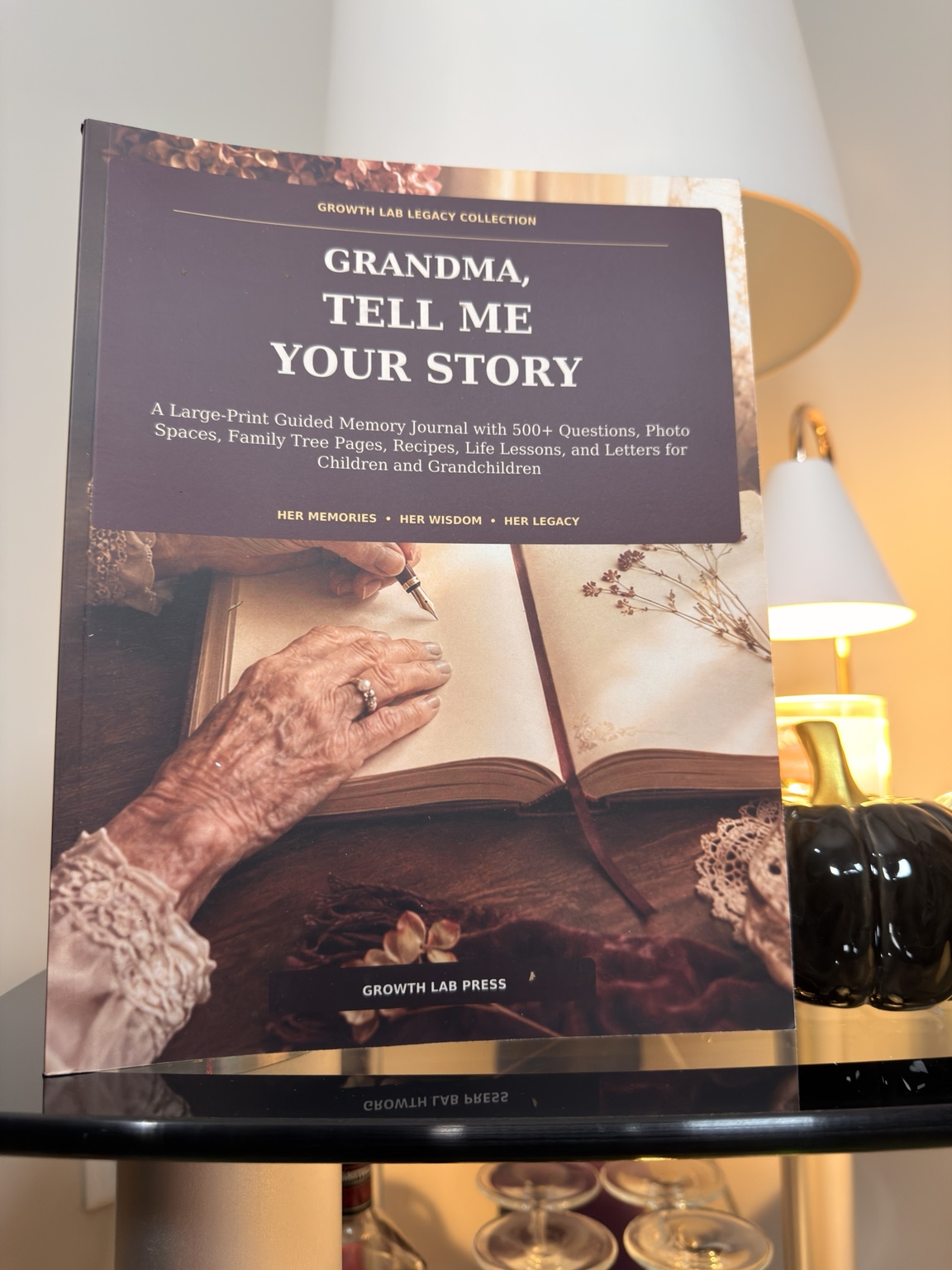
Grandma, Tell Me Your Story includes 531 guided questions along with photo spaces, family tree pages, recipes, life lessons and letters. Both journals are by Michael Bennett and are available in paperback and hardcover.
A journal can provide a prompt for the next call and a place for an agreed written account. Use the book links below to compare current details. The call plan, five prompts and fictional template here were created for this article, not taken from the journals.
The related life-story guide offers more starting subjects. The journal-selection guide helps you choose a format that fits the person who will tell the stories.
Common questions
Can I save family stories without recording a phone call?
Yes. With agreement, take short notes and turn them into a labelled summary. Read it back so the storyteller can correct the meaning, add details or remove something private.
What if my parent does not use video calls?
Use an ordinary phone call. The prompts here work without a shared screen. Choose notes or a tested audio setup that does not require your parent to learn a new app.
How do I know the recording captured both sides?
Make a short test with everyone's agreement and play it back before starting the story. Check both voices. If it does not work, use notes rather than relying on an untested recording.
Should I write the story in my parent's voice?
Preserve their wording where you have an accurate record. Label paraphrased notes as a summary, avoid invented quotations and ask them to review the page before sharing it.
Sources and further reading
Published by Growth Lab Press. Read our editorial standards.