Activities for seniors
12 Remove-the-First-Letter Word Puzzles for Seniors
Try 12 easy letter-removal word puzzles for seniors, with paired clues, checked answers and simple ways to play on paper or aloud with family.
How these letter-removal puzzles work
Each puzzle has two clues. Find a word for the first clue, then remove only its first letter. Keep every remaining letter in the same order. The shorter word must answer the second clue. The numbers in brackets tell you how many letters each answer needs.
For example: a place to sit (4) becomes what you do with a meal (3). The answer is SEAT → EAT. Remove S and leave EAT exactly as it is. You do not need to rearrange letters or find a hidden message.
These are original clue pairs created for this article, not sample pages from the linked workbooks. They are recreational word games for an afternoon at home or a shared visit. Try a round together before deciding whether to continue.
Round 1: familiar things
Solve either side first. If the shorter word comes to mind, try adding a letter at its beginning to fit the longer clue.
- 1. A seat with a back, usually for one person (5) → what grows on your head (4).
- 2. A flat dish used to serve a meal (5) → arriving after the expected time (4).
- 3. A vehicle made of connected carriages running on rails (5) → water falling from clouds (4).
- 4. A large animal that may be a grizzly or a polar one (4) → the body part used for hearing (3).
Show answers or guidance
1. CHAIR → HAIR: remove C. 2. PLATE → LATE: remove P. 3. TRAIN → RAIN: remove T. 4. BEAR → EAR: remove B.
Round 2: words in everyday life
Take a pause between pairs. If you want a hint, look at the first word in the answer panel and cover the rest, then work out the shorter word yourself.
- 5. A small piece of rock (5) → the quality of a sound or voice (4).
- 6. A happy expression made with your mouth (5) → the word completing ‘go the extra ___’ (4).
- 7. A loaf you might slice for toast (5) → look at written words and understand them (4).
- 8. Become bigger, as a plant does (4) → a line of seats beside one another (3).
Show answers or guidance
5. STONE → TONE: remove S. 6. SMILE → MILE: remove S. 7. BREAD → READ: remove B. 8. GROW → ROW: remove G.
Round 3: a little more wordplay
There is no timer. You can say both clues again, spell a guess aloud or skip to a different pair.
- 9. An extra item kept in case it is needed (5) → trim away the outer layer, as with a knife (4).
- 10. The amount of money asked for an item (5) → a grain often served with a curry (4).
- 11. A cereal crop commonly milled into flour for bread (5) → warmth (4).
- 12. Close and reopen your eyes quickly (5) → one connected piece of a chain (4).
Show answers or guidance
9. SPARE → PARE: remove S. 10. PRICE → RICE: remove P. 11. WHEAT → HEAT: remove W. 12. BLINK → LINK: remove B.
Make the puzzle comfortable on paper or aloud
For an easier version, provide the longer word instead of its clue: ‘The word is CHAIR. What remains when we take off C?’ For more challenge, keep both words hidden and use only the clues. Ask which version the person prefers; age alone does not tell you how much challenge they enjoy.
When playing aloud, say the word and spell it before removing the first letter. This is a spelling game: the first written letter is what disappears, even when the sounds change. If spelling aloud feels cumbersome, write the word where both people can see it.
For a homemade sheet, put each clue pair on its own line and keep answers on a separate page. RNIB describes large print as generally 16 to 18 point. Try a short sample at a size the reader chooses before preparing the full set; see RNIB’s guide below for more about print options.
You can stop after any pair. If an answer is unfamiliar, explain it plainly and move on. For PARE, for example, you might say, ‘It means trimming or peeling something with a cutting tool.’ Nobody has to earn a hint.
Create another pair together
Start with a short word you know, add one letter at the front and see whether you have another familiar word. Try EAR: adding P makes PEAR. A new clue pair could be ‘a fruit with a narrow top (4) → a body part used for hearing (3).’
Check your pair in three steps: remove exactly the first letter, confirm the remaining spelling, and read each clue against its answer. Avoid proper names or obscure words unless everyone wants that extra challenge. If you accept another answer, check that it follows the same rule.
Choose more activities by the reader’s interests
If this format was enjoyable, ask whether the next session should use more wordplay or a different activity. Our guide to large-print activity books explains what to look for on a page, while our book-selection guide considers interests and the setting where the book will be used.
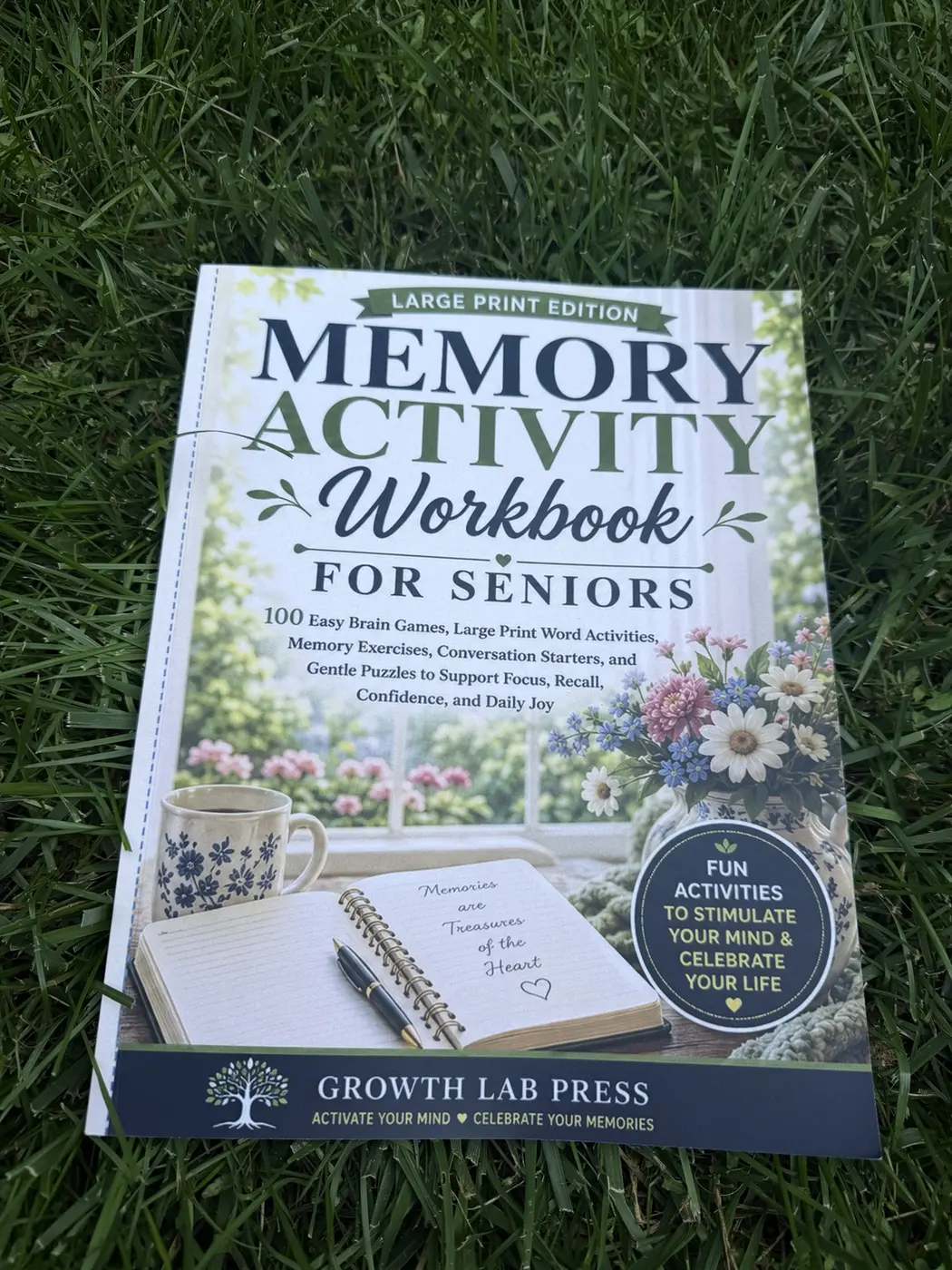
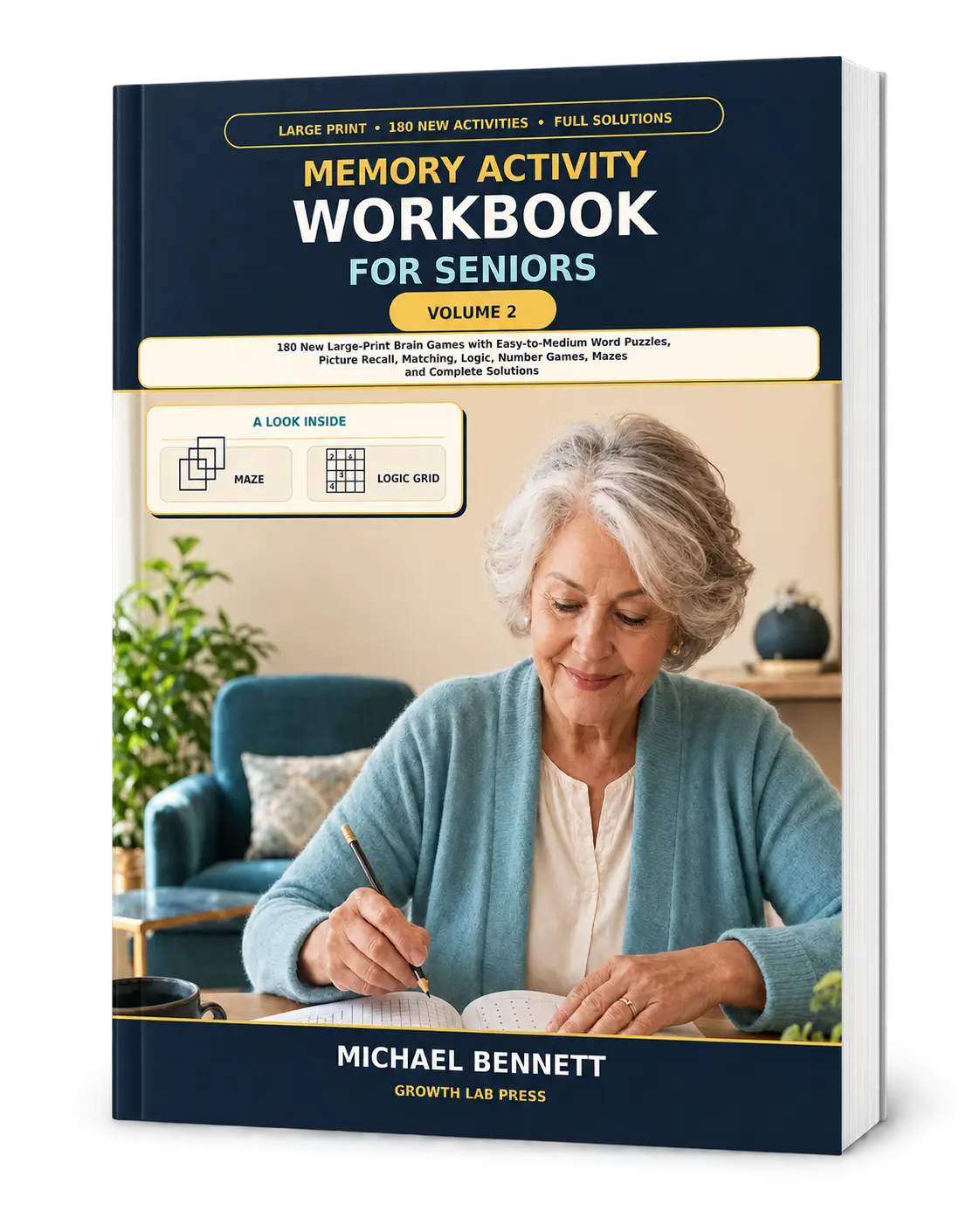
Memory Activity Workbook for Seniors includes word games, everyday prompts and conversation starters. Volume 2 offers 180 large-print word, number, matching, visual, logic, planning and maze activities with complete solutions. Use the linked book pages to compare their actual samples. These twelve puzzles are separate blog activities; the book descriptions do not promise this exact puzzle format.
Common questions
Can I remove a letter from the middle instead?
Not in this set. Remove only the first letter and leave the other letters in their original order. A game allowing any letter to be removed would need different instructions.
Can we solve the shorter word first?
Yes. Solve the second clue and try adding a first letter to match the first clue. Both directions lead to the same pair.
Do we need to write the answers?
No. Say or spell them aloud, or have one person write for the group. Keep the words visible if that makes the letter change easier to follow.
What if these puzzles feel too easy or too difficult?
Offer the longer word as a hint, try another round or switch activities. For a different challenge, take turns creating new clue pairs and checking each other’s spelling.
Sources and further reading
Published by Growth Lab Press. Read our editorial standards.