Activities for seniors
12 Easy Rhyming Word Puzzles for Seniors, With Answers
Try 12 easy rhyming word puzzles for seniors, with clear choices, clue-based challenges, checked answers and simple ways to play aloud or on paper.
How to play the rhyming word game
Read one puzzle at a time and listen for the ending sound. Words rhyme when their final stressed vowel sound and the sounds after it match. Spelling may look different: mail and tail rhyme, while a similar-looking pair does not always rhyme.
The first six puzzles ask the player to choose between two words. The next three ask which word does not rhyme with the other two. The final three give a clue whose answer rhymes with the word provided.
These examples were written for this article and are not sample pages from the linked books. They use common pronunciations, but accents can change how a word sounds. If a player uses a pronunciation that creates a genuine rhyme, talk about the difference instead of marking it wrong.
Set up one short, comfortable round
Start with three puzzles. The player can answer aloud, point to a printed choice or ask a partner to write the response. Keep the answer key on a separate page so the puzzle area stays uncluttered.
For a homemade large-print sheet, place one question on each line, use dark text on a plain background and leave generous space between questions. Ask the reader whether the type size is comfortable before printing the full set.
If you are supporting someone living with Alzheimer's disease or another dementia, choose the activity around that person's interests and current abilities. The Alzheimer's Association recommends adjusting familiar activities as needed, paying attention to enjoyment and focusing on the experience rather than achievement.
- Use three puzzles for the first round
- Remove timers unless the player asks for one
- Let the player speak, point or write
- Offer two choices when a clue feels too open
- Pause or change activities when the player wants to stop
Puzzles 1–6: Choose the word that rhymes
Say the first word, then read both choices in the order shown. The player chooses the word with the matching ending sound.
- 1. Which word rhymes with chair: care or car?
- 2. Which word rhymes with light: late or night?
- 3. Which word rhymes with train: rain or run?
- 4. Which word rhymes with book: brook or boot?
- 5. Which word rhymes with clock: rock or cloak?
- 6. Which word rhymes with mail: tall or tail?
Puzzles 7–9: Find the word that does not rhyme
Two words in each line rhyme. The third has a different ending sound. Read all three words once, then repeat them if the player wants to hear the sounds again.
- 7. Lake, cake, leaf
- 8. Room, road, broom
- 9. House, horse, mouse
Puzzles 10–12: Solve the rhyming clue
Each clue has one intended everyday answer. The answer must fit the meaning and rhyme with the word at the end of the question. If needed, give the first sound as a hint.
- 10. What fuzzy fruit rhymes with beach?
- 11. What word for a heavy burden rhymes with road?
- 12. What word meaning require rhymes with seed?
Check all 12 rhyming answers
Read the answers after the round or check one at a time. The explanation shows both the meaning and the matching sound where a clue was used.
- 1. Care rhymes with chair.
- 2. Night rhymes with light.
- 3. Rain rhymes with train.
- 4. Brook rhymes with book.
- 5. Rock rhymes with clock.
- 6. Tail rhymes with mail.
- 7. Leaf is the odd word; lake and cake rhyme.
- 8. Road is the odd word; room and broom rhyme.
- 9. Horse is the odd word; house and mouse rhyme.
- 10. Peach is a fuzzy fruit and rhymes with beach.
- 11. Load can mean a heavy burden and rhymes with road.
- 12. Need can mean require and rhymes with seed.
Show answers or guidance
All 12 intended answers were checked for both the clue meaning and the stated rhyme. The pairs use common pronunciations: chair/care, light/night, train/rain, book/brook, clock/rock, mail/tail, lake/cake, room/broom, house/mouse, beach/peach, road/load and seed/need.
Make each rhyme easier or more challenging
To make a puzzle easier, say the words slowly, repeat only the ending sounds or show two printed choices. For beach, you might offer peach or bench. If the person wants another hint, add the category: It is a fruit.
To make the game more challenging, remove the choices and ask for any word that rhymes. A player might answer hair, fair or pair for chair. Check that the spoken answer rhymes; spelling does not need to match.
Another option is to build a three-word rhyme chain. Begin with light, add night, and invite one more word such as bright. Stop the chain when a new answer no longer comes easily. The activity does not need a score or a fixed length.
- Easier: repeat the ending sound
- Easier: offer two answer choices
- Easier: give a meaning or category hint
- Harder: remove the choices
- Harder: ask for a third rhyming word
- Harder: ask the player to create the next clue
Turn the puzzle into a shared word activity
For two players, alternate reading and answering. One person can read puzzle 1, the other can read puzzle 2, and both can check the answers together. In a small group, let people answer in turn or work as one team.
A rhyming answer can lead to an ordinary conversation. After cake, ask about a favourite celebration dessert. After train, ask about a memorable journey. Keep the follow-up optional; some people will prefer to stay with the sound game.
The National Institute on Aging advises caution around claims that commercial brain-training games improve memory or thinking. Use this rhyme set as a recreational language activity, not as a test, treatment or promise of a medical result.
Continue with large-print activity books
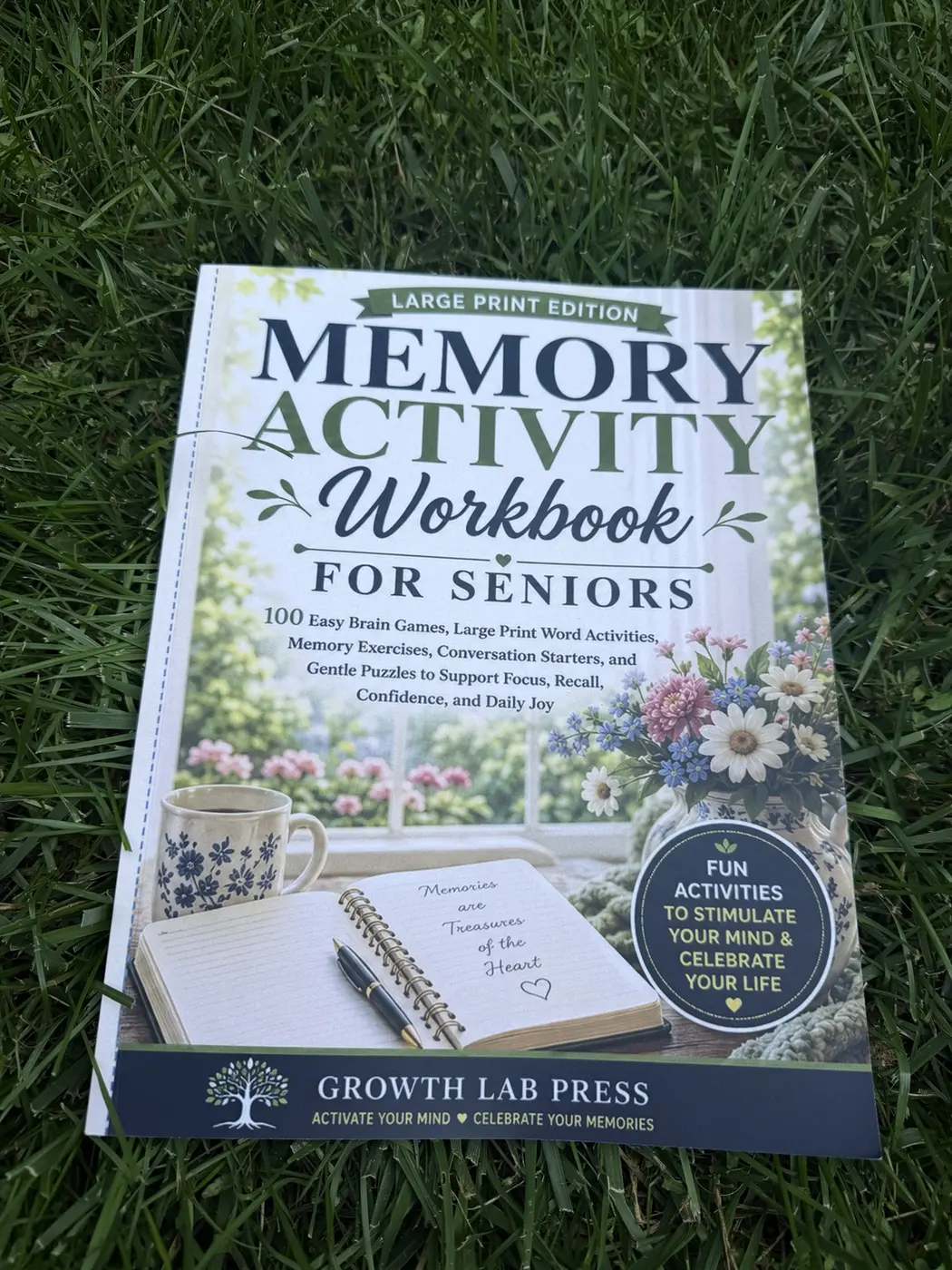
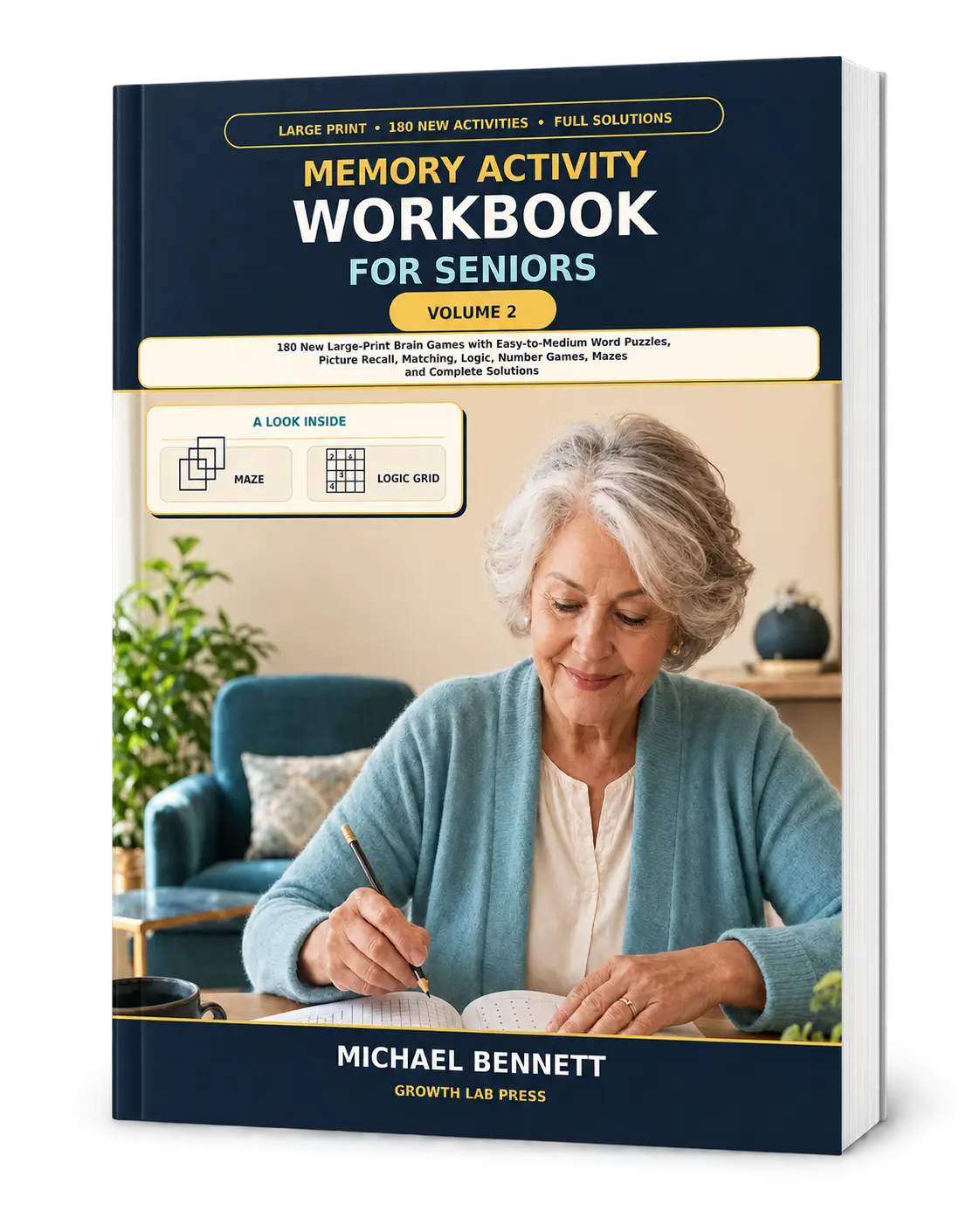
Memory Activity Workbook for Seniors is a large-print paperback with memory recall activities, word games and trivia, conversation starters, reflection pages and spacious writing pages. Memory Activity Workbook for Seniors, Volume 2 contains 180 large-print word, number, matching, visual, logic, planning and maze activities with complete solutions. Both are written by Michael Bennett.
The related large-print guide explains how to compare instructions, contrast, spacing and answer guidance. The book-selection guide helps families and caregivers match the activity style, support level and setting to the person who will use it.
Use the product links below to inspect the current descriptions and formats before choosing. The 12 rhyming puzzles above are original blog activities and are not presented as pages from either workbook.
Common questions
What is an easy rhyming word game for seniors?
Say one familiar word and offer two choices, such as: Which rhymes with chair, care or car? The player can answer aloud, point or ask a partner to record the answer.
Can these rhyme puzzles be played without writing?
Yes. Read one puzzle aloud and let the player speak or point to the answer. A partner can keep the answer key and write only when requested.
What if an accent changes whether two words rhyme?
Accept a genuine rhyme in the speaker's pronunciation and discuss the sound difference. Rhyme depends on pronunciation, so accent differences are part of language rather than a mistake.
Do rhyming games improve memory or treat dementia?
This article makes no medical claim. Use the puzzles for recreation and shared language play. Speak with a qualified health professional about memory concerns or individual care needs.
Sources and further reading
Published by Growth Lab Press. Read our editorial standards.