Activities for seniors
15 Things That Go Together Puzzles for Seniors, With Answers
Try 15 things-that-go-together puzzles for seniors, with checked answers, clear clues and simple options for playing aloud or in large print.
How to play things that go together
Read the first item and ask for the familiar object or idea that usually goes with it. For example, if the prompt is LOCK, the intended partner is KEY. Say the complete pair after each answer: ‘lock and key.’
The first round completes familiar pairs, the second uses short clues and the third matches two word lists. Reveal the answer panel after each round or wait until the end. There is no timer, and a player can answer aloud, write, point to a choice or ask for a hint.
These fifteen puzzles were created for this article and are not sample pages from the linked Growth Lab Press books. Begin with five and continue only if the person or group wants another round.
Round 1: finish the familiar pair
Complete each pair with the word that most commonly goes with the capitalized item.
- 1. LOCK and ___.
- 2. NEEDLE and ___.
- 3. SALT and ___.
- 4. CUP and ___.
- 5. KNIFE and ___.
Show answers or guidance
1. KEY: lock and key. 2. THREAD: needle and thread. 3. PEPPER: salt and pepper. 4. SAUCER: cup and saucer. 5. FORK: knife and fork.
Round 2: use the clue
Each clue describes an everyday partner. Name the item that completes the pair.
- 6. A hammer drives this into wood: HAMMER and ___.
- 7. You might write on one with the other: PEN and ___.
- 8. These are used together when washing hands: SOAP and ___.
- 9. One goes on the foot before the other: SOCK and ___.
- 10. Both can be used to tidy hair: BRUSH and ___.
Show answers or guidance
6. NAIL: hammer and nail. 7. PAPER: pen and paper. 8. WATER: soap and water. 9. SHOE: sock and shoe. 10. COMB: brush and comb.
Round 3: match the two lists
Match each numbered word with one lettered partner. Use every letter once.
- 11. BREAD — A) stars
- 12. TABLE — B) bookmark
- 13. RAIN — C) butter
- 14. MOON — D) chair
- 15. BOOK — E) umbrella
Show answers or guidance
11–C: bread and butter. 12–D: table and chair. 13–E: rain and umbrella. 14–A: moon and stars. 15–B: book and bookmark.
What to do when another answer also fits
Everyday pairs depend on context, so a reasonable alternative may appear. CUP could go with HANDLE, TEA or COFFEE, but SAUCER is the intended answer in the traditional pair ‘cup and saucer.’ The clue in round two narrows each answer, and the word bank in round three makes every match unique.
If someone gives a sensible alternative, acknowledge it and then share the intended pair. You can ask, ‘What clue would make your answer the best fit?’ That turns an unexpected answer into another small word game instead of a mistake.
To write a new puzzle, choose the pair first. Then decide whether the relationship is obvious enough on its own. If not, add a short clue or two choices and read it aloud to make sure the intended answer is clear.
Make the game easier or more challenging
For an easier version, offer two choices: ‘Lock and key, or lock and spoon?’ You can also show the partner words on separate cards and ask the player to place each card beside its match. For more challenge, read only the clue or mix all fifteen partner words into one word bank.
In a small group, let one person read a prompt and another complete it, then switch roles. Avoid calling on people in a fixed order if that creates pressure. Anyone may pass, ask for a choice or simply listen.
A correct pair can lead to optional conversation: ‘Did your family use a cup and saucer?’ or ‘What kind of books do you keep a bookmark in?’ Keep the story invitation separate from scoring, and move on if the person prefers the puzzle alone.
Prepare a clear page for comfortable reading
Place one prompt on each line, leave generous space for the answer and keep the answer key on a separate page. RNIB explains that large print is generally 16 to 18 point, while individual readers may prefer a different size. Print one sample first and ask whether the type size, spacing and contrast feel comfortable.
On a screen, enlarge the text rather than asking the reader to move closer. If reading becomes tiring, use the same prompts aloud. Repeat the whole pair after the answer so the two words stay connected.
Our guide to large-print activity books lists other page features to compare, and our book-selection guide helps match activity style to the person and setting.
Choose a related book by activity style
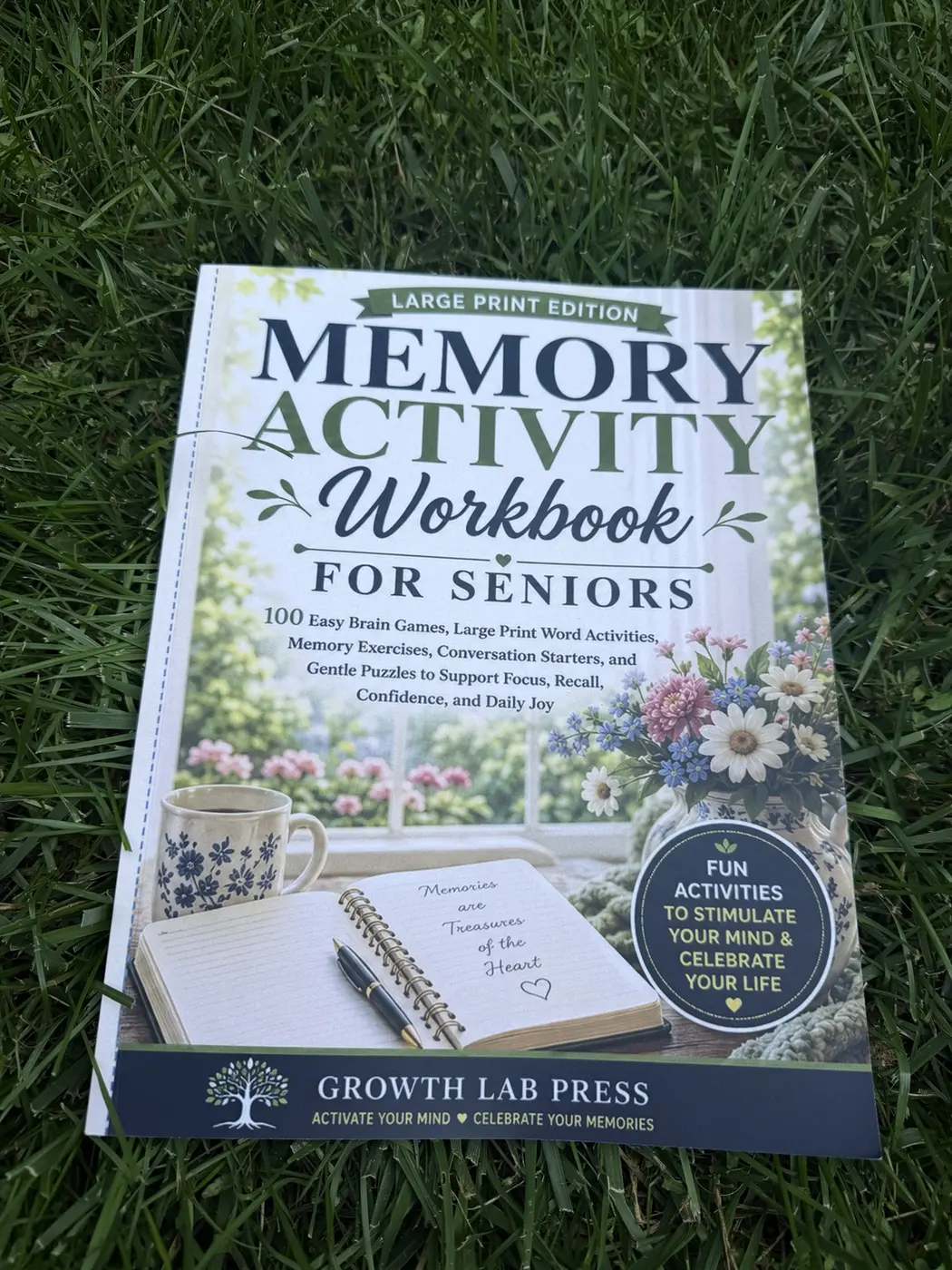
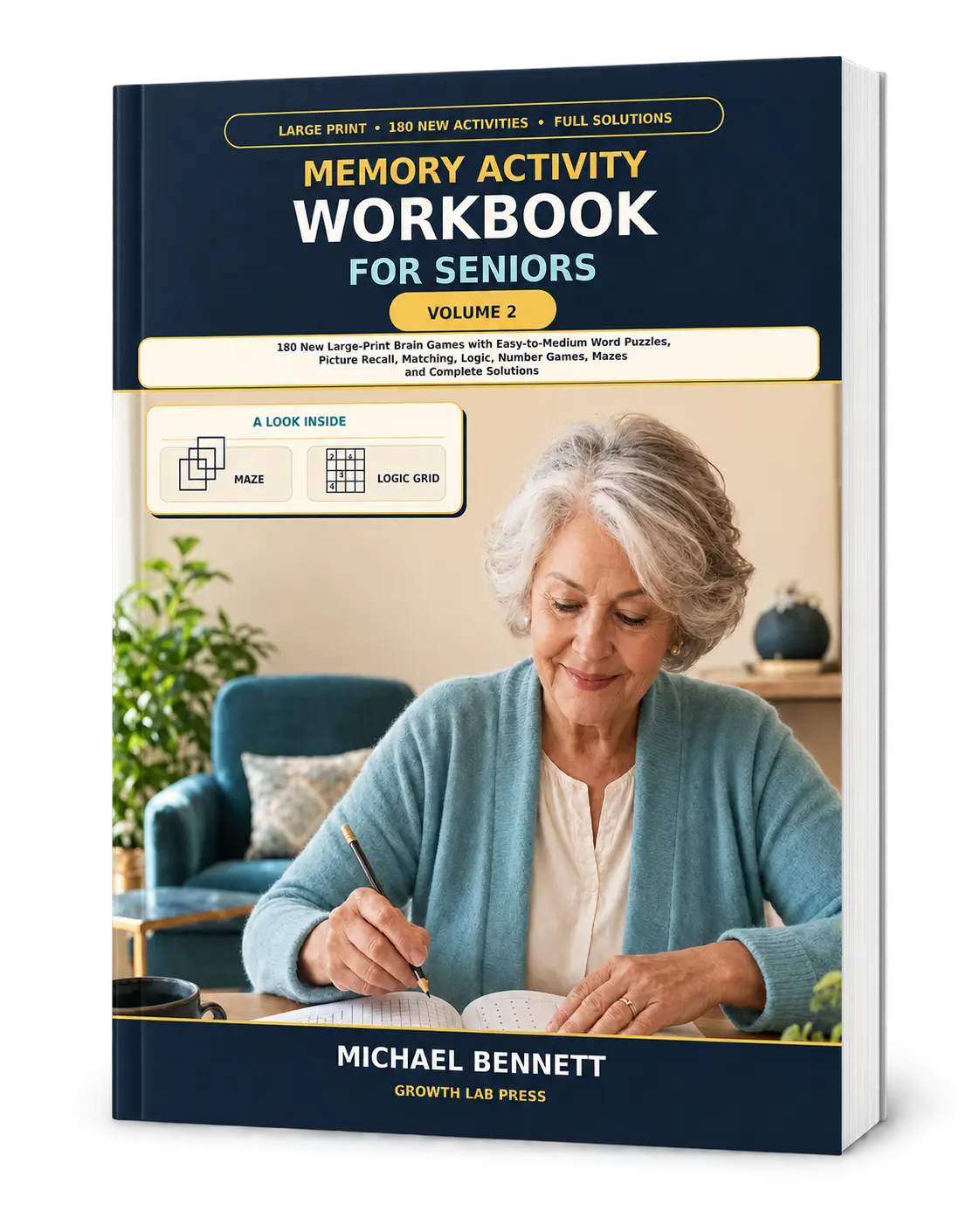
Memory Activity Workbook for Seniors includes large-print memory recall activities, word games, everyday prompts, conversation starters and reflection pages. Memory Activity Workbook for Seniors, Volume 2 contains 180 large-print word, number, matching, visual, logic, planning and maze activities with complete solutions.
The linked product pages show the current book details. Choose the first workbook for a varied mix that includes conversation and reflection, or Volume 2 for a larger collection with matching and other structured activities. The puzzles above remain a separate free blog activity.
Common questions
What is a things-that-go-together game for seniors?
One person names an everyday object or idea and the player supplies its familiar partner, such as lock and key or salt and pepper. It can be played aloud, on paper or with matching cards.
Can more than one answer be correct?
Sometimes. Everyday objects can have several associations. Accept a sensible alternative, then explain the intended pair or add a clue that makes one answer the clearest fit.
How can I make matching puzzles easier?
Use five pairs at a time, provide two spoken choices or place the partner words on cards. Give the first sound as another optional hint.
Can this activity be played without writing?
Yes. Read each prompt aloud and let the player answer verbally or point to a partner card. Repeat the completed pair before moving to the next one.
Sources and further reading
Published by Growth Lab Press. Read our editorial standards.