Senior activities
How to Use a Weekly Calendar for a 20-Minute Senior Activity
Use a simple fictional weekly calendar for senior activities involving finding, sequencing, time questions, word play and conversation.
Choose a weekly calendar that is easy to explore
Use the fictional calendar below or make a separate practice calendar with seven clear rows. Keep it distinct from a person's real appointments, medication schedule or care plan so the activity cannot be mistaken for current instructions.
RNIB describes large print as generally 16 to 18 point, while individual readers may prefer another size. Write the day, activity and time in large dark text, leave generous space between rows and remove decorative backgrounds.
The National Institute on Aging recommends matching an activity to what a person can do, helping the person get started and watching for frustration. Ask whether the participant would prefer finding information, putting days in order, comparing times, playing with words or talking about favourite weekly routines.
Use this fictional seven-day calendar
Copy the seven entries onto one sheet. Every name, event and time is fictional and is provided only for the activities in this article.
- Monday — Library visit — 10:00 a.m.
- Tuesday — Tea with Rosa — 2:00 p.m.
- Wednesday — Garden club — 11:30 a.m.
- Thursday — Grocery delivery — 1:00 p.m.
- Friday — Music hour — 3:00 p.m.
- Saturday — Family lunch — 12:00 noon
- Sunday — Phone call with Ben — 6:00 p.m.
Activity 1: find the day, event or time
Keep the calendar visible and ask one question at a time. The participant can point, read the line aloud or answer verbally.
Try these six questions. Avoid asking the player to remember the answer after the calendar is covered; the information should stay available on the page.
- 1. Which activity is on Monday?
- 2. When is Tea with Rosa?
- 3. Which day has Garden club?
- 4. What happens at 1:00 p.m.?
- 5. Which activity is on Saturday?
- 6. When is the phone call with Ben?
Show answers or guidance
1. Library visit. 2. Tuesday at 2:00 p.m. 3. Wednesday. 4. Grocery delivery on Thursday. 5. Family lunch at 12:00 noon. 6. Sunday at 6:00 p.m.
Activity 2: work with before, after and between
Read the week from Monday through Sunday before starting. Leave the calendar visible and offer the day names as choices whenever useful.
- 1. Which day comes after Tuesday?
- 2. Which day comes before Friday?
- 3. Which event comes after the Library visit?
- 4. Which event comes before Family lunch?
- 5. Which activity is between Tea with Rosa and Grocery delivery?
- 6. Which two events are on the weekend?
Show answers or guidance
1. Wednesday. 2. Thursday. 3. Tea with Rosa. 4. Music hour. 5. Garden club. 6. Family lunch on Saturday and the phone call with Ben on Sunday.
Activity 3: compare the scheduled times
Use the printed times as a finding and comparison activity, not as a test of mental arithmetic. A clock face, paper notes or a calculator may be used.
- 1. Which activity has the earliest time of day?
- 2. Which activity has the latest time of day?
- 3. Which comes earlier in the day: Garden club or Family lunch?
- 4. How long is it from 1:00 p.m. to 3:00 p.m.?
- 5. How long is it from 10:00 a.m. to 12:00 noon?
- 6. Which two activities are scheduled exactly one hour apart?
Show answers or guidance
1. Library visit at 10:00 a.m. 2. Phone call with Ben at 6:00 p.m. 3. Garden club at 11:30 a.m. comes before Family lunch at 12:00 noon. 4. Two hours. 5. Two hours. 6. Grocery delivery at 1:00 p.m. and Tea with Rosa at 2:00 p.m.; Tea with Rosa at 2:00 p.m. and Music hour at 3:00 p.m. are also one hour apart.
Activity 4: try a weekly calendar word hunt
Every answer appears in the fictional calendar. Point to the word after saying it so the activity remains easy to check.
- 1. Find the two activity words that begin with G.
- 2. Find the four-letter drink.
- 3. Find the event containing a word that rhymes with hall.
- 4. Find the two people's names.
- 5. Find the event containing the longest day name.
- 6. Find the two events whose first activity words begin with the letter F or P.
Show answers or guidance
1. Garden and Grocery. 2. Tea. 3. Phone call with Ben; CALL rhymes with HALL. 4. Rosa and Ben. 5. Wednesday has the longest day name, and its event is Garden club. 6. Family lunch and Phone call with Ben.
Activity 5: turn the calendar into conversation
Ask for an opinion rather than a remembered fact: 'Which fictional activity would you choose?', 'What did a typical Saturday look like in your family?', 'Which library, garden, music or lunch tradition do you remember?' or 'What would you add to a pleasant week?'
Let the conversation move away from the calendar when an interesting story begins. A family member can write down one sentence or title with permission, such as 'Saturday lunches at Aunt May's house.'
If conversation is not the participant's preference, return to pointing, ordering days or choosing between two events. Watching a partner read the calendar can also be a valid way to take part.
Activity 6: make a new imaginary week
Use blank day cards from Monday to Sunday. Invite the participant to choose three fictional activities, then place them on any three days. A partner can write the entries and add times if requested.
Possible choices include a picnic, film afternoon, card game, music visit, garden walk, family call or favourite meal. This is an imaginative planning game, not a real commitment.
Read the finished week aloud and ask one checking question, such as 'Which activity comes first?' or 'What is planned for Friday?' There is no single correct schedule.
Make the calendar activity easier or more challenging
To simplify, show three days instead of seven, cover the times and offer two choices. Highlight the row being discussed with a plain card or ruler, and let a partner read every entry aloud.
To add challenge, put seven day cards in order, copy three events onto separate cards and match them to the calendar, or create a second fictional week and compare which activities happen earlier or later.
Stop, shorten the activity or switch to conversation when attention fades or frustration appears. Keep the practice calendar labelled FICTIONAL and store it separately from real schedules.
A ready-to-use 20-minute calendar plan
Minutes 0–3: show the fictional calendar and read the seven entries together. Minutes 3–7: ask three find-the-event questions. Minutes 7–11: try three before-and-after questions.
Minutes 11–15: choose two time questions or two word-hunt clues. Minutes 15–18: ask one conversation prompt or add one imaginary event. Minutes 18–20: ask which part the participant preferred and save the page for another visit.
The timing is flexible. Continue with a story or puzzle the participant enjoys, and end earlier when they prefer.
Add large-print activities for more variety
Our large-print activity-book guide explains how to compare type size, spacing, instructions and answer sections. Our memory-activity-book guide helps families and caregivers match activity style, interests, support level and setting to the reader.
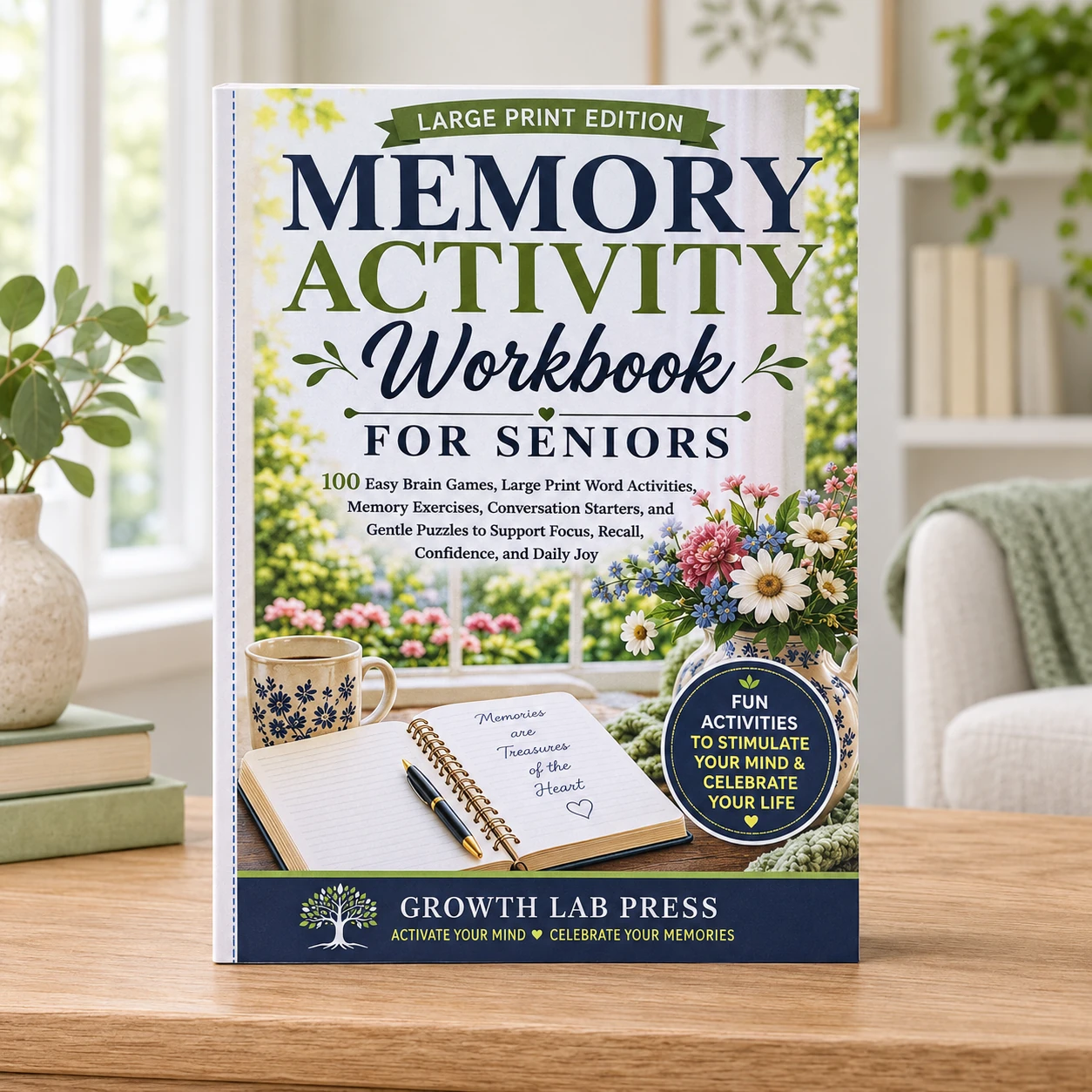
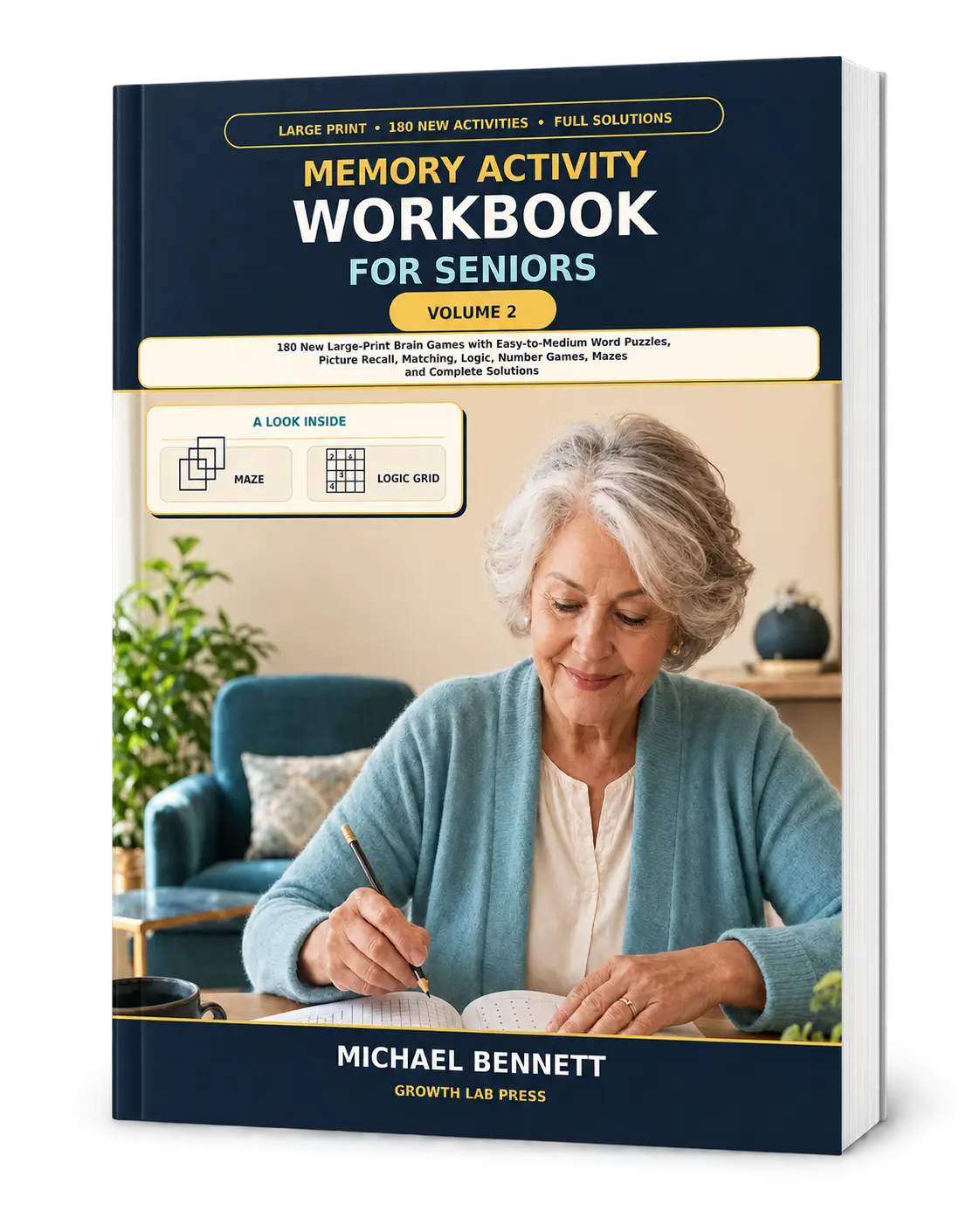
Memory Activity Workbook for Seniors by Michael Bennett is a large-print paperback with memory recall activities, word games and trivia, everyday prompts, conversation starters, reflection pages and spacious writing pages. Memory Activity Workbook for Seniors, Volume 2 contains 180 large-print word, number, matching, visual, logic, planning and maze activities in 12 chapters, with an easy-to-medium progression and complete solutions; its current product page lists paperback and hardcover formats.
Use the linked product pages to inspect the real covers, photographs and current details. The fictional calendar, questions and answer sets above were created for this article and are not presented as sample pages from either workbook.
Common questions
Do I need a real calendar for this senior activity?
No. Copy the fictional seven-day calendar in this article. Keep it clearly labelled and separate from real appointments, medication schedules and care instructions.
Can the weekly calendar activity work without writing?
Yes. Read one row or question aloud and let the participant point, answer verbally, choose between two options or ask a partner to write.
How can I make the calendar questions easier?
Show only three days, cover the times, highlight one row and offer two spoken choices. Keep the information visible while the participant answers.
Is the fictional calendar a substitute for a real schedule or care plan?
No. It is only a recreational practice activity. Use a person's actual schedule, medication instructions and care plan exactly as provided by the responsible person or qualified professional.
Sources and further reading
Published by Growth Lab Press. Read our editorial standards.