Caregiver activities
How to Adapt Word Games for Seniors Who Prefer Not to Write
Adapt familiar word games for seniors using spoken answers, choices, pointing and shared play, with six ready-to-use examples and checked answers.
Change the response method, not the adult topic
A word game does not have to require handwriting. Read the clue aloud, point to printed choices, move word cards or take turns while one person writes. The player can still solve the puzzle even when someone else handles the pen.
Begin by asking how the person would like to play: answer aloud, point, choose between two options or work as a team. Keep the subject familiar and adult. Gardening, music, travel, household objects and favourite foods can all support word play without making the activity feel childish.
If you are supporting someone living with dementia, match the activity to that person's current interests and abilities rather than relying on a diagnosis alone. The Alzheimer's Association recommends focusing on enjoyment, breaking activities into simple steps and modifying or ending an activity when attention wanes or frustration increases.
Prepare one short round before adding more
Choose one game style and prepare three items. Put the answers on a separate sheet for the person leading the activity. Remove timers and scoring unless the player specifically enjoys them.
For printed choices, use clear dark text on plain paper and leave space between options. Show only the current question when a full page feels crowded. If hearing is easier than reading, say the choices slowly and repeat them once without changing the order.
Explain the rule with a completed example. For instance: Hot and cold are opposites. Now what is the opposite of open? This shows the task before asking the person to solve it.
- One game rule
- Three prepared questions
- Two choices when a hint is wanted
- One answer sheet for the activity partner
- A natural stopping point after every question
Try six word-game adaptations without handwriting
The examples below were written for this article and are not sample pages from the linked books. Read one prompt at a time. The suggested answer follows each game in the checked answer section.
A person may speak, point, nod toward a choice, move a card or ask a partner to record the answer. Those are different ways to participate in the same recreational game.
- 1. Missing letter with two choices: B _ O K, something to read. Is the missing letter O or A?
- 2. Spoken opposite: What is the opposite of early? If a choice helps, offer late or open.
- 3. Odd word out: Apple, pear, carrot, peach. Which word belongs to a different food group?
- 4. First-sound choice: Which word begins with the same sound as garden: gate or table?
- 5. Category turn-taking: Name one thing used in a kitchen. The activity partner names the next item, then passes the turn back.
- 6. Three-clue word: I have pages. I have a cover. You can read me. What am I?
Check the six answers
Use the answers to confirm the puzzle, not to judge the person. If another answer fits an open category, accept it and continue the round together.
- 1. BOOK. The missing letter is O.
- 2. Late is the opposite of early.
- 3. Carrot is the vegetable among the fruits.
- 4. Gate begins with the same hard G sound as garden.
- 5. Many answers fit, including cup, plate, kettle, spoon and saucepan.
- 6. A book has pages and a cover and can be read.
Show answers or guidance
All fixed-answer items were checked against their stated rules. Game 5 is intentionally open-ended, so any genuine kitchen item is a valid answer.
Use a three-step hint ladder
Do not jump straight from an open question to giving the answer. Offer help in small steps so the player can decide whether to continue solving or hear the solution.
For the three-clue answer book, begin with the clues alone. Next, give a first-letter hint: It begins with B. Then offer two choices: book or spoon. If the person asks for the answer, say it plainly and move to a related question such as, What kind of books do you enjoy?
A hint is part of cooperative play, not a penalty. The activity can become easier or harder from one question to the next.
- Step 1: Repeat the clue slowly
- Step 2: Give the first sound, a gesture or one extra clue
- Step 3: Offer two clear answer choices
Convert a workbook page into shared play
For a matching page, read the word on the left and two choices from the right. The player can point to the match while the activity partner draws the line. For a word search, ask the player to look for one target word while the partner traces or circles it after receiving permission.
For a written category task, invite one spoken answer at a time and write it down. For a maze or visual puzzle, let the player point to the next move while the partner marks the page. For a trivia page, read the question and offer a clue or two choices only when wanted.
Keep the workbook visible so the person remains part of the task. Ask before writing in their book, and use a separate sheet or removable marker when they prefer to keep pages clean.
Make the game cooperative instead of one-sided
Take equal turns. One person reads a clue, the other answers, and then the roles change. In a category game, alternate answers until both players want a new topic. In a matching game, one person chooses a pair and the other explains why it fits.
Do not correct every pronunciation, spelling or side story. If the puzzle has a fixed answer, check it calmly and explain the rule once. If the person gives a sensible alternative to an open question, add it to the list.
The Alzheimer's Association advises concentrating on the process rather than the result and avoiding criticism or correction during harmless activities. The goal here is an enjoyable shared word game, not an assessment.
Know when to pause, switch or finish
Offer a choice after each short round: another question, a different game or a break. Turning away, repeated frustration or saying no is enough reason to stop. A game does not need to be completed to count as shared time.
If a format works well, make a private practical note such as prefers spoken opposites with two choices or enjoys garden categories. Do not label the person by a score. Preferences and energy can change from one day to the next.
These suggestions are recreational and general. They do not diagnose, prevent or treat a health condition, and they do not replace an individual care plan or professional advice.
Choose ready-made pages that can be used flexibly
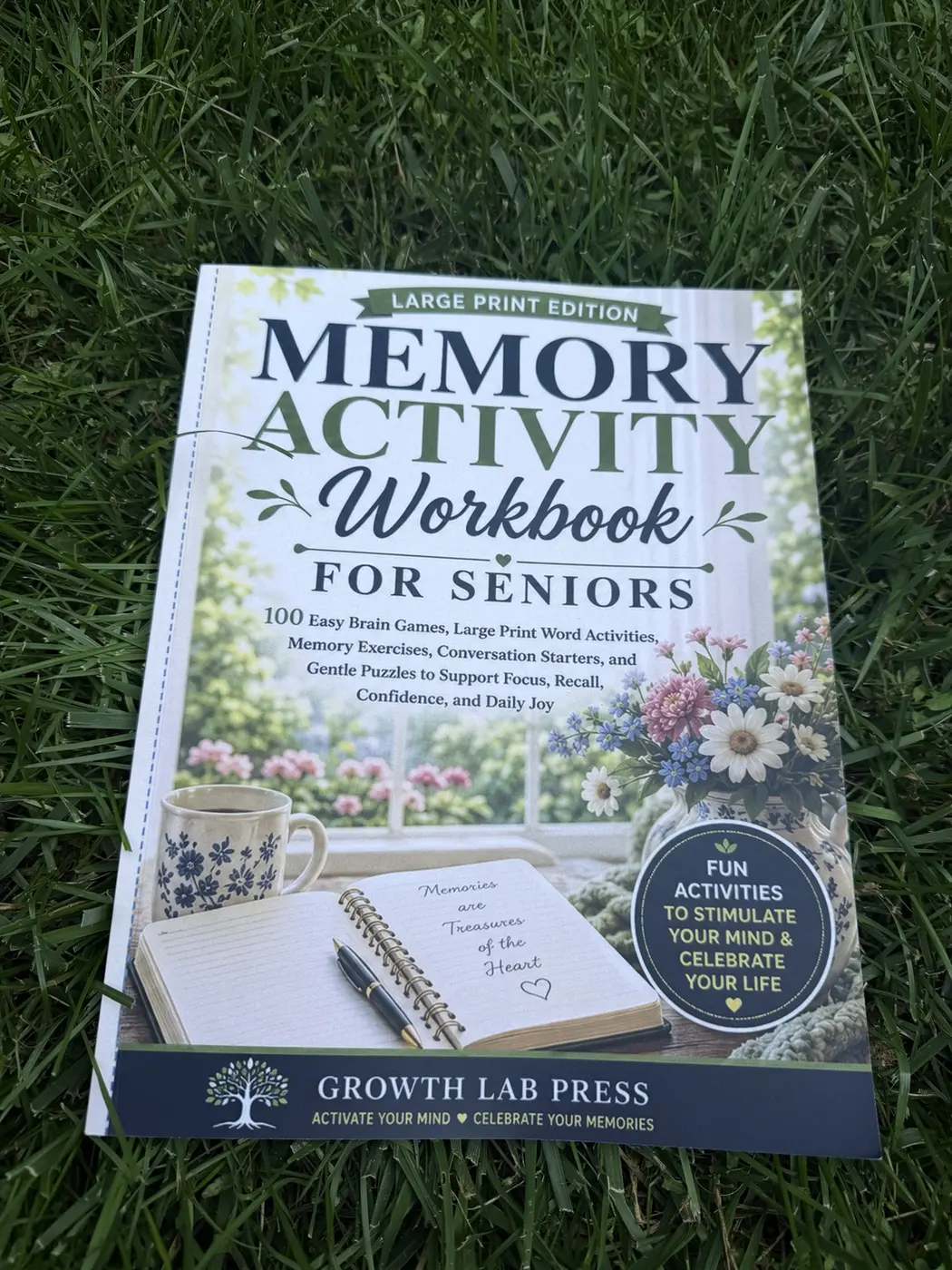
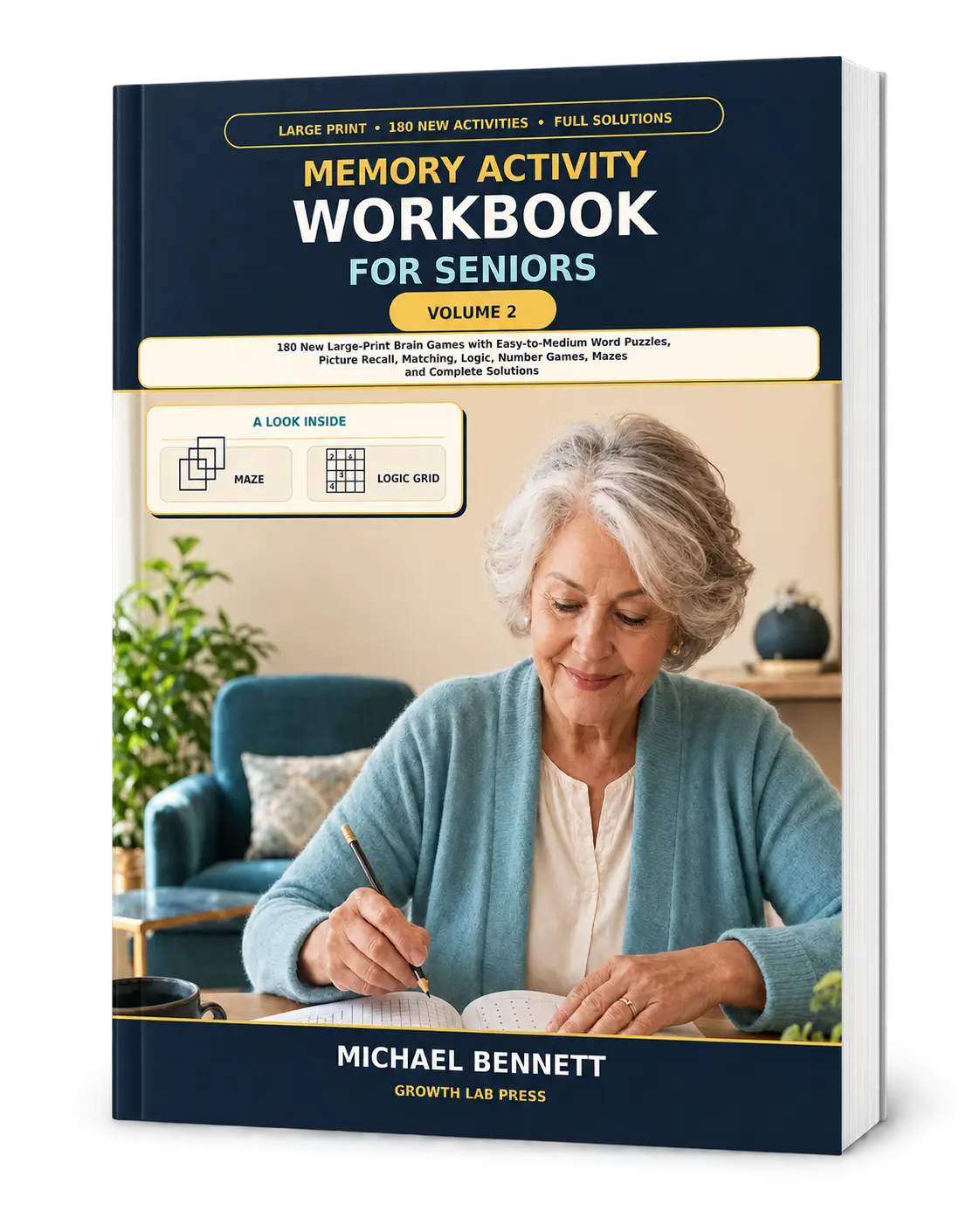
Memory Activity Workbook for Seniors is a large-print paperback with memory recall activities, word games and trivia, conversation starters, reflection pages and spacious writing pages. Memory Activity Workbook for Seniors, Volume 2 contains 180 large-print word, number, matching, visual, logic, planning and maze activities with complete solutions. Both books are written by Michael Bennett.
The related large-print guide explains how to compare instructions, contrast, spacing and answer guidance. The book-selection guide helps match an activity style to the person's interests, preferred support and setting.
Use the product pages below to inspect the actual previews and current formats before choosing. The six adapted examples in this article are original blog activities and are not presented as pages from either workbook.
Common questions
Can a senior do a word game without holding a pen?
Yes. Read the clue aloud and let the person speak, point, nod toward a choice or move a word card. A partner can write or mark the agreed answer with permission.
How can I make a word game easier without giving the answer?
Repeat the clue, add one sound or visual hint, then offer two choices. Give the answer when requested and move on without treating the hint as a penalty.
How many questions should we try?
Start with three. After each question, ask whether the person wants another, a different activity or a break. There is no required session length.
Are these adaptations only for people with dementia?
No. Spoken, pointed and shared answers can suit anyone who prefers not to write. When a person has individual health or care needs, follow their care plan and qualified professional guidance.
Sources and further reading
Published by Growth Lab Press. Read our editorial standards.