Caregiver activities
How to Turn a Magazine Into a 20-Minute Activity for Seniors
Use one familiar magazine to plan a relaxed 20-minute senior activity with pictures, short reading, conversation prompts and no-pressure choices.
Why use a magazine for a senior activity?
A single magazine offers several ways to participate without requiring a long setup. One person can read, another can read aloud, and both can look at photographs, compare choices or talk about a familiar subject. The activity can stop after one page and continue on another visit.
Choose the subject for the person, not for their age. Gardening, travel, cooking, local history, cars, crafts, nature, sports and home magazines all create different starting points. Ask what sounds interesting before opening the issue.
The North Simcoe Muskoka Specialized Geriatric Services activity toolkit recommends letting the person choose the reading material, using a quiet space with suitable lighting and deciding who will read aloud. This article applies that person-led approach to magazines and adds a ready-to-use 20-minute plan.
Bring one magazine and a few simple supplies
You need only one clean magazine or newspaper supplement. A bookmark or sticky note helps save a page for later. Bring a dark pen and plain paper only if the person enjoys writing.
Preview the issue before the visit. Remove loose inserts, subscription cards and damaged pages. Avoid stories or images that you already know would be upsetting. Do not bring a large stack: two clearly different choices are enough if you want the person to select the subject.
If the print is too small, use the pictures and headlines, read a short passage aloud or find a digital version that allows larger text. RNIB notes that many e-readers and digital publications let readers enlarge the typeface, while its guide describes large print as generally 16 to 18 point.
- One magazine chosen for the person’s interests
- A bookmark or two sticky notes
- Plain paper and a dark pen, if wanted
- Comfortable seating and good light
- Optional reading glasses or the person’s usual magnifier
A simple 20-minute magazine activity plan
Treat the times as a guide, not a deadline. Stay with a good conversation and stop early if the person has had enough.
- Minutes 0–3: Offer the magazine and ask, ‘Would you rather look at pictures, read something short or choose a topic together?’
- Minutes 3–7: Browse slowly and let the person choose one page. Do not quiz them about what they see.
- Minutes 7–12: Read the headline, caption or one short paragraph aloud. Pause whenever the person comments.
- Minutes 12–17: Try one of the seven activities below using the same page.
- Minutes 17–20: Ask whether to save the page, choose one more picture or finish. Mark the page only with permission.
Seven magazine activities to try on one page
Choose one activity rather than working through all seven. The examples use a gardening magazine, but the same formats work with travel, food, nature, cars, crafts or local-interest pages.
- 1. Picture choice: Point to two photographs and ask, ‘Which one would you put on the cover, and why?’
- 2. Caption maker: Cover or ignore the printed caption and create a short caption together. Example: ‘First tomatoes of summer.’
- 3. Three details: Find three visible details in a photograph. Example: red gloves, a watering can and yellow flowers.
- 4. Finish the headline: Read the beginning of a simple headline and invite a guess before revealing the rest. Keep it playful; any sensible ending counts.
- 5. Personal connection: Ask one open question linked to the page. Example: ‘Did you ever grow something you were proud of?’
- 6. Category list: Use the page to name three related things. A rose article could lead to three flowers, three garden tools or three colours.
- 7. Choose for next time: Circle nothing and cut nothing unless invited. Simply mark a page the person would like to revisit or use as the theme for a future activity.
Worked example: one garden photograph
Suppose the selected page shows a person filling a window box with herbs. Begin with a choice: ‘Would you like me to read the caption, or should we look at the picture first?’ If the picture comes first, ask which plant or tool stands out.
Read only the caption and first paragraph. Then try the personal-connection prompt: ‘Did you ever grow herbs, flowers or vegetables?’ A short answer is enough. If a story follows, leave the magazine page and listen.
Finish with a future choice: ‘Next time, would you rather look at recipes using herbs or more garden pictures?’ Write the choice on a sticky note if the person wants you to remember it.
Adapt the activity without making it feel like a test
For a read-aloud visit, keep the magazine facing the person so they can see the image while you read. Use a normal adult tone, read a short section and pause before changing pages. The Specialized Geriatric Services toolkit suggests a quiet setting, appropriate lighting, comfortable positioning and reading material chosen by the person.
If reading is uncomfortable, use photographs only. Describe one image, offer two page choices or ask the person to point. If writing is uncomfortable, write down their caption or list for them. Participation can mean looking, listening, choosing, speaking or simply sharing the page.
Avoid memory-test language such as ‘Do you remember what I just read?’ Ask opinion questions instead: ‘Which picture do you prefer?’, ‘What do you notice?’ or ‘Does this topic interest you?’ Reveal answers and printed captions freely.
Use the same idea in a group or by phone
For a small group, show one clear image and invite one observation from each person who wants to speak. Read the caption, then ask the group to choose between two follow-up topics. Avoid passing a fragile issue quickly around the room; place it where everyone can view it comfortably.
For a phone call, use a magazine that both people have or describe the page aloud. Say the subject, read a short caption and ask an opinion question. A food page might become ‘Which would you choose: soup or sandwiches?’ followed by ‘What did your family usually serve with it?’
For a video call, hold the page steady near the camera or share a legal digital page from the publisher’s site. Check that the person can see it before beginning.
Move from magazines to structured activities
Our large-print activity-book guide explains how to compare readability, page spacing, subject matter and activity style. The memory-activity-book guide helps families choose among word games, trivia, matching activities, conversation prompts and mixed workbooks.
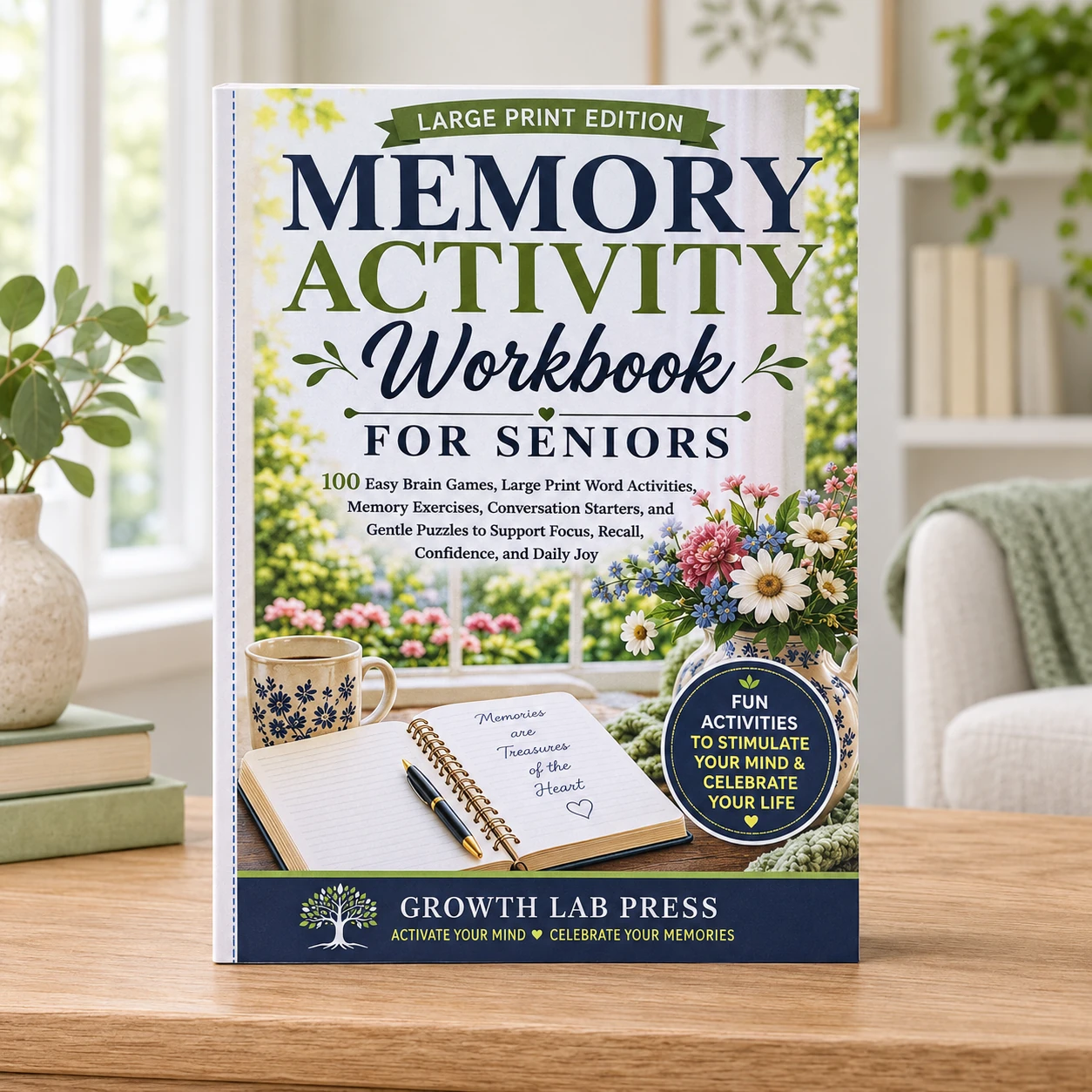
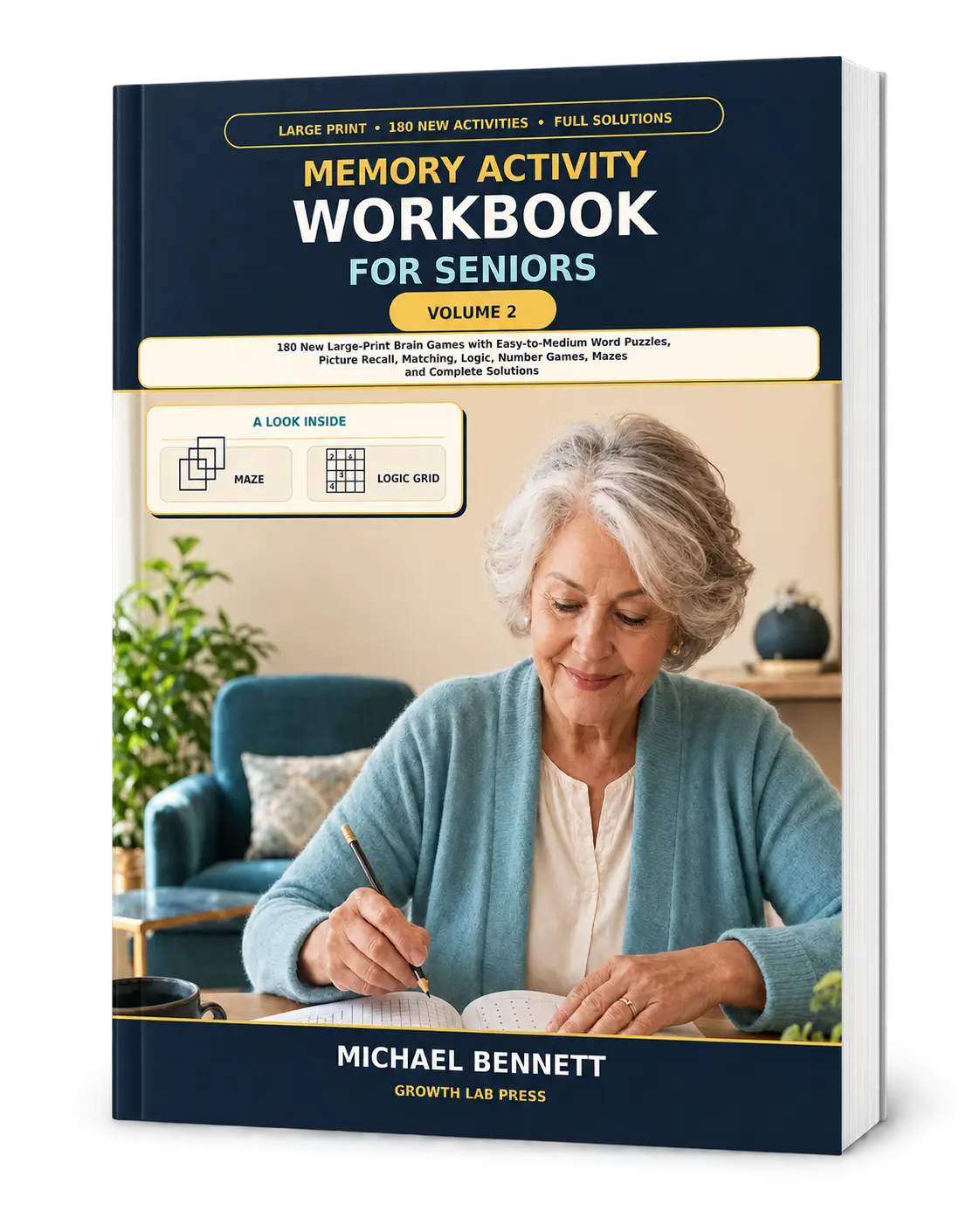
Memory Activity Workbook for Seniors includes large-print memory recall activities, word games, everyday prompts, conversation starters and reflection pages. Memory Activity Workbook for Seniors, Volume 2 contains 180 large-print word, number, matching, visual, logic, planning and maze activities with complete solutions.
Use a workbook when the person wants a prepared page and a clear answer or stopping point. Use a magazine when they would rather browse, choose a subject and let the conversation lead.
Common questions
What kind of magazine works best for a senior activity?
Choose a subject the person already enjoys, with clear photographs and short sections. Gardening, travel, cooking, nature, cars, crafts and local-interest magazines are practical options.
What if the magazine print is too small?
Use the pictures and headlines, read a short passage aloud, or use a digital edition that allows larger text. Ask which option feels most comfortable.
Does the activity need to last exactly 20 minutes?
No. The timing is a flexible outline. Stop earlier, continue longer or save the page for another visit according to the person’s interest.
Can this magazine activity be done without writing?
Yes. The person can look, listen, point, choose between pages, make a spoken caption or answer an open conversation question.
Sources and further reading
Published by Growth Lab Press. Read our editorial standards.