Senior activities
How to Use a Map for a 20-Minute Senior Activity
Turn a paper map into a flexible 20-minute senior activity with six simple games, conversation prompts, easy adaptations and a ready-to-use visit plan.
Choose a map that invites conversation
Use a large paper road map, a simple city map, a transit map or an atlas opened to one uncluttered page. A map connected to the person's interests often works better than a random page: their home region, a favourite holiday area, a country they want to learn about or the route between two familiar towns.
Fold or cover the map so only one section is visible. Use strong lighting and a magnifier if requested. A screen map can work, but a paper map is easier to point at together and does not need scrolling or tapping.
The National Institute on Aging advises choosing activities people enjoy and keeping them fun rather than stressful. Ask first whether the person would like to look at a familiar place, plan an imaginary trip or try a short map game. A map activity should be an invitation, not a test of memory or direction.
Activities 1 and 2: find a place and choose a direction
Activity 1 — find three familiar places: choose a map that contains a town, lake, road or neighbourhood the person knows. Ask, 'Which place would you like to find first?' Point together and mark it with a removable note. Then find two more places if the person wants to continue.
Activity 2 — north, south, east or west: place a removable arrow showing north. Name one visible place and ask which general direction another place lies. Keep the choice simple: 'Is the lake east or west of the town?' Rotate the map only if that makes it easier.
Original example: on a made-up map, Pine Lake sits to the east of Rose Town and Hill Farm lies north of the town. If the question is 'Which direction is Pine Lake from Rose Town?', the answer is east. This fictional example is not a statement about a real place.
Activities 3 and 4: plan a route and choose a stop
Activity 3 — trace a simple route: choose two nearby points and trace a route with a finger or a piece of yarn. Ask one step at a time: 'Which road leaves the town?' then 'Where would we turn next?' This is an imaginary planning game, not navigation advice.
Activity 4 — choose one stop: invite the person to pick a place to pause along the route. It might be a park, café, museum, viewpoint or friend's town. Ask what they would want to do there and how long they would stay.
Original example: travel from Rose Town to Pine Lake by following Garden Road, turning onto Lake Road and stopping at Maple Park. The activity answer is Garden Road, Lake Road, then Maple Park. Change the names to match a real map or invent your own.
Activities 5 and 6: sort places and tell one story
Activity 5 — make two groups: point to visible places and sort them into two categories. Try city or countryside, land or water, visited or not visited, or would choose or would skip. There is no correct answer when the category depends on personal preference.
Activity 6 — one place, one story: let the person choose any place on the map. Ask one open question: 'What do you remember about being there?', 'Who would you take there?' or 'What would you like to see?' Accept a short answer and follow the story rather than returning quickly to the map.
If a place brings up an uncertain date or detail, write the person's words with a label such as approximate or to check. Do not quietly turn a guess into a fact. The map can start a story without proving every detail in it.
Make the map activity easier or more challenging
To simplify, show only a small section, use two answer choices and place removable dots on the locations before asking. Read place names aloud and let the participant point instead of speaking or writing. A map with fewer labels may be easier than a detailed road atlas.
To add challenge, ask the person to estimate which of two routes looks shorter, list three places beginning with the same letter or plan an imaginary trip with two stops. Keep the answer visible on the map so the game does not depend on remembering a long instruction.
For a group, give each person a turn choosing the next destination. Use a shared route instead of scoring individuals. If the activity takes place in a care setting, follow the person's care plan and the setting's guidance, and stop when the person wants a break.
A ready-to-use 20-minute map visit plan
Minutes 0–3: show two map choices and ask which one looks more interesting. Minutes 3–7: find one familiar place and two nearby features. Minutes 7–12: trace a short route or choose a direction activity.
Minutes 12–17: select one destination and use a story prompt. Minutes 17–20: mark a place to explore next time, ask which activity the person preferred and fold the map together if they wish.
The plan is flexible. One enjoyable five-minute conversation about a single place can be enough. Skip route planning if the person prefers stories, and skip personal questions if they prefer a neutral geography game.
Add large-print activities for more variety
Our large-print activity-book guide explains how to compare page spacing, type size, instructions and answer sections. Our memory-activity-book guide focuses on the reader's interests, preferred way to participate and the setting where the book will be used.
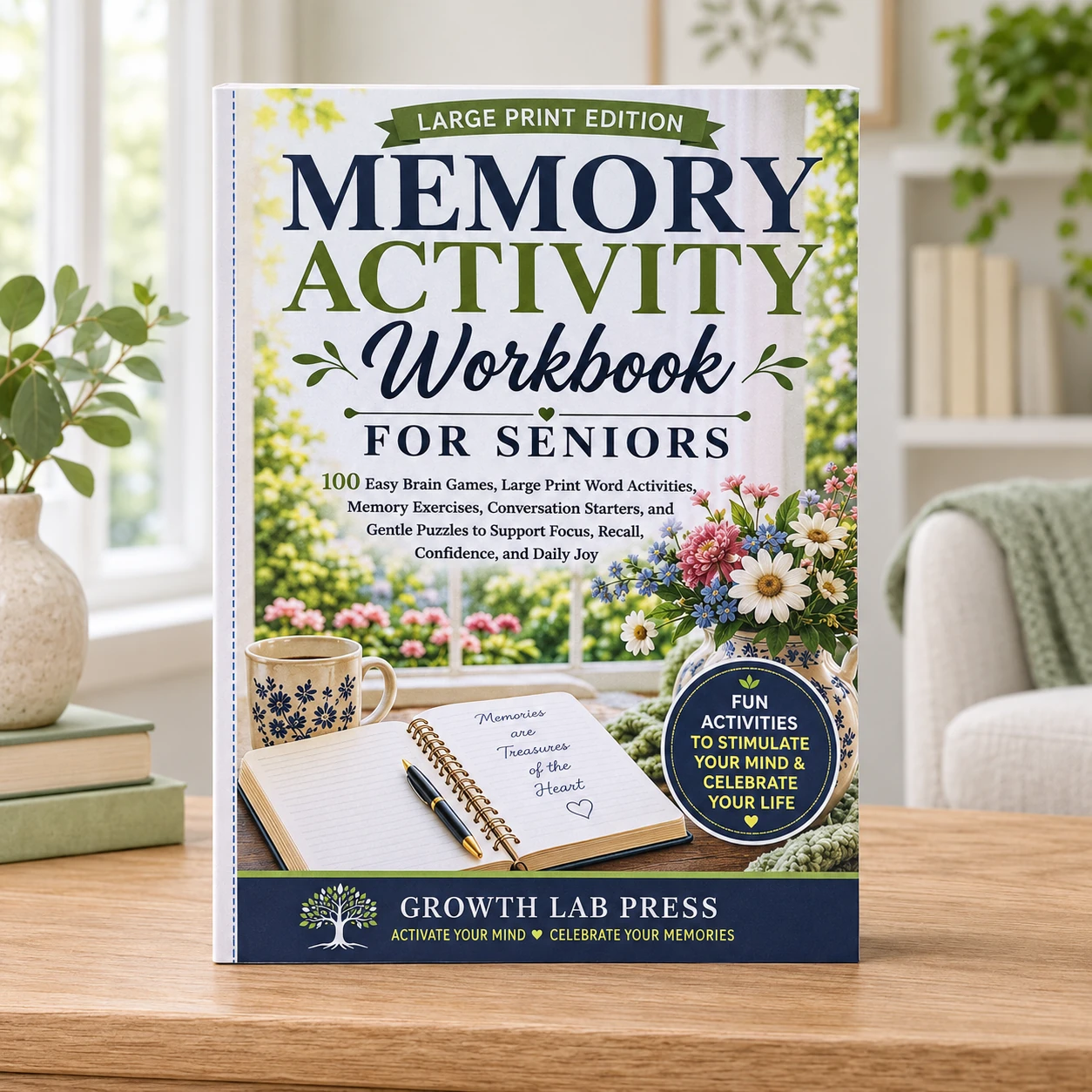
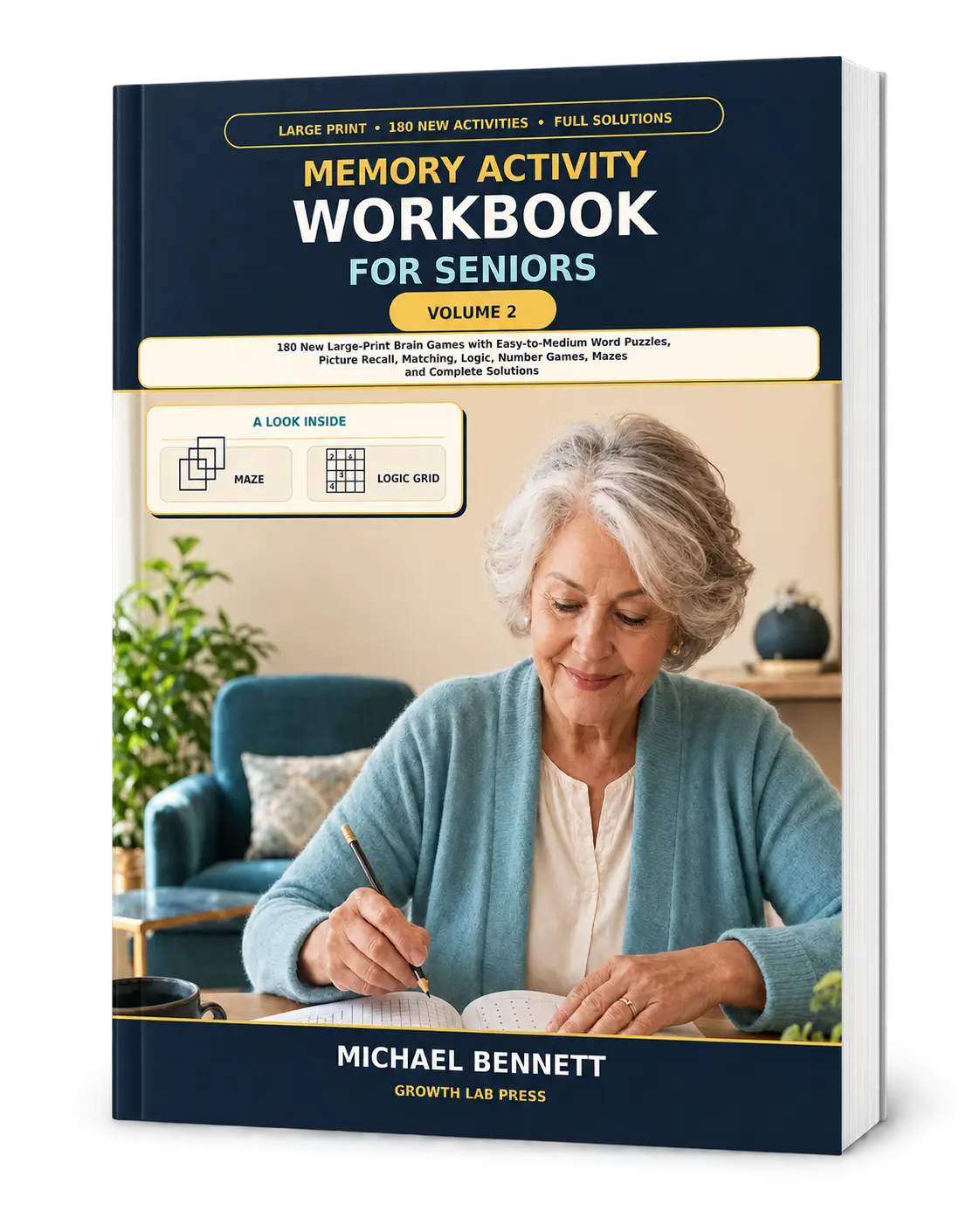
Memory Activity Workbook for Seniors by Michael Bennett is a large-print paperback with memory recall activities, word games, trivia, everyday prompts, conversation starters, reflection pages and spacious writing room. Memory Activity Workbook for Seniors, Volume 2 contains 180 large-print word, number, matching, visual, logic, planning and maze activities in 12 chapters with complete solutions; its current product page lists paperback and hardcover formats.
Use the linked product pages to inspect the real covers, current formats and actual book details. The six map activities and fictional Rose Town examples above were created for this article and are not sample pages from either workbook.
Common questions
What kind of map works best for a senior activity?
Start with a large, uncluttered map connected to the person's interests. A familiar regional map, simple city map or atlas page usually offers enough places for a short activity.
Can a map activity work without writing?
Yes. The participant can point, choose between two places, trace a route with a finger or answer aloud while someone else marks the map.
Should the activity test geography knowledge?
No. Use the map for finding, choosing and conversation. Offer hints, keep answers visible and avoid correcting personal memories as though the visit were a quiz.
Can I use a phone or tablet map?
Yes, if the person likes screens. Increase the text size, reduce clutter and keep the map still while discussing one area. A paper map may be easier for two people to view and point at together.
Sources and further reading
Published by Growth Lab Press. Read our editorial standards.