Family visits
How to Plan a 20-Minute Activity Visit With an Older Adult
Use this simple 20-minute activity visit plan for an older adult, with low-pressure conversation, word play, adaptations and a graceful stopping point.
Start with the person, not the activity
The 20-minute outline below is a planning tool, not a rule or a medical recommendation. A good visit may last five minutes, 20 minutes or longer. Let the older adult's comfort, interest and energy determine the pace, and make it easy to pause or stop without treating that choice as a failure.
Before choosing an activity, consider what the person already enjoys, whether mornings or afternoons are usually better, and whether they prefer talking, looking, listening, writing or doing something with their hands. The Alzheimer's Association advises caregivers to consider a person's interests, abilities and enjoyment, then adjust familiar activities as needed.
Ask one simple choice at the start: Would you rather look at a picture, try a word game or just chat? Two or three clear options can be easier to answer than an open question such as What would you like to do?
Bring one main activity and one easy backup
A small activity bag is usually enough. Choose one main item that suits the person's interests and one backup that needs little setup. For example, bring a large-print word activity as the main choice and three labelled family photographs as the backup.
Avoid turning the visit into a performance. You do not need to finish a page, correct every answer or fill every minute. The National Institute on Aging recommends matching activities to the person's abilities, helping them get started and watching for signs of frustration. It also notes that simply watching an activity can be a valid way to participate.
- One main activity: a familiar word game, photo prompt, music choice or simple sorting task
- One backup: three photographs, a short poem, a postcard or an object with a story
- Useful supports: reading glasses, a dark pen, a blank card for covering extra text and a drink if appropriate
- No score, timer or requirement to complete the activity
A ready-to-use 20-minute activity visit plan
Use the following sequence as a flexible guide. If one part is going well, stay with it. If the person looks tired, uncomfortable or uninterested, move to the close or simply sit together.
The original examples in this article were created for this guide and are not sample pages from the linked books.
- Minutes 0–3 — Arrive and settle: greet the person, reduce distractions and offer a simple choice of activities.
- Minutes 3–8 — Easy warm-up: use one photograph, familiar object or either-or question that has no wrong answer.
- Minutes 8–15 — Main activity: try three short word prompts, one large-print puzzle or another chosen activity together.
- Minutes 15–18 — Optional conversation: follow one answer into a memory or everyday topic, but let the person decline.
- Minutes 18–20 — Calm close: acknowledge the shared time, put materials away and offer one choice for the next visit.
Example: a familiar-places word visit
For the warm-up, show a photograph of a park or garden and ask: Would you rather sit near the flowers or near the pond? Accept either answer without asking the person to explain it.
For the main activity, say a familiar place and invite one related word. Try kitchen, garden and railway station. Possible answers include kettle, roses and train, but any sensible association works. If the prompt feels too broad, offer two choices: At a railway station, would you expect a train or a tractor?
For optional conversation, choose one answer and ask a gentle follow-up: Did your family grow flowers or vegetables? If the person does not want to answer, return to the word activity or share your own brief observation without demanding a response.
Close with a specific, low-pressure choice: Next time, shall I bring animal pictures or music questions? Record the answer only if the person is comfortable with that.
Adapt the visit without making it feel like a test
Make only the changes the person wants or needs. Ask whether the print is comfortable, whether they would like a question repeated and whether they prefer to answer aloud. A family member can read, point or write without taking over the activity.
If writing is tiring, play entirely aloud or let the person point. If a page looks busy, cover the lower part with a blank card so only one prompt is visible. If hearing is difficult, face the person, reduce background noise and show the key words in clear print. If vision is limited, describe photographs and use familiar objects or spoken prompts instead.
For someone living with dementia, keep the focus on shared enjoyment rather than achievement. Familiar, adult-appropriate choices and a predictable pace may be more welcoming than rapid questions or repeated correction. Individual needs vary, so follow the person's care plan and professional guidance where applicable.
- Tired today: use one photograph and shorten the visit
- Does not want to write: invite spoken or pointed answers
- Page feels crowded: show one line at a time
- Question feels difficult: offer two concrete choices
- Conversation is flowing: set the prepared activity aside
Know when to pause or stop
Stop or change course if the person says no, turns away, repeatedly loses interest, appears frustrated or seems uncomfortable. You can say: We can leave this for another day. Would you like to sit quietly or look at one picture instead?
Do not use the activity to measure memory or prove what the person can remember. This plan is for recreation and connection, not assessment, diagnosis or treatment. If you notice a new health, communication or safety concern, share it through the person's usual care channel rather than trying to address it with a harder activity.
Keep one useful note for the next visit
After the visit, write one factual line about what the person chose or enjoyed, if appropriate within your family or care setting. For example: Chose garden pictures; enjoyed naming flowers; preferred answering aloud. Avoid labels such as did well or failed.
One short note helps the next visit begin with a known preference. It can also prevent you from bringing too many materials. Respect the person's privacy and any rules about recording or sharing information in their home or care setting.
Choose a book for future activity visits
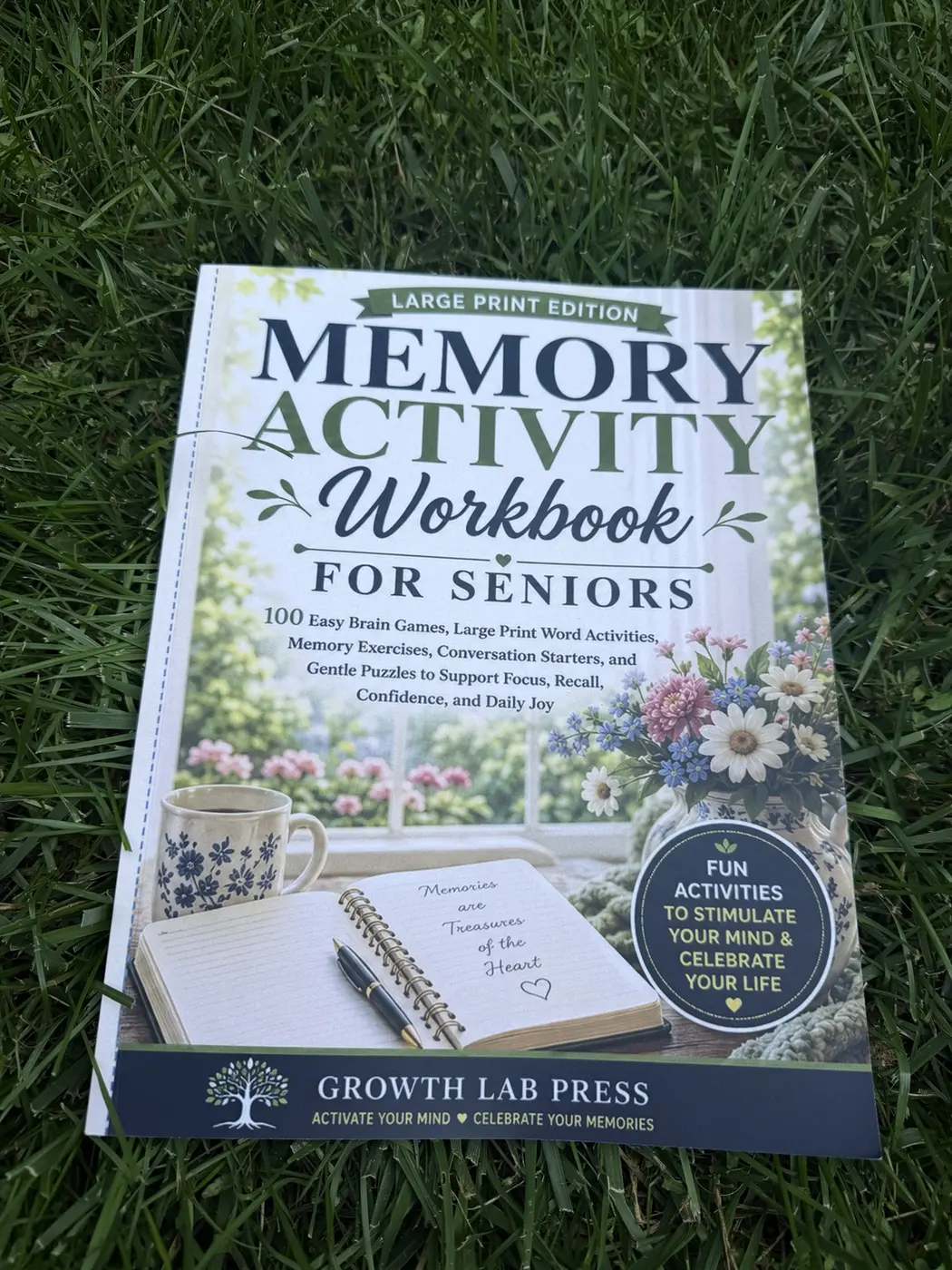
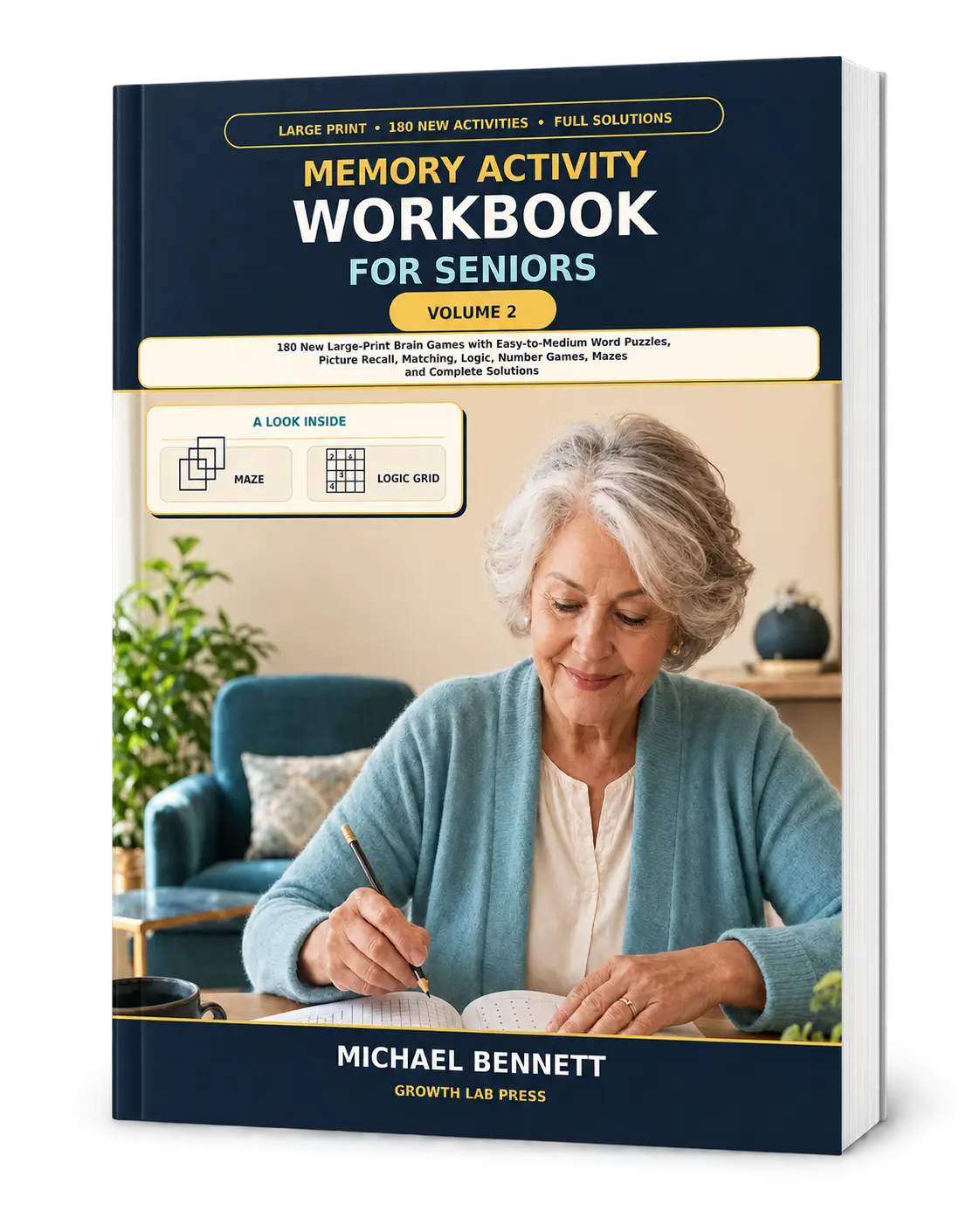
Memory Activity Workbook for Seniors is a large-print paperback with memory recall activities, word games and trivia, conversation starters, reflection pages and spacious writing pages. Memory Activity Workbook for Seniors, Volume 2 contains 180 large-print word, number, matching, visual, logic, planning and maze activities with complete solutions. Both books are written by Michael Bennett.
The related book-selection guide helps families compare activity style, support level and setting. The large-print guide explains practical features such as readable instructions, contrast, spacing and answer guidance.
Use the product links below to review the current descriptions and formats. Choose a book around the reader's interests and preferred way of participating rather than assuming that one activity style suits every older adult.
Common questions
Does an activity visit need to last exactly 20 minutes?
No. Twenty minutes is only a simple planning template. Shorten, extend or stop the visit according to the older adult's preference, comfort and energy.
What should I bring for a short visit with an older adult?
Bring one main activity and one easy backup, such as a large-print word page plus three family photographs. Useful extras may include reading glasses, a dark pen and a blank card for covering unused text.
Can we do the activity without writing?
Yes. Read prompts aloud and invite the person to speak, point, choose between two options or simply listen. A partner can write only when requested.
Is this plan suitable for a person living with dementia?
It can be adapted for shared recreation, but it is not clinical advice. Match activities to the person's interests and current abilities, focus on enjoyment, and follow their individual care plan and professional guidance.
Sources and further reading
Published by Growth Lab Press. Read our editorial standards.