Family visits
What to Bring to a Care Home Visit: A Small Activity Bag
Pack a simple activity bag for a care home visit with a short checklist, three ready-to-use conversation prompts and options for a visit without writing.
Check with the home before packing
Ask the home about visiting arrangements before you go. In its care-home guide, Alzheimer's Society recommends checking the home's visiting policy and choosing activities around the person's interests and current abilities. Its guide is linked below.
For this bag, use items you already own. Ask staff whether your planned materials suit the person and the setting. Leave food, scents and messy materials out of this first version. Keep the bag small enough to unpack and put away yourself.
Pack three things, then choose one
Here is an original packing plan for a conversation-led visit. The quantities are suggestions for keeping preparation small, rather than a prescribed activity programme. Change the contents around your parent's preferences.
- Two copied photographs: choose an ordinary scene, such as a garden, family meal or pet. Keep treasured originals at home.
- One reading choice: a short page from a book, a picture-led magazine or an activity page with instructions you have read beforehand.
- One small notebook and pen for you: use it for requests or stories the person wants you to keep. There is no requirement for them to write.
Use these three prompts without testing recall
Start by offering a choice: Would you prefer to look at a picture, hear something short, or chat? Keep the other items in the bag until wanted. The prompts below are examples written for this article, not excerpts from a workbook.
For a garden photograph, try: Which flower colour would you choose for a garden? For a meal photograph, try: What would you put on a Sunday lunch menu? For a pet photograph, try: Would you rather watch a cat or a dog playing?
Give your own answer if you want to share the conversation. Avoid making the activity depend on identifying everyone in the picture, naming a date or producing a particular answer. Follow a new topic if the person takes the conversation elsewhere.
Offer a version with no writing
If your parent chooses a page, ask whether they would like you to read it aloud. Read one instruction, then pause. Offer to write their answer only if they want a written record. Pointing, speaking or listening are options for this visit.
For an original read-aloud round, ask: Which would you choose for a quiet afternoon, a book or some music? Then ask: Which would you choose for a view, a garden or the sea? These questions have no correct answers. They work as invitations to share a preference.
If you bring a puzzle, check its answer beforehand. Keep the solution separate and available if requested. Agree together whether to continue after one question rather than treating a whole page as the goal.
Let the visit change direction
In its guidance for visits with someone living with dementia, Alzheimer's Society advises adapting plans to the person's mood and energy. It also advises stopping an activity if a memory prompt causes distress and telling care staff about the concern.
Your bag is optional. Put it away when the person prefers something else. Sitting together, joining a suitable activity already happening in the home or listening to their chosen topic does not require completing your plan. Ask staff for support with concerns about the person's comfort or care.
Choose an activity page before your next visit
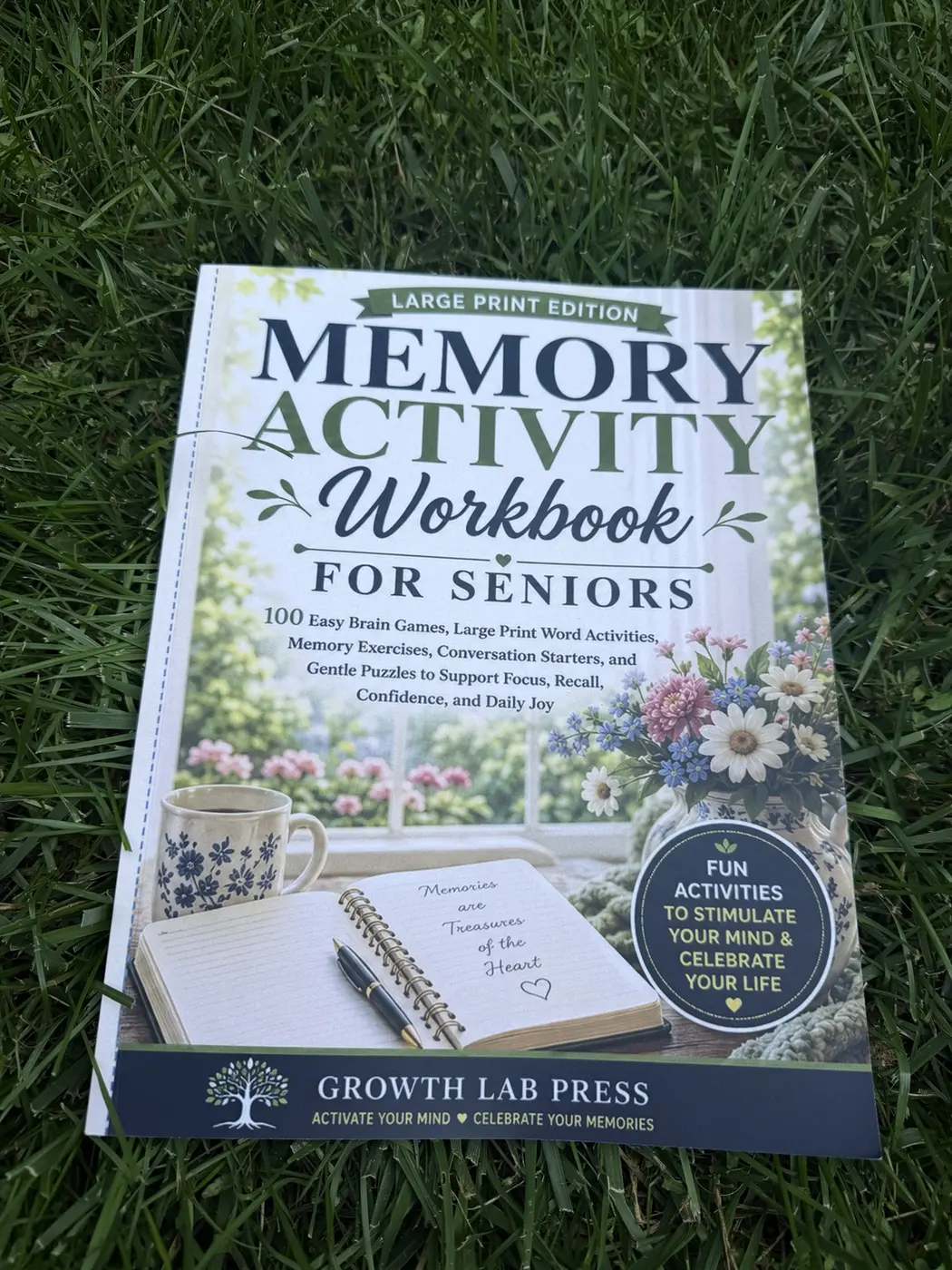
If you want a prepared book for the bag, preview the Memory Activity Workbook for Seniors below. It includes word games, conversation starters and spacious writing pages. Inspect the actual sample pages for readable text, clear instructions and a subject your parent enjoys before ordering.
An activity book is optional. The photo prompts and preference questions above work without a purchase. They are recreational suggestions, without a promise to improve memory or treat a condition.
After the visit, make a short practical note: the item chosen, anything requested for next time, and anything to leave out. Keep this private. For example: Preferred the garden photo. Asked for a picture of the new plants. Did not want a puzzle today. Use the note to pack less, rather than adding more activities each time.
Common questions
What should I bring if my parent does not like puzzles?
Choose a copied photograph or a short reading item linked to an interest. Offer conversation without a worksheet. Ask whether they want to use anything from the bag.
Do I need to buy an activity kit?
No. Two photo copies, a reading item and a notebook are enough for this suggested bag. Use materials you already have and check suitability with staff.
How long should the activity last?
There is no fixed duration in this plan. Offer one prompt, then ask whether the person wants to continue. Follow their preference and the home’s guidance.
Are these prompts taken from the workbook?
No. They are original examples for this article. Visit the linked book page to inspect actual workbook samples.
Sources and further reading
Published by Growth Lab Press. Read our editorial standards.