Book selection
Trivia Book or Activity Workbook for Seniors: How to Choose
Compare a trivia book with a mixed activity workbook for seniors using five practical questions, a quick at-home test and verified book details.
The quick answer: match the format to the moment
A trivia book is often the better fit when someone enjoys familiar facts, likes answering aloud or wants an activity that can turn into a conversation. A mixed activity workbook is often the better fit when someone wants different types of pages, enjoys writing or prefers choosing between word games, recall prompts and reflective activities.
Neither format is automatically better for every older adult. Think about who will use the book, whether another person will join in and what usually feels enjoyable rather than tiring. A book that suits a family visit may not be the same book someone reaches for during quiet time alone.
Choose for enjoyment and participation, not for a promised health result. The National Institute on Aging says evidence for lasting cognitive effects from many commercial activities is not definitive, so this comparison does not claim that either format prevents or treats memory loss.
Ask five questions before choosing
Use these questions as a buying checklist. If you are choosing a gift, ask the recipient or someone who knows their everyday preferences instead of relying only on the word senior on the cover.
A clear preference on two or three questions is usually more useful than trying to find one perfect book for every situation.
- 1. Do they enjoy facts and familiar topics, or do they prefer several kinds of activities?
- 2. Will the book be used mainly aloud with family or a group, or quietly by one person?
- 3. Is writing comfortable, or would spoken answers be easier?
- 4. Would one nostalgic theme hold their interest, or would variety help from day to day?
- 5. Do they like checking an answer, completing a page or simply letting a prompt begin a story?
Choose a trivia book for questions that work aloud
Trivia needs very little setup. One person can read a question, offer a clue and reveal the answer. That makes the format practical for a family visit, an activity group or a reader who prefers not to write.
Familiar subjects can also open a path beyond the factual answer. A question about a song, household item or television programme may lead to a story about where someone lived, who was in the room or what daily life felt like. Let the story take priority over the score when conversation is the real goal.
Trivia may feel less suitable for a person who dislikes being quizzed or wants more variety than questions and answers. Present each question as an invitation, allow passing and avoid correcting someone in a way that makes the activity feel like a test.
- Good fit for read-aloud sessions and groups
- Little or no writing required
- Easy to pause after one question
- Familiar topics can lead naturally to stories
Choose an activity workbook for variety on the page
A mixed workbook gives the reader more than one way to participate. On one day a word game may appeal; on another day a short recall prompt, conversation starter or reflection page may be a better choice. This format can work independently or with someone reading the instructions and recording answers.
Look beyond the cover when comparing workbooks. Check whether the instructions, activity text and answer choices are readable; whether pages have enough space; and whether answers or guidance are available where needed. The related large-print guide provides a fuller page-design checklist.
A workbook may be less convenient when the reader wants a purely spoken group activity or finds writing uncomfortable. Many pages can still be adapted by answering aloud, pointing to choices or asking a partner to write, but previewing the inside pages is the best way to judge the fit.
- Good fit for readers who enjoy several activity styles
- Supports independent or shared page work
- Offers a choice when interest changes from day to day
- Can combine word play, prompts and reflection
Try this 10-minute comparison before you buy
You can compare the two formats with a sheet of paper. The examples below were written for this article and are not sample pages from either linked book. Ask permission before starting, keep the tone relaxed and stop if the person would rather do something else.
For the trivia half, ask: Which everyday kitchen appliance became a common sight in many homes during the 1950s: a microwave oven or an electric toaster? Suggested answer: the electric toaster. Then ask the open prompt: What breakfast do you remember from home? The factual answer gives the activity structure; the second question makes room for a personal story without treating memory as right or wrong.
For the workbook half, write four words—garden, radio, train and birthday—and ask the person to choose one. Invite them to list three related words, draw a small picture or say one sentence about their choice while you write it down. There is no single correct response.
After five minutes with each format, ask which one they would like to continue. Notice whether they preferred spoken questions, open-ended page work, both or neither. That answer is more useful than choosing only from an age label.
Compare two Growth Lab Press choices
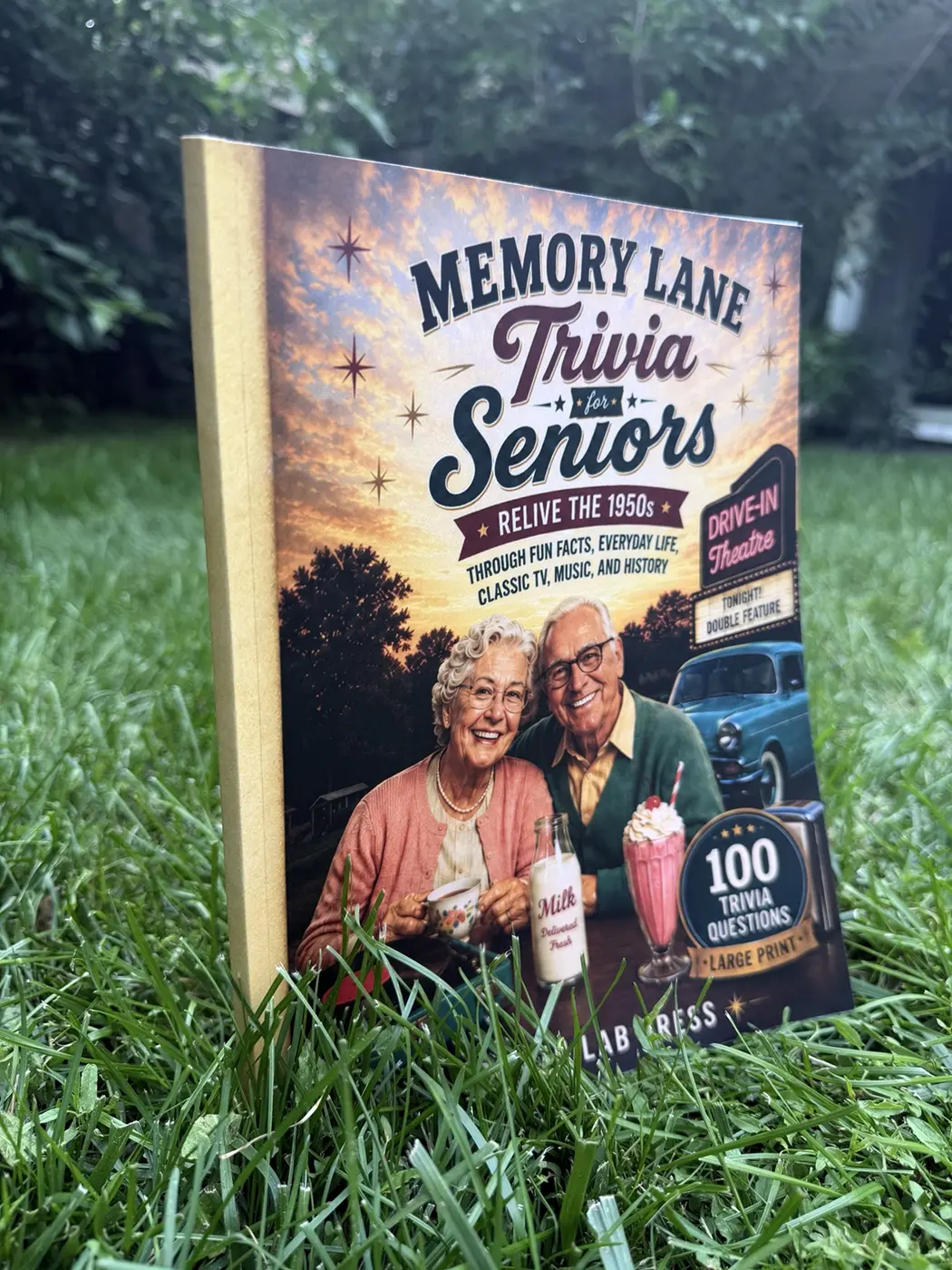
Memory Lane Trivia for Seniors contains 100 large-print questions about 1950s music, television, daily life and shared memories. Its question-and-answer format is designed to work independently, during family visits or in activity groups. It is available in paperback and hardcover and is written by Michael Bennett.
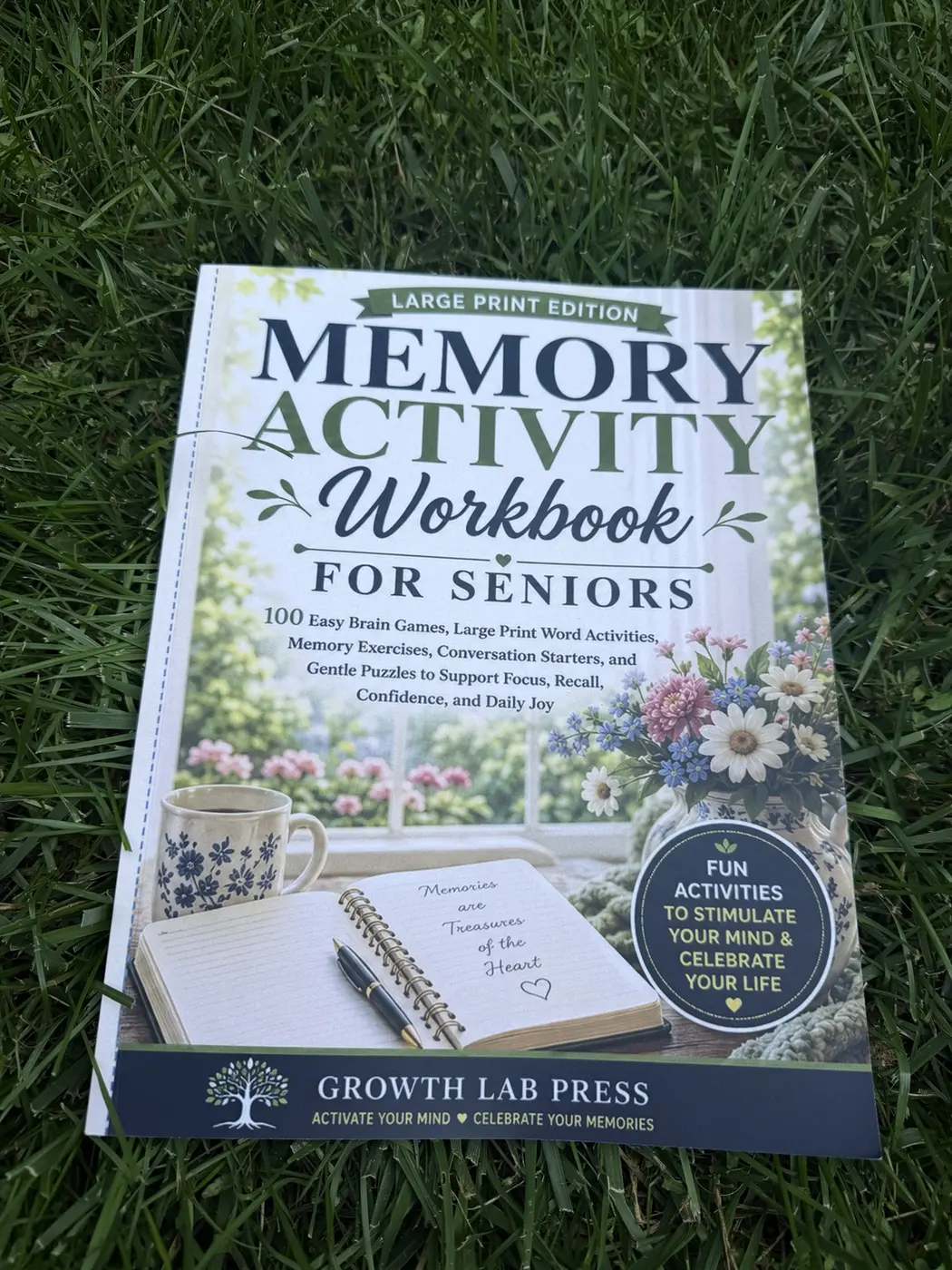
Memory Activity Workbook for Seniors is a large-print paperback with memory recall exercises, word games and trivia, everyday prompts, conversation starters, reflection pages and spacious writing room. It can be used independently or one page at a time with a family member or caregiver. It is also written by Michael Bennett.
Choose Memory Lane Trivia when read-aloud questions and a 1950s theme are the main attraction. Choose the workbook when a mix of written and spoken activities is more important. Use the linked product pages to inspect the current book previews and formats before ordering.
Use one simple rule when the choice is still close
For a shared visit, start with the format that makes participation easiest: often trivia when someone likes talking, or a workbook page when they enjoy making, sorting or writing something together. For solo use, choose the inside-page style the reader is most likely to open without encouragement.
If both formats appeal, decide by theme and variety. A focused 1950s trivia book provides continuity from page to page. A mixed workbook provides more options in one volume. The related book-selection guide can help you compare readability, interests, support needs and the setting where the book will be used.
Whichever you choose, offer the book without pressure. A short enjoyable session is enough, and the reader can return another day or choose a different activity.
Common questions
Is a trivia book better than an activity workbook for a family visit?
Trivia is often easier to use aloud and can lead naturally to conversation. A workbook may be better when the person enjoys choosing from word games, prompts and written activities. The better option is the one that suits the reader and the visit.
What if the reader does not want to write?
Choose a trivia format or adapt a workbook page by reading it aloud, accepting spoken answers, offering choices or writing for the person. Do not make writing a requirement for joining in.
Should I choose a book based on difficulty?
Difficulty matters, but interest, readability and the way the book will be used matter too. Preview the instructions and page layout, then choose something inviting rather than something that feels like a test.
Do senior trivia books or workbooks improve memory?
This article makes no medical claim. Choose these books for recreation, conversation and personal enjoyment. Speak with a qualified health professional about concerns involving memory or daily function.
Sources and further reading
Published by Growth Lab Press. Read our editorial standards.